
9th Circuit reinstates Robert Rundo's indictment, rejects Antifa comparison
The opinion describes U.S. District Judge Cormac Carney's 'strained attempt' to find a wrongful motive behind the prosecution of white supremacists for violence at rallies.


Ruling the trial judge was wrong in many areas, an appellate court has reinstated the criminal indictment against a white supremacist leader accused of inciting violence at political rallies.
Now-retired U.S. District Judge Cormac J. Carney “compared apples to oranges” when he compared Antifa and far-left groups to Robert Rundo and his co-defendant, according to the 31-page opinion from the 9th Circuit U.S. Court of Appeals.
The proper legal analysis involves comparing individual conduct to individual conduct, not individual conduct to group conduct.
“That kind of exercise is impossible to do here, where we do not know, for example, which of the ‘dozens’ of individual Antifa members assaulted people at the KKK rally,” according to the opinion, issued Thursday. “Some Antifa members at the rally may have injured multiple people; some may have injured none.”
The opinion includes a footnote that says while Carney and the attorneys referred to Antifa as if it were an organization “[it] is not a well-structured organization, but rather a loosely organized, secretive movement of like-minded far-left activists,” quoting a 2021 Reuters article.
Assistant U.S. Attorney Alexander P. Robbins said in oral argument on June 18 that Carney assumed three people were Antifa members, “but it’s not actually clear that they were.”
Thursday’s opinion was written by Judge Milan D. Smith Jr. with concurrence from Judge Richard A. Paez and U.S. District Judge Jon S. Tigar, sitting by designation from the Northern District of California.
The judges on Tuesday issued another ruling reversing Carney’s order releasing Rundo’s from custody. He’s been in custody since the appellate panel intervened on another release order in February.
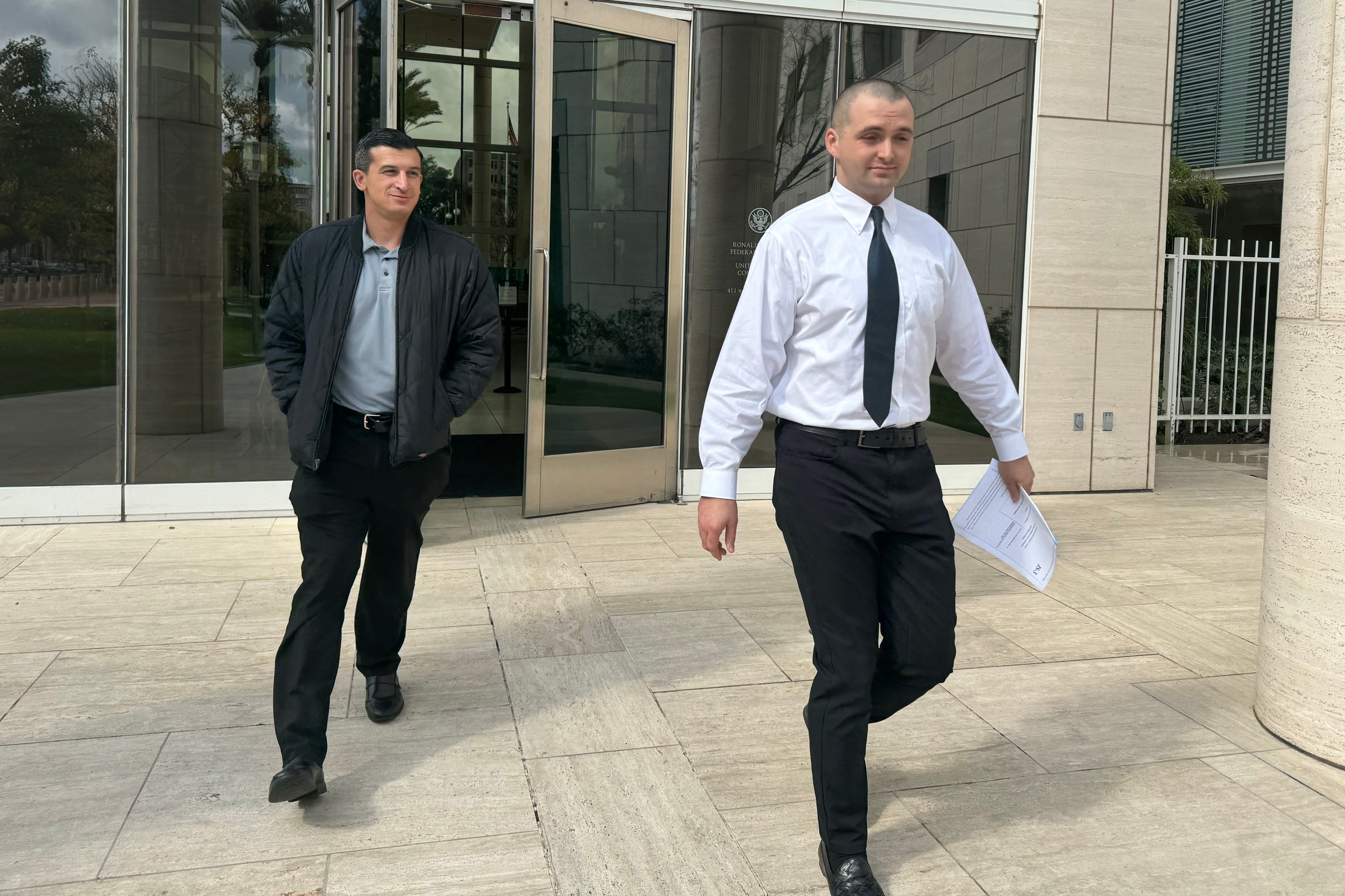
Thursday’s decision means Rundo’s case, which includes charges of rioting and conspiracy to violate the Anti-Riot Act, will return to U.S. District Court, and it will be assigned to another judge because Carney retired in May. Rundo’s co-defendant Robert Boman, who is out of custody, also had his charges reinstated and must return to court.
Boman struck a plea agreement last year, but he never pleaded guilty to the conspiracy charge as planned. Instead, Carney said during a Feb. 21, 2023, hearing that he didn’t believe he could accept the plea because Boman may not have committed any crimes and was instead defending himself and others against far-left activists. Boman was out of custody when Carney formally dismissed the indictment against him and Rundo in February 2024.
Thursday’s 9th Circuit opinion says Rundo and his co-defendants “behaved like leaders of an organized crime group,” unlike the three men at a rally in Huntington Beach, identified by the initials J.A., J.F. and J.M.A, to whom their lawyers compared them in appellate briefings.
“They coordinated combat training sessions; created materials to recruit others; and planned crosscountry travel to commit their acts,” according to the ruling. “Nothing in the record indicates that J.A., J.F., or J.M.A. were similarly organized. That is, there is no evidence that these individuals trained together, coordinated their attendance at other rallies, recruited others, or otherwise did anything other than commit violence at the Huntington Beach rally.”
The evidence against Rundo, who founded the Rise Above Movement, and Boman also outweighs the evidence against the three men identified by their attorneys. Rundo and “his co-defendants conveniently bragged about their exploits online, providing the government with ample evidence of their alleged unlawful conduct.”
“Defendants attempt to take characteristics of random individuals and piece them together with those of J.A., J.F., and J.M.A. in an attempt to create an ideal comparator, but this comparator does not actually exist (or, rather, Rundo has not shown it to exist),” according to the opinion.
The opinion also says Boman’s claim that he was protecting “this Black kid” at a rally occurred “only years after the fling of his indictment, at a change of plea hearing.” It also notes that Boman is a “self proclaimed white supremacist.”
Judge Carney cited Boman’s statements about protecting a “Black kid” when he refused to accept his guilty plea.
“The district court conveniently omitted information regarding the timing and circumstances of Boman’s self-defense claim when it ‘found’ that he was similarly situated to J.F.,” according to a footnote in Thursday’s opinion. “To the extent a clear error standard applies, we are left with a “definite and firm conviction that a mistake has been committed” when it drew an equivalence between these two individuals.”
The opinion also disputes statement made by Rundo’s public defenders that the U.S. Attorney’s Office press release announcing Rundo’s indictment demonstrates he was targeted because of his political beliefs.
“Nothing in the press release says that RAM was ‘targeted’ because they were ‘white supremacists’; instead, the words ‘white supremacists’ are only used to describe a statement of fact: that RAM consists of them,” according to the opinion.
Rundo’s and Boman’s indictment had not yet been assigned to a new judge as of Friday afternoon.
Previous articles:
My Feb. 22 article has background on Judge Carney, his departure as chief judge in 2020, and his other notable cases.
My Feb. 23 article has details on Judge Carney refusing to accept Boman’s guilty plea.
My Feb. 29 article has details on a status conference in which Carney asked in front of Rundo, “How about some of the reporting I’ve seen on my decision? Can I get those people arrested? Just because I disagree with how they characterize what I say and do?”
March 14: 9th Circuit stays future release orders for neo-Nazi Robert Rundo amid dismissal appeal
May 1: 'It was Antifa': Judge Carney grants bail for neo-Nazi leader Robert Rundo
May 4: 9th Circuit stays Judge Carney's bail order for Robert Rundo four hours after request
New Young Thug trial judge holds first status conference
The new judge in rapper Jeffery “Young Thug” Williams’ racketeering conspiracy case in Atlanta, Georgia, is moving forward with the trial amid new rules.
Fulton County Superior Court Judge Paige Reese Whitaker said at a status conference today that she’ll start court at 8:45 a.m. and expects prosecutors to have witnesses immediately available. She ordered everyone back to court on July 30 to hear motions, which must be filed by the end of the day on July 23. Prosecutors have until the end of July 26 to respond.
Whitaker also told everyone to stop eating in court, and she wants the attorneys to reduce the number of courtroom outfits for their clients, at the request of sheriff’s deputies.
Defense attorneys already have filed one bail motion, and Williams’ lawyers Brian Steel and Keith Adams filed a motion to recuse Chief Deputy District Attorney Adriane Love and Deputy District Attorney Simone Hylton over their involvement in the June 10 ex parte meeting with Judge Ural Glanville and witness Kenneth “Woody” Copeland.
Judge Rachel Krause recused Glanville on Monday because of how he defended himself after attorneys filed recusal motions against him over the meeting.
Krause said in her ruling that she “generally” agrees with Glanville’s assessment of the propriety of the meeting, so Steel on Friday filed a motion asking Whitaker to reconsider that finding. He also wants Whitaker to strike Krause’s line that referenced “hyperbole” in the recusal motion.
“There is nothing hyperbolic in Mr. Williams’ Motion to Recuse and Affidavit and Mr. Williams stands by all law and facts therein,” Steel wrote.


Steel also filed a motion to invalidate everything that happened in trial after the first recusal motion was filed against Glanville on June 12, which includes Copeland’s testimony.
“If a party files a Motion to Recuse a Trial Judge and the Motion is denied, but it is later determined that the Judge should have been disqualified to act in the case, all proceedings after the filing of the Motion to Recuse are invalid and of no effect,” Steel wrote.


I’ll be streaming on YouTube on July 30 as always. I’m also sharing updates on TikTok, where I’ve amassed nearly 180,000 followers. Thank you for your support!

Thank you for supporting my independent legal affairs journalism. Your paid subscriptions make my work possible. If you’re not already a paid subscriber, please consider purchasing a subscription through Substack. You also can support me through Venmo (MeghannCuniff), CashApp ($MeghannCuniff) and Zelle (meghanncuniff@gmail.com). Thank you!