
Ex-deputy mayor's corruption trial casts final spotlight on Los Angeles City Hall RICO scheme
Closing arguments are to begin Tuesday morning in the trial of Raymond Chan, the last man standing in the José Huizar scandal.

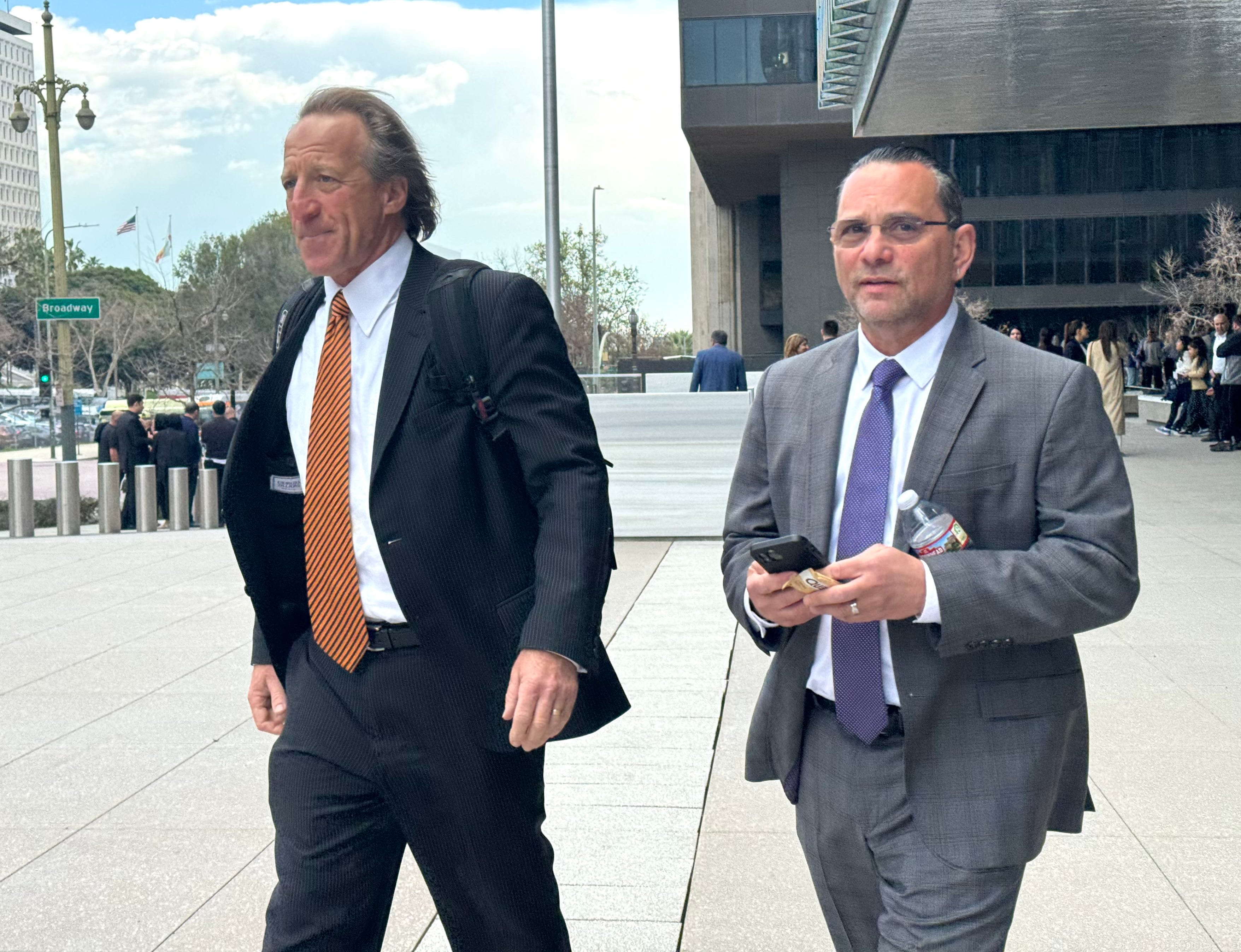
In the midst of a years-long criminal enterprise that encompassed downtown Los Angeles, lobbyist Morris Goldman enjoyed closed access to its mastermind.
The one-man political operation presented himself to clients as someone who could navigate the city’s notoriously tangled bureaucracy, and he knew the key to success was keeping corrupt City Councilman José Huizar happy.
Six weeks after a federal judge sentenced Huizar to 13 years in prison, Goldman took the witness stand in the same courtroom to testify against retired Los Angeles Deputy Mayor Raymond She Wah Chan, a career city employee who’s accused of criminally conspiring with Huizar.
Goldman is among three prosecution witnesses trying to cut months if not years off their own time in prison by cooperating with prosecutors, who are seeking to make 68-year-old Chan the first Los Angeles government official to be convicted by a jury of conspiracy to violate the federal Racketeer Influenced and Corrupt Organization Act.
Prosecutors rested their case on Monday after FBI Special Agent Andrew Civetti testified for the second time. He oversaw the Huizar investigation, which also sent a Bel Air multimillionaire developer to prison for six years, and he currently oversees all public corruption investigations in the Los Angeles area.
Chan’s lawyers did not call any witnesses. Closing arguments are to begin after the jury is instructed starting at 8 a.m. on Tuesday in U.S. District Judge John F. Walter’s courtroom in downtown Los Angeles.
Goldman was among the first defendants to resolve his charges when he pleaded guilty in August 2020 to honest services fraud and conspiracy to commit bribery. He told the jury last week, “I felt I needed to make a fresh start someplace else,” so he now works at a winery on California’s Central Coast, hosting tours and educating guests about winemaking.
Goldman orchestrated a key part of Huizar’s racketeering conspiracy by managing a political action committee to benefit the City Council candidacy of Huizar’s now ex-wife, Richelle Rios. A former chief of staff for two Los Angeles councilmembers in the 1990s and 2000s, Goldman had operated his “government boutique lobbying firm” Urban Solutions for 14 years when he hosted a fundraiser for Rios on the rooftop deck of his office in downtown L.A.’s Little Tokyo neighborhood.
He told the jury last week that he was “underwhelmed” by Rios’ speech and felt she lacked the “fire in her belly” that winning candidates need.
“I don’t think that she really had a vision or was able to articulate why she wanted to be on the counsel,” Goldman testified. “My sense is José was pushing her to run.”
Goldman said he sought donations for Huizar through the PAC, anyway, including one from Chan that federal prosecutors are using as evidence of a larger conspiracy. Goldman also secured a donation from an executive for a development company who was worried he’d lose his job if Huizar didn’t help his project get approved.
The U.S. Attorney’s Office agreed to recommend no more than 30 months in prison when Goldman pleaded guilty two federal felonies in August 2020, but he’s yet to be sentenced as prosecutors seek to make Chan the first Los Angeles government official to be convicted by a jury of organized crime.
Chan is a retired career city employee accused of conspiring with Huizar, including through a corrupt partnership with real estate developers. Goldman and others testified about Chan’s alleged role in the racketeering conspiracy that other defendants have admitted corrupted the downtown development process.
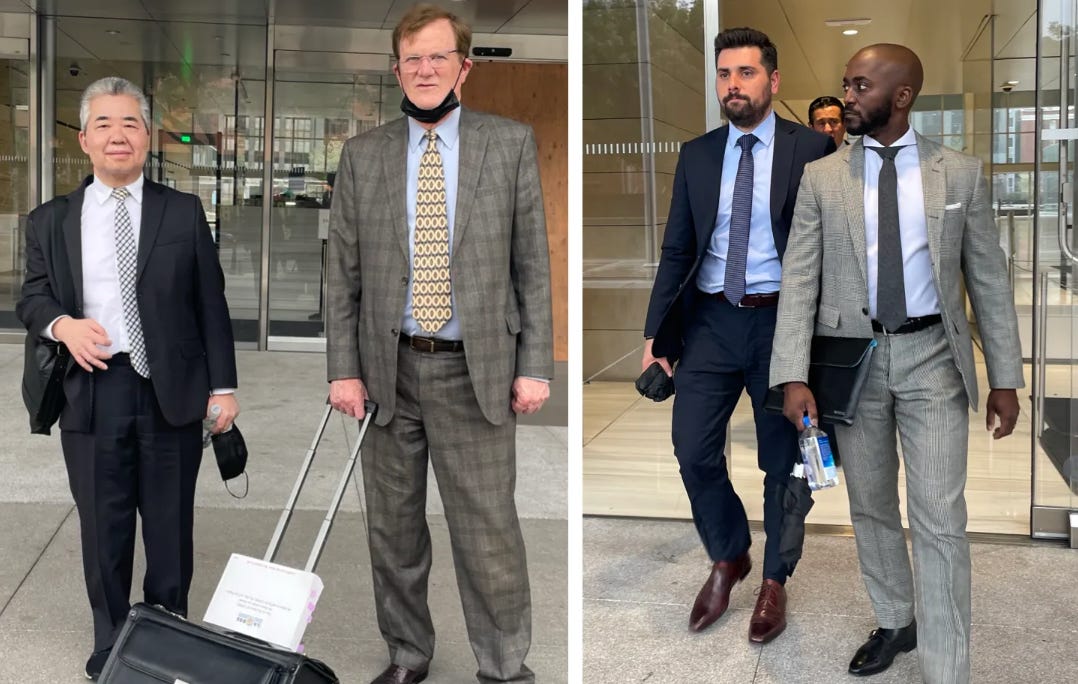
The most at risk is George Esparza, Huizar’s former assistant who faces a maximum recommendation of 87 months in prison, followed by George Chiang, a real estate consultant who opened a consulting firm with Chan. Prosecutors agreed to recommend no more than 70 months when Chiang pleaded guilty in June 2020, but, like Esparza’s, his sentencing has been delayed five times as prosecutors pursue Chan’s case after his original lawyer fell ill during his first trial.
Chiang is a key witness because of his close relationship with Chan and their work on Synergy, a consulting company that Chan planned to join as an executive after he retired as the city of Los Angeles’ deputy mayor of economic development. He spent two days on the stand last week testifying about his years working with Huizar and Chan while consulting for the Chinese-based company Shenzhen Hazens. Hazens is owned by Fuer Yuan, a wealthy developer hoping to redevelop the Luxe City Center Hotel in downtown Los Angeles.
Chiang testified about Chan’s effort to stop the city from merging the Planning Department with the Department of Building and Safety — which would have eliminated Chan’s job — and his support for Huizar’s pay-for-play schemes with Yuan and current federal fugitive Wei Huang, the billionaire owner of the LA Grand Hotel and the Sheraton Universal Hotel.
Chiang also implicated Chan in a nepotistic plan to influence the City Planning Commission’s approval of the redevelopment by giving a $1,000 monthly job at Synergy to Deron Williams Jr., the son of now-former City Councilman Herb Wesson’s chief of staff.
Chiang testified that Deron Williams Sr., is close with Ana Guerrero, who was chief of staff to then-Mayor Eric Garcetti, and Chan intended to curry favor with Guerrero through Williams to help the Luxe hotel.
In cross-examination, Chan’s lawyer John Hanusz emphasized that Chiang was the one who contacted Williams about the job, which was paid by check pursuant to a contract.
“You didn’t hand him cash like you handed him George Esparza cash?” Hanusz asked.
“No,” Chiang answered.
Chiang also said Chan influenced his friend Andy Wang to hire the wife, Ave, of City Commissioner Joel Jacinto in hopes of pleasing Jacinto to grease the city skids for the Luxe hotel. Wang started working with the feds, and he used FBI money to pay Ave Jacinto about $20,000 as part of the pay-for-play scheme.
But, as Hanusz pointed out in his cross, “Is it illegal to recommend someone for a job?”
“No,” Chiang answered.
“To your knowledge, was Synergy taking any portion of any payment” from Jacinto’s job with Wang? Hanusz asked.
“Synergy was not taking anything of that,” Chiang answered.
Hanusz and his co-counsel, Michael Freedman, are trying to distance Chan from his guilty co-defendants by emphasizing not only what he wasn’t involved in, but the lack of a quid pro quo that clearly exchanged his government services for personal benefits. They’re working to cast witnesses such as Esparza, Chiang and Goldman as opportunists who are exaggerating or outright lying about Chan’s involvement in Huizar’s crimes to try to win leniency at sentencing.
Prosecutors say Chan was a key link between Huizar and Yuan as well as Huang, including serving as an English-Chinese translator, but Hanusz pointed out that it was Chiang who served as a translator when Yuan met with Garcetti, now the U.S. ambassador to India, at Los Angeles City Hall while visiting from China in 2016.
“Mr. Chan wasn’t at that meeting, right?” Hanusz asked.
“No,” Chiang answered.
‘Jose Huizar’s crimes are Jose Huizar’s crimes’
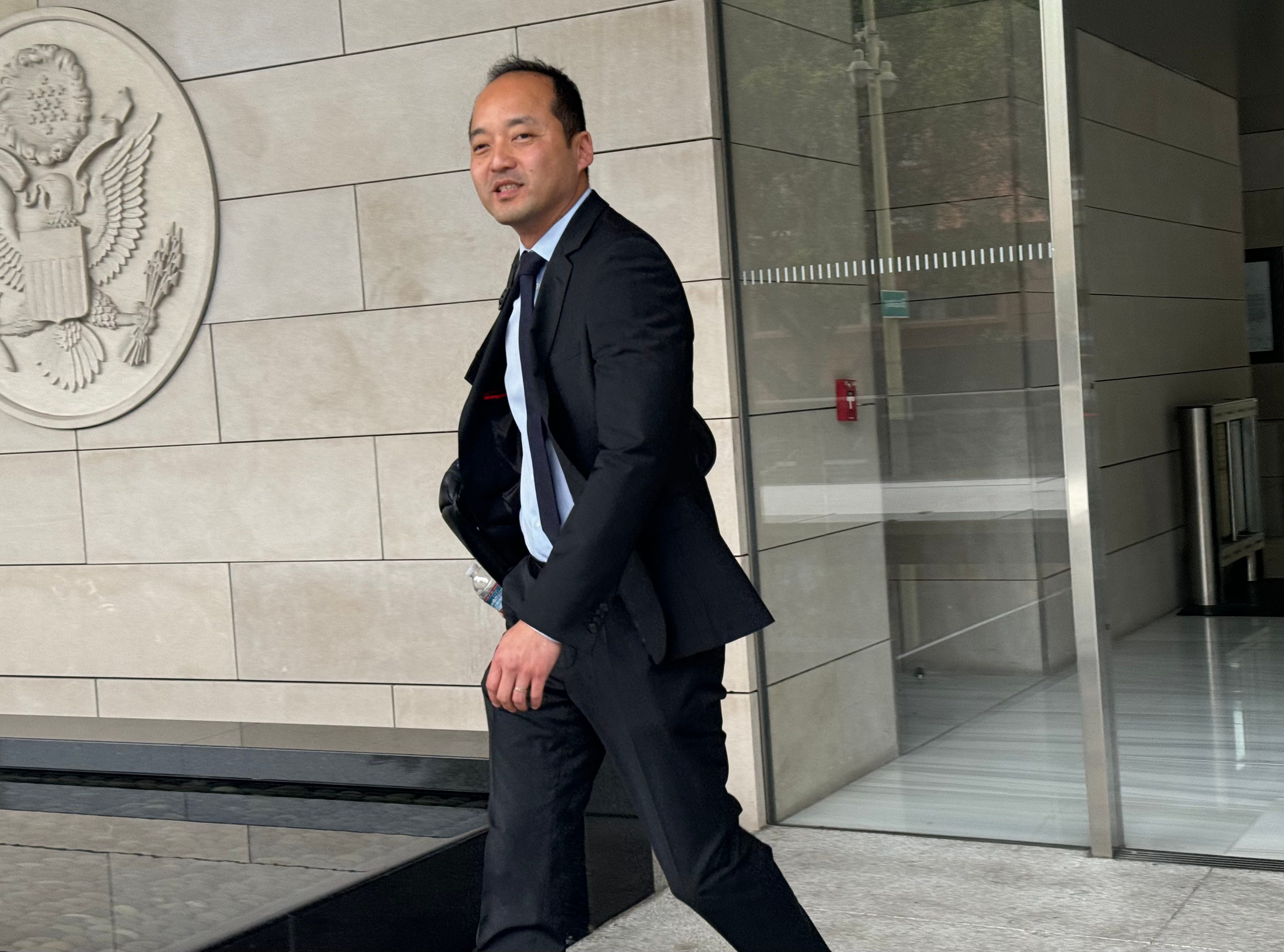
Hanusz said in his March 12 opening statement that prosecutors are pushing a case of guilt by association when Chan shouldn’t be punished for accommodating real estate developers looking to build in Los Angeles.
“There was no quid pro quo in this case with Ray Chan,” Hanusz said. Meanwhile, Huizar’s quid pro quo was “clear as day.”
“The government got its man,” Hanusz said. But, “José Huizar’s crimes are José Huizar’s crimes. They’re not Ray Chan’s crimes.”
“The crimes that were committed by the government’s witnesses are their own. They’re not Ray Chan’s,” Hanusz said.
But Assistant U.S. Attorney Brian Faerstein that Chan “helped José Huizar extract hundreds of thousands of dollars in financial benefits” from developers.
“There was a reason the defendant did all of this for José Huizar: It helped the defendant get bribes for himself,” said Faerstein, who is prosecuting Chan with Assistant U.S. Attorneys Susan Har and Cassie Palmer.
The bribes for Huizar included $600,000 from Huang to settle a sexual harassment lawsuit filed by a former employee that Huizar feared would threaten his political career if allowed to fester. The bribes for Chan included money for Synergy, described by Faerstein as a “secret consulting business” with Chiang that Chan planned to use after he retired from the city “to continue doing what he had always done, getting bribes for public officials to help advance his clients’ projects.”
Chan also is accused of helping broker bribes that benefited Huizar’s high school alma mater. Huizar’s now-former wife, Richelle Rios, fundraised for the school, and Chan helped secure donations to the school’s annual gala from the development companies. He also played an instrumental role in fundraising for Rios’ plan to seek her husband’s City Council seat in 2020 to keep power in the family.
Rios’ brief candidacy, which ended after FBI agents raided her and Huizar’s home in 2018, is a key part of the racketeering conspiracy because of the bribes it generated for Huizar.
As a political consultant in Huizar’s inner circle, Goldman was at the center of Rios’ candidacy through a political action committee he formed to help Huizar circumvent candidate fundraising limits. A former chief of staff for two Los Angeles councilmembers in the 1990s and 2000, Goldman met Huizar when Huizar was a Los Angeles School Board member, and they developed a closer relationship after Goldman opened his “government boutique lobbying firm” Urban Solutions in 2004.
“Los Angeles can be a really difficult place to manage politically,” Goldman said, citing the weak mayor system that centralizes power with the City Council. Huizar controlled downtown development through both his City Council seat and his leadership role on the city’s influential Planning & Land Use Management Committee.
“With Jose, there was no in between. Either he liked you or he didn’t like you,” Goldman said, later describing Huizar as “lazy” and someone who “really didn’t like to work.”
Goldman said he charged his clients from “$5,000 a month to $18,000 a month.”
“And that increased as your access to Jose Huizar increased?” Faerstein asked.
“Yes,” Goldman answered.
Goldman spoke with an attorney before creating the PAC for Rios’ candidacy, and he testified he told Huizar the PAC had to support issues other than Rios’ candidacy. Jurors heard the men discuss their plans in a 2017 phone call that was covertly recorded by the FBI.
One donation Goldman secured for the PAC was $50,000 from the San Francisco company CP Employer, Inc., formerly known as Carmel Partners, through Neils Cotter, a senior vice president who paid the money to secure Huizar’s support for a company development and save his job.
Jurors saw texts between Huizar and Goldman in which Goldman asked about supporting texts and Huizar responded by asking if the company was donating money.
“I’m sure they will. However, as your friend, let’s talk about this in a different text,” Goldman replied. He testified last week that Huizar was “looking to tie a political contribution to an official act” and this was a “brazen” attempt put in writing.
“I thought it was inappropriate and potentially illegal,” Goldman answered. Still, he secured a $100,000 in donations from Carmel for Huizar, anyway, and he testified last week that he “deeply regrets it.”
CP Employer paid a $1.2 million fine in December 2020 as part of a non-prosecution agreement; Cotter was not prosecuted. Goldman pleaded guilty to honest services fraud and conspiracy to commit bribery.
“Did pleading guilty effectively end your lobbying career?” Faerstein asked in direct-exam last week.
“I felt it did,” Goldman answered.
‘I hope I can get leniency’
Along with his donation, Chan is connected to the PAC bribes through Chiang’s testimony about a conversation the men had with Huizar at a steakhouse in San Gabriel with Yuan, the Luxe hotel developer.
According to Chiang, Chan joined them for a smoke break outside the restaurant in which Yuan agreed to donate to the PAC.
In cross-examination, Hanusz asked Chiang, “The reality is that Mr. Chan didn’t join you during that smoke break, did he?”
“He joined us during that smoke break,” Chiang said.
As the federal investigation grew, Chiang said Chan was “calling me and contacting me constantly” about trying to get his money out of Synergy. Chiang cut a cashier’s check for him but decided not to give it to him after speaking with an attorney. Chiang signed a cooperative plea agreement in May 2020, two months before Chan was charged.
“You’ve done this in the hope that the government will give you a favorable sentencing recommendation?” Hanusz asked.
“Yes, I hope I can get leniency,” Chiang answered.
“The way to do it is keep these prosecutors happy, isn’t it?” Hanusz asked.
“I’m not here to keep anybody happy. I’m just here to tell the truth,” Chiang answered.
Hanusz took a similar approach to testimony about Chan’s supposed knowledge of Huizar’s frequent trips to Las Vegas that Huang funded as a bribery effort to support the LA Grand Hotel project.
The key connection between Chan and the trips, which included big money gambling and expensive prostitutes, comes through the testimony of Esparza, who said Chan knew of the trips and asked him after one if Huang was taking good care of them. Esparza said he responded, “he’s given me some chips,” and Chan replied, “Good, good.”
In cross, Hanusz emphasized that Esparza didn’t mention the alleged conversation with Chan until February 2023, “years after Mr. Chan was charged. Years after you start cooperating with the government.”
“In none of the previous 16 interviews do you bother mentioning this fact,” Hanusz said.
Chan never joined Huizar or Huang in Las Vegas, and his lawyers tried to eliminate any mention of the trips from trial.
“These trips – and their salacious details – are irrelevant and unnecessarily prejudicial to the case against Chan (who did not attend), and should be excluded as a result. They do not further any fact of consequence and will only serve to inflame the jury’s sensibilities,” according to a Feb. 9 motion.
Prosecutors said they had to prove all aspects of the bribery scheme between Huizar and Huang because Chan is charged with aiding and abetting it.
“The Vegas trips (and everything they entailed) were an integral part of that scheme and the government further expects to present evidence that defendant played a crucial role in aiding and abetting that scheme, including by facilitating and encouraging the Vegas trips,” they said.
Judge Walter agreed, so Hanusz told jurors in his opening statement: “You’re going to hear about wild nights out. You’re going to hear about crazy expensive bottles of wine and champagne. … What you won't hear and what the government neglected to tell you is that Ray Chan never went on a single trip to Vegas.”
‘You’re not going to have 3 1/2 hours’
This trial included testimony I covered during the first trial, including testimony from Esparza, Huizar’s ex-wife and former City Planning Commission President David Ambroz.
Chan is charged with five counts of aiding and abetting honest services wire fraud, two counts of honest services wire fraud, one count of false statements and two counts of aiding and abetting bribery concerning programs receiving federal funds. Here is the joint proposed verdict form.
Prosecutors wanted to include a “trial indictment” that would basically be a narrative of the case, but Judge Walter rejected it on Friday morning. He said he was “shocked” by its length and that prosecutors “want to make revisions in the trial indictment from the original indictment.”
“At the last minute to drop a 93-page trial indictment on counsel as well as the court is something that I don’t think is appropriate,” the judge said. He also said he didn’t think it would help the jury.
Walter, a 2002 George W. Bush appointee who is taking senior status soon, also rejected prosecutors’ plans for a 3 1/2 hour closing argument and rebuttal as “just way too long.”
“You’re not going to have 3 1/2 hours to argue this case. So you better go back to the drawing board and carve it up,” the judge said, adding they can “do it in under three” and “I would hope that you'd be able to do it less than that.”
Walter also pointed out how detail oriented prosecuted are with exams that take witnesses “through this minutia that has nothing to do with the issue or the point that’s important in the case.”
“You just keep going over and over and over the same stuff, and you lose the jury,” he said.
Jurors could begin deliberating tomorrow or they could go home after closings and begin on Wednesday. I will write an article on the verdict; stay tuned.
Meanwhile, I discussed the raids on Diddy’s properties on LiveNOW from Fox last night:
Thank you for supporting my independent legal affairs journalism. Your paid subscriptions make my work possible. If you’re not already a paid subscriber, please consider purchasing a subscription through Substack. You also can support me through my merchandise store. Thank you!