
My take on the $6M jury verdict against Meta and YouTube in the social media addiction trial

“Especially as a reporter in L.A., when you spend a lot of time covering celebrity trials, you spend a lot of time around lawyers. I told someone recently, if you want to be reminded that there are still real normal people in this world, go to jury selection. Look at all the people who come in for juries.”
A jury in Los Angeles on Wednesday said Meta and YouTube should pay $6 million for negligently designing Instagram and YouTube and failing to warn of its potential harm.
The plaintiff is a 20-year-old woman identified in court by the pseudonym Kaley. She began using YouTube when she was 6 and Instagram when was 9, and she claimed their intentionally addictive design harmed her mentally, including giving her social anxiety and depression.
The jury of 12 deliberated eight days and into the ninth day before awarding $3 million in compensatory and saying Meta shared 70 percent of the blame and YouTube 30 percent. They said the companies acted with fraud and malice, which meant they then had to determine what if any in punitive damages to impose.
They heard about an hour of argument from attorneys about punitive damages, then awarded $3 million in punitive damages, with Meta to pay $2.1 million and YouTube to pay $900,000.
Two female jurors disagreed with every aspect of the verdict. Another juror disagreed with the damages award. None spoke to reporters, but their tones during polling indicated they vehemently disagree.
Two jurors — one was the jury foreman — spoke to reporters in the courthouse hallway after the verdict. One, a woman, said Mark Zuckerberg’s testimony “was not, it was — he changed it, and that didn't sit well with us.”
“He’s the guru, so to speak, and he should have really, really known what he was going to say out to us jurors, before he even said anything," the juror said of Zuckerberg.
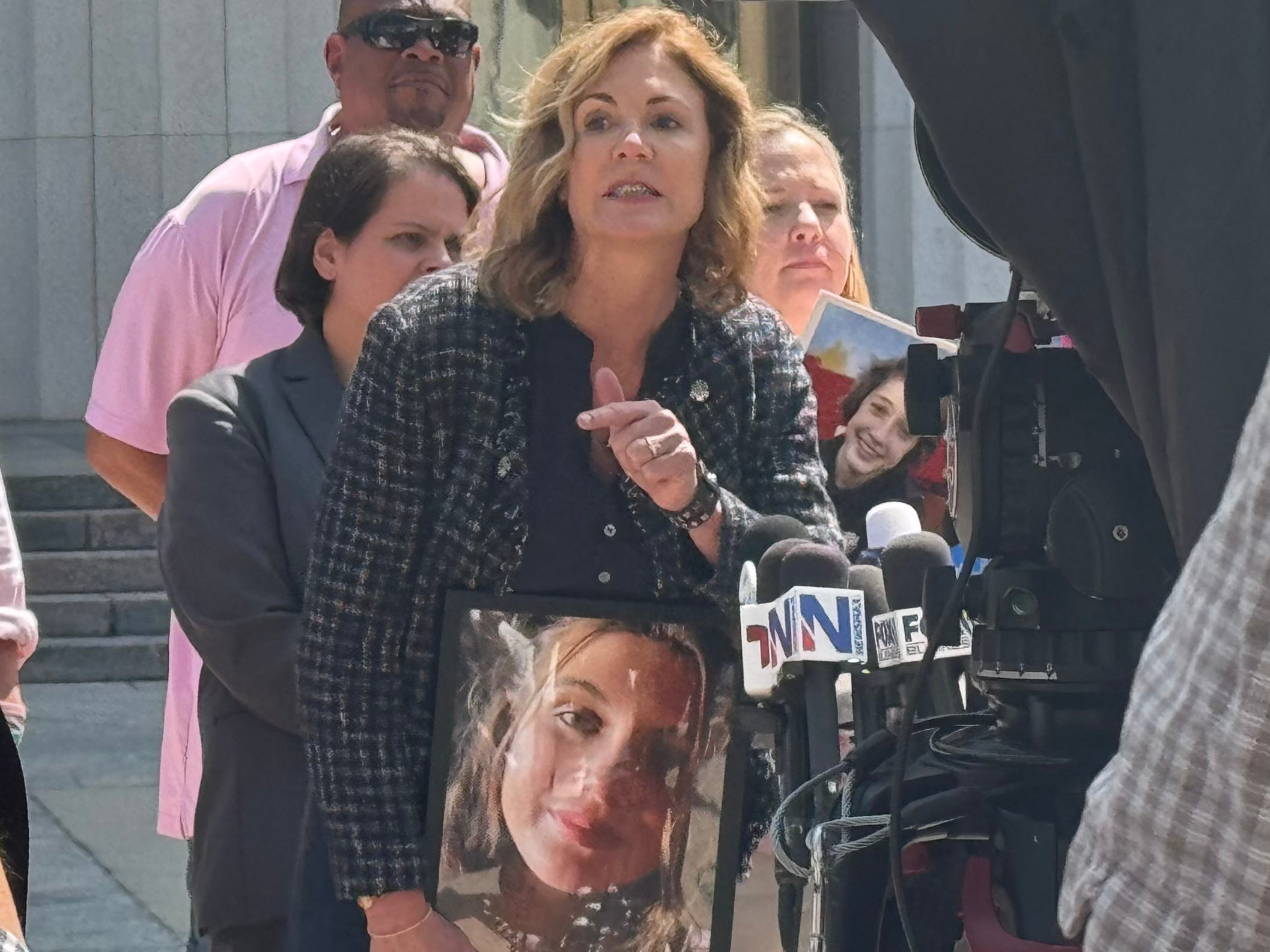
Parents of children who died because of social media related issues like choking games and sexual exploitation spoke outside the courthouse after the liability verdict.
“We’re all out of words to express what we feel,” said Julianna Arnold, whose 17-year-old daughter, Coco, died from a fentanyl overdose after buying a pill from someone she met through Instagram.
“Being in that courtroom and hearing those answers from the jury … [was] a complete validation of what we’ve been screaming on the top of roofs about for years. This was a conscious decision that they made. It was not an accident. The parents are not to blame, that’s for sure,” Arnold said.
Arnold said their advocacy “is is not over.”
“We know this is a long game. We’re headed to D.C. with the evidence we have in hand and this verdict, and we’re demanding safety protections and legislation to keep kids safe online,” she said. “We don’t want any more hearings. We don’t want any more loopholes in these bills. We don’t want any more of them shielding big tech. Enough is enough. We want them to do their jobs and keep American families safe.”
Plaintiff's attorney Mark Lanier told reporters that in bellwether trials such as this one, “It usually takes the plaintiffs three or four times to figure out how to win these cases. The plaintiffs are supposed to lose the first three or four.”
“We won. And so that’s provocative in what it says to everyone,” said Lanier, who’s based in Houston and is one of the most successful mass torts trial lawyers in the United States.
He said Kaley “feels like she was vindicated because she knows that what happened to her has happened to a host of countless people in her generation.”
One juror told us they “looked at what the average person would make times the rest of the life 40 years” when deciding the $3 million in compensatory.
The foreman said the issues “we were having was really just going through all the evidence. We wanted to make sure we took our time really thorough, going through each and every witness. What is the evidence provided in both directions, and ultimately, where did that lead to.”
The woman said they “all got along very well, even with individuals that didn’t agree with our decision, majority of our decision and we respected that.”
“We were hoping there’d be a trust or something to where this money could go and then little portions. ... We wanted them to feel it. We wanted them to realize that this was not acceptable,” the woman said.
“We also wanted to follow the law and how it was presented to us,” the foreman said.
Meta spokesman Andy Stone posted a statement on X that said the company will appeal.
“We respectfully disagree with the verdict and will appeal. Teen mental health is profoundly complex and cannot be linked to a single app. We will continue to defend ourselves vigorously as every case is different, and we remain confident in our record of protecting teens online.”
The verdict followed a jury in New Mexico on Wednesday imposing a $375 million penalty on Meta for enabling the sexual exploitation of children.
Speaking to reporters on Wednesday, Lanier differentiated his case from that case.
“Ours is different, not only in who the plaintiff — we have an individual — but the root of ours is social media addiction, and that’s very different than this exploitation that’s happening on the platforms,” Lanier said.
“We weren’t even allowed to get into content, so we didn’t talk about any of the potential grooming or any of the potential sexploitation issues that are built into the platforms, because that’s content based. We only talked about the features and whether or not the platforms are addictive, and that’s a whole different arena. It’s apples and oranges from New Mexico,” he said.
Meta’s defense team is from Covington & Burling LLP.
In his argument against punitive damages, partner Paul Schmidt reminded jurors that Meta’s “fiercest critic,” former Facebook employee Brian Boland, agreed in his trial testimony that Meta “is not intentionally trying to do wrong.”
YouTube’s defense team is from Wilson Sonsini Goodrich & Rosati. Partner Luis Li emphasized in his argument that the company has and continues to implement safety precautions for children
“YouTube has, from the beginning, gone and tried to make its product better and better and better,” Li said.
He told the jury, “Even though I wish that they turned out differently, I want to tell you I respect your word and I respect each and every one of you care and work.”
Lanier emphasized the companies’ huge wealth and told jurors, “I just ask you to please remember what these companies are, because you've got to talk to Meta in Meta money.”
“I promise you waiting on you will be Adam Mosseri, Mark Zuckerberg and a number of others, and their cell phones are turned on because they want to know,” Lanier said.
He didn’t mention that Los Angeles County Superior Court Judge Carolyn Kuhl allowed corporate representatives and trial team members to watch the trial remotely from an online stream not available to the public, so Mosseri and Zuckerberg may have watched the verdict publishing live.
Previous coverage:


Thank you for supporting my independent legal affairs journalism. Your paid subscriptions make my work possible. If you’re not already a paid subscriber, please consider purchasing a subscription through Substack. You also can support me through my merchandise store and by watching my YouTube channel. Also, please follow me on Facebook and Instagram as I grow my Meta presence. Thank you!