
Jury orders NFL pay $4.7 billion for Sunday Ticket antitrust price-fixing conspiracy
The verdict ends a four-week trial over a class action that brought NFL Commissioner Roger Goodell and Dallas Cowboys owner Jerry Jones to the witness stand.

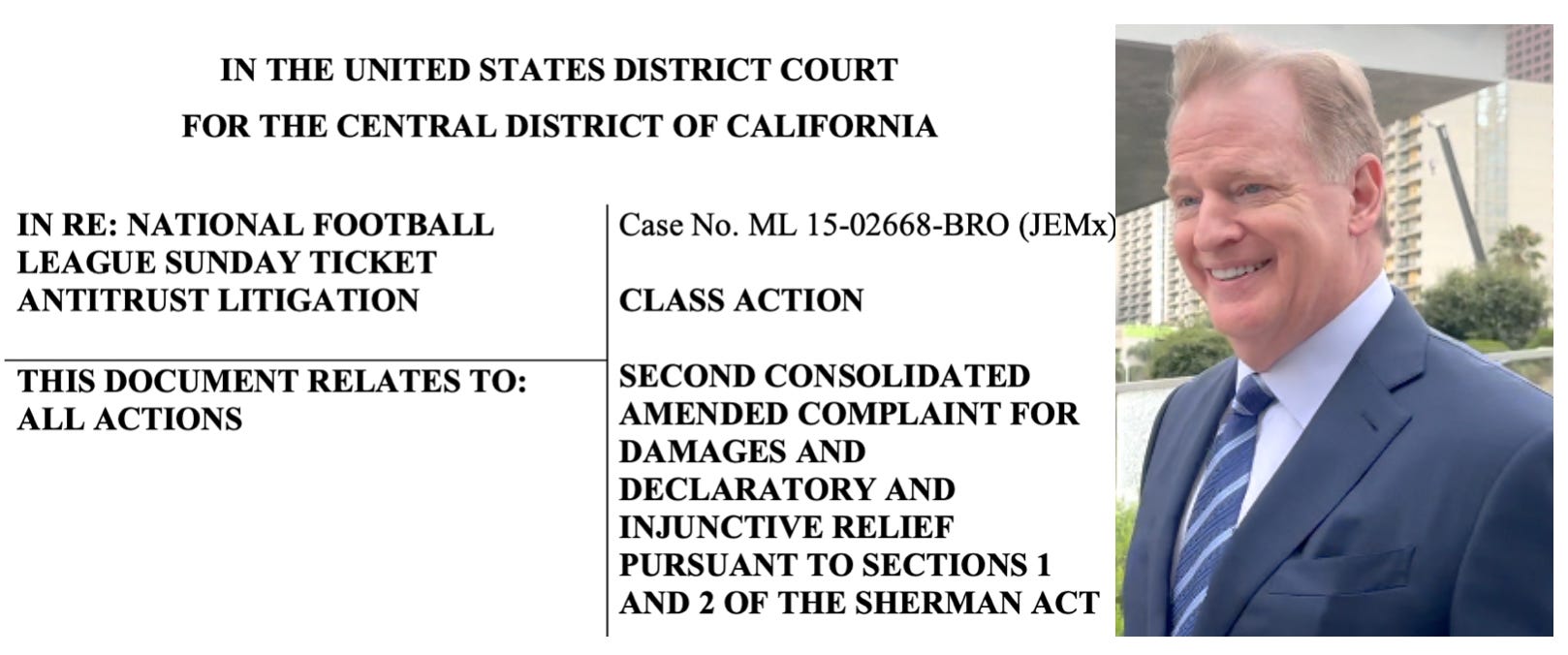
Update: The exact damages are $96,928,272.90 and $4,610,331,671.74. Here is the full verdict form.
A California federal jury on Thursday ordered the National Football League to pay nearly $5 billion in damages for a years-long conspiracy to fix the price of DirectTV’s Sunday Ticket package, ending a four-week antitrust trial that included internal NFL documents as key evidence.
The eight jurors awarded $96 million in damages to the commercial class, which includes 48,000 businesses that subscribed to Sunday Ticket between 2011 and 2023. Jurors awarded $4.6 billion to the residential class, which covers 2.4 million subscribers from 2011 to 2023. Class members are automatically included; they had until October 2023 to opt out.
The final damages total could triple to nearly $15 billion under the treble damages rule often applied in antitrust cases.
“It’s a great verdict for the consumers of America,” lead plaintiffs’ attorney Bill Carmody of Susman Godfrey LLP told reporters. Carmody said the jury upheld antitrust laws “despite the star power of the defendants.”
Carmody called the class action, which was filed in 2015, “the biggest case in America” during his closing argument on Wednesday. The Susman Godfrey lawyers worked with attorneys from Langer Grogan & Diver P.C. in Philadelphia, which filed the first lawsuit.
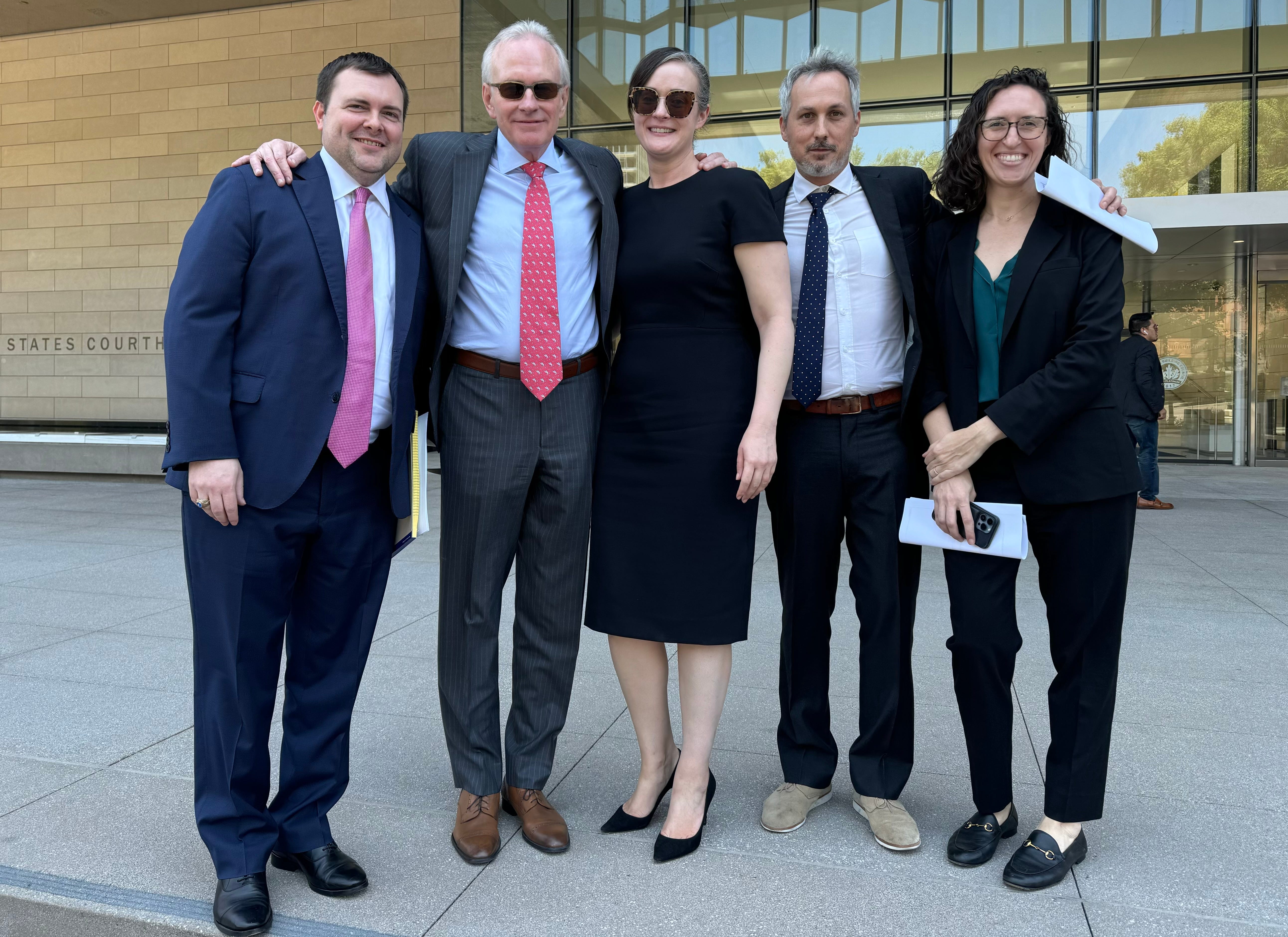
Carmody, who’s based in New York City, congratulated his team in the courthouse hallway outside the verdict. Susman Godfrey partner Amanda Bonn of Los Angeles wept.
NFL Sunday Ticket, which gives access to all NFL games instead of only those broadcast on Fox and CBS, currently is available through YouTube TV. Neither Google nor YouTube are defendants in this case, but plaintiffs’ attorneys implicated them in trial, telling jurors the price-fixing conspiracy continues to this day. They also said CBS and Fox are part of the conspiracy because each wants to protect the viewership of its free football broadcasts and not lose viewers to Sunday Ticket.
NFL spokesman Alex Riethmiller said in an email that the league “is disappointed with the jury’s verdict today in the NFL Sunday Ticket class action lawsuit.” He said the NFL’s media distribution strategy “is by far the most fan friendly distribution model in all of sports and entertainment,” and the league “will certainly contest this decision.”
“We believe that the class action claims in this case are baseless and without merit,” according to the email. “We thank the jury for their time and service and for the guidance and oversight from Judge [Philip S.] Gutierrez throughout the trial.”
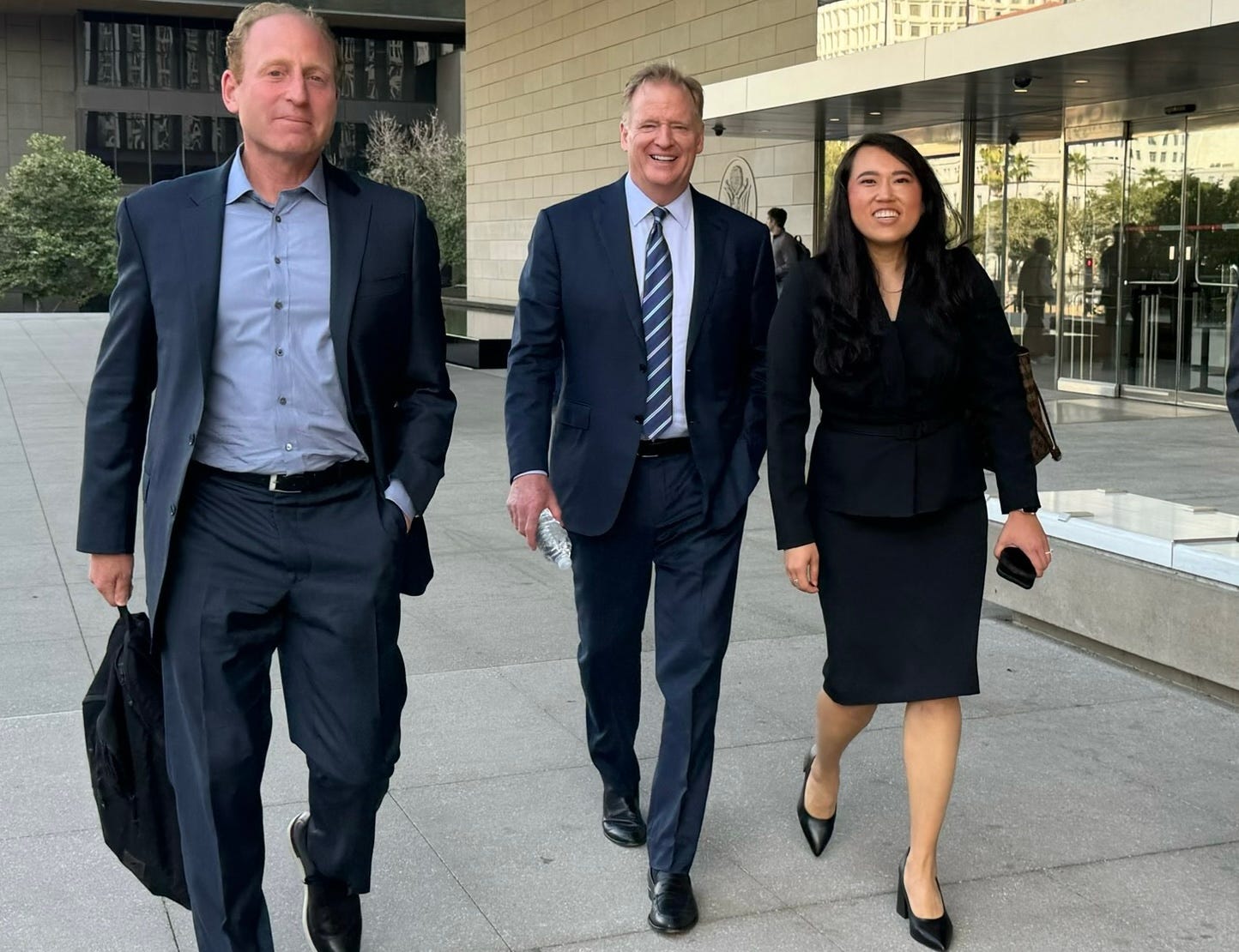
The NFL’s lawyers, led by Beth Wilkinson of Wilkinson Stekloff LLP in Washington, D.C., left the courthouse without speaking to reporters.
So did the jurors, who requested damages-related information in two questions submitted shortly before they reached the verdict about 1 p.m., following about 5 1/2 hours of deliberation over two days. The first asked for the number of Sunday Ticket subscribers for each year of the class period and the exact subscription price. The second asked for the damages experts’ full reports. None of the information was admitted into evidence, so jurors didn’t get any of it.
After the first question, Judge Gutierrez remarked that the astrophysicist juror must be trying to come up with his own damages model.
The nearly $4.8 billion awarded is less than the $7 billion that plaintiffs expert Daniel Rascher, an economics professor at the University of San Francisco, testified the NFL owed under a theory that considered the money subscribers could have saved had the 32 teams licensed their broadcast rights individually instead of the league controlling everything.
Another damages theory of about $3.5 billion was based on what consumers could have saved simply if Sunday Ticket was available for cheaper through competition.
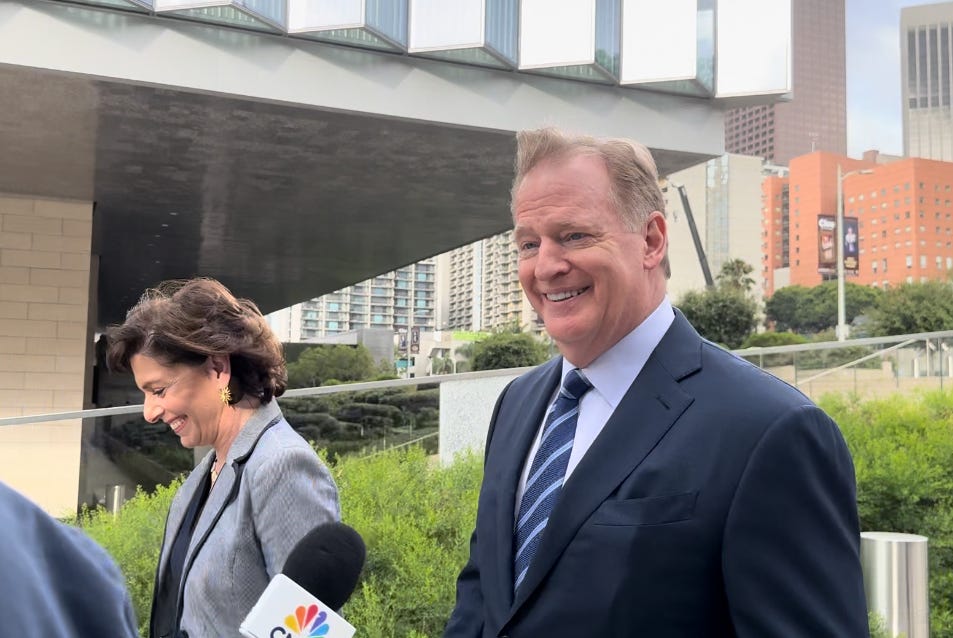
NFL executives, including Commissioner Roger Goodell, testified that DirectTV set the price of Sunday Ticket, and the NFL, CBS and Fox had no input. Carmody called it “the company line.”
But the plaintiffs’ evidence included a May 1, 2009, email from Sean McManus, then the chairman of CBS Sports, to now-former NFL Network CEO Steve Bornstein — then CBS CEO Les Moonves was c.c.’d — in which McNamus said, “We will need clarification on the premium pricing for NFL Sunday Ticket.”
“The concept here has always been that these packages are sold at a premium, thereby limiting distribution,” McManus wrote.
McManus continued, “If they are offered as non-premium, or even free packages, we're concerned that distribution may grow considerably.”
“This is what CBS is reminding the NFL,” Carmody said. And in response, the NFL didn’t say “Hey, what are you talking about? We don’t control pricing.’”
Instead, Bornstein forwarded the email to NFL executives Hans Schroeder and Brian Rolapp without comment.
Carmody began his closing by telling jurors “ask yourself an important question: What is competition?”
“On the field, there are no side agreements,” and the networks don’t get to weigh in.
But CBS and Fox pay the NFL billions of dollars to broadcast games, and “with that price came protection.” The protection, Carmody said, involved keeping the price of DirectTV’s all-game NFL Sunday Ticket package expensive to limit the number of subscribers and maintain CBS and Fox viewership.
“The NFL knew 33 million of its most loyal fans were underserved” because they were “priced out of NFL Sunday Ticket,” Carmody said. The league also knew “everyone subscribing to NFL Sunday Ticket was being price gouged, but they didn’t care.”
“This case transcends football. This case matters,” Carmody said, adding it’s about “telling the 32 team owners, ‘Even you can’t ignore the antitrust laws. Even you can’t hide the truth and think you’re going to get away with it.’”
In 2012, Direct TV dropped the list price of Sunday Ticket to about $200 from $335. Subscribers went up, Carmody said, but DirectTV rose the price the next year, and it didn’t drop again. Carmody then showed jurors a document from July 2015 that said DirectTV’s Sunday Ticket price is “subject to NFL approval.”
In a video deposition, plaintiff’s lawyers asked DirectTV’s senior director of revenue, James Dyckes, about an email in which he wrote he was in a difficult spot with “the two entities” required to lower the Sunday Ticket price. The first entity is DirectTV’s finance department.
But Dyckes “had a hard time” and “couldn’t say who the other one was,” Carmody said.
“Is that believable, or is that the company line?” Carmody asked.
Another NFL document discussed the 2016 pricing for Sunday Ticket and said DirectTV had submitted “recommended pricing.”
Carmody also highlighted Goodell’s repeated testimony that he never read the contacts he signed authorizing DirectTV’s Sunday Ticket distribution.
“Nobody came in here prepared to argue on the merits of what really happened here,” Carmody said.
In her closing, Wilkinson questioned Carmody’s use of the term “company line.” Does he not “want to tell you that he thinks they’re all lying?” and that “every executive came in here and lied?”
She said the plaintiffs’ case depended on “cherry-picked” “snippets” of documents not supported by witness testimony. She said Sunday Ticket’s steadily increasing price is a standard part of life.
“I don’t know if you've been to the grocery store recently, but usually the price of things go up every year. They don’t go down. There may be discounts,” Wilkinson said.
Wilkinson also emphasized that many subscribers paid much less than DirectTV’s list price for Sunday Ticket.
“That’s either a really crappy conspiracy, or there wasn’t one. There wasn’t one,” she said.
Rascher’s $7 billion damages figure was based on a “but for” economics theory modeled on college football’s approach to individual team licensing.
Under antitrust law, if a plaintiff establishes a restraint harms the competitive market, Carmody said, the burden shifts to a defendant to show that the behavior has pro-competitive effects.
“They have to show that the high prices and limited viewership that they made sure happened with Sunday Ticket somehow produced a big pro-competitive advantage,” Carmody told the jury.
Wilkinson, a prominent national trial attorney who prosecuted Oklahoma City bomber Timothy McVeigh, argued there was no violation, and that the pooling of licensing rights helps competitiveness because it splits all TV revenue equally between the 32 teams.
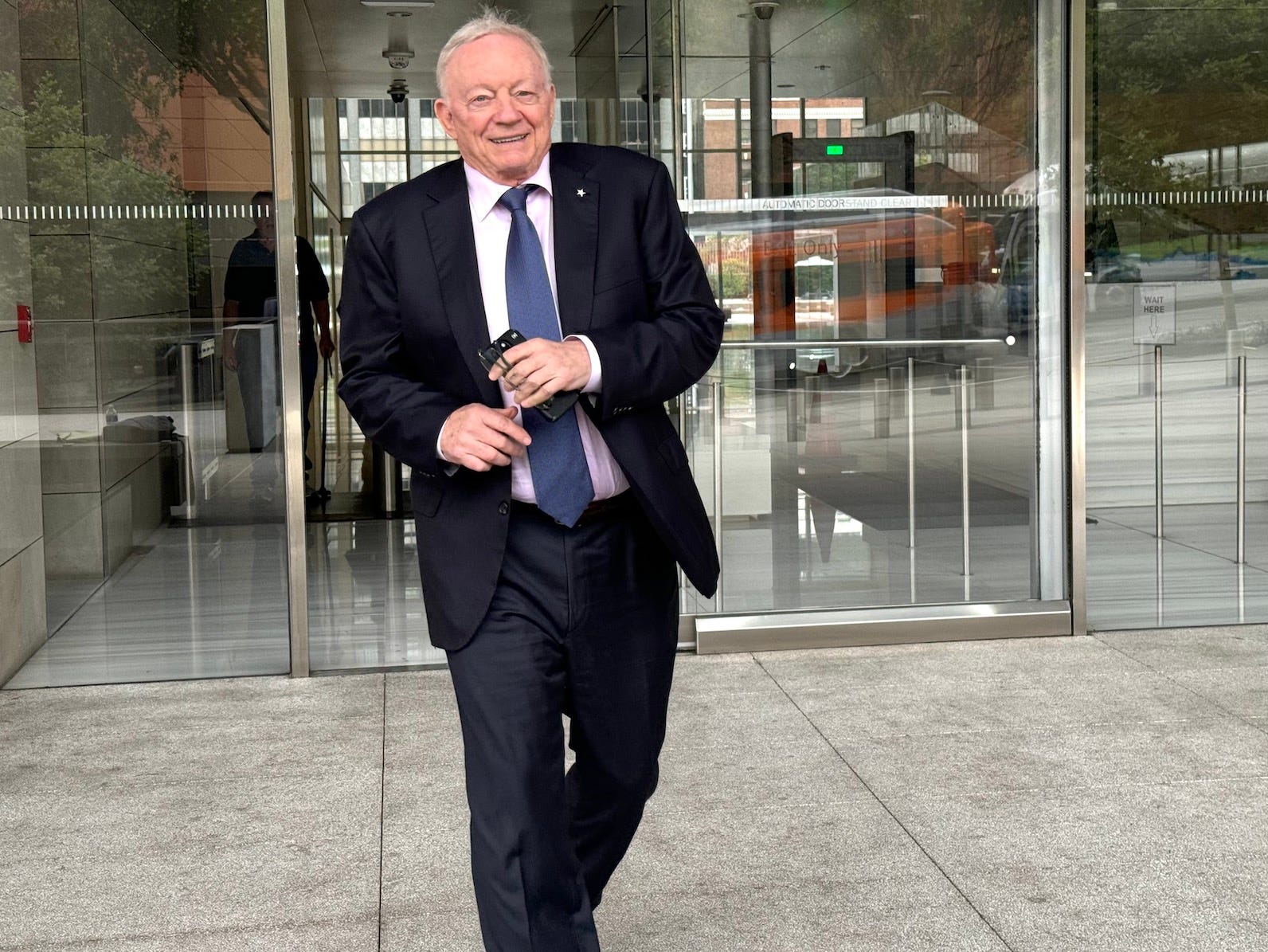
Along with Goodell and McManus, defense witnesses included multibillionaire and Dallas Cowboys owner Jerry Jones, who testified he believes the equal sharing of TV revenue helps teams evenly compete.
“I haven’t won a Super Bowl in 25 years or more. And I would be embarrassed to tell you what I do to get to win a Super Bowl,” Jones said. But because of the “equity” within the NFL, “you have to earn it and scrap for it.”
Much of Jones’ cross focused on a lawsuit he filed after the NFL sued in 1995 that sought the right for the Cowboys to license team merchandise that called the league a “price-fixing cartel.” Defense lawyers sought a supplemental instruction that would have told the jury “the allegations in that lawsuit are not relevant to this case and you should not consider them for any purpose,” but Gutierrez didn’t agree to it.
Early in the trial, the Susman Godfrey team played video from the deposition of New England Patriots owner Robert Kraft, who seemed to connect the number of Sunday Ticket subscribers to the NFL’s desire “to keep this as a premium product that doesn't devalue over the air, TV product.”
“We’re not looking to get multitudes of people,” said Kraft, who did not appear at the courthouse.
Asked if he’d considered a cap on subscribers, Kraft said he’d never thought of it, “but maybe.”
“I don’t know,” Kraft said in the video.
An attorney asked Kraft about Apple Inc.’s offer to host Sunday Ticket, and if he considered drawing more subscribers to be a good thing. Kraft said it depends on where they’re located.
“If it’s in the U.S., my personal opinion is it’s too many,” Kraft said.
The class representatives include a New Orleans Saints fan who subscribed to Sunday Ticket while living in California and a New York City bar owner who hosts Chicago Bears games and had to subscribe to do so.
Judge Gutierrez still must rule on a motion for judgment Wilkinson filed under Rule 50 of the Federal Rules of Civil Procedure.
The motion and opposition were filed last week, but Gutierrez is allowing supplemental briefing. Wilkinson’s is due on July 3, and the plaintiffs’ is due July 17. A reply is due July 24, and a hearing is scheduled July 31.
Previous article:
Roger Goodell and Jerry Jones testify in NFL antitrust trial at LA federal courthouse

National Football League Commissioner Roger Goodell and Dallas Cowboys owner Jerry Jones testified Monday in an antitrust trial in Los Angeles federal court over the NFL’s DirectTV Sunday Tic…
Thank you for supporting my independent legal affairs journalism. Your paid subscriptions make my work possible. If you’re not already a paid subscriber, please consider purchasing a subscription through Substack. You also can support me through Venmo (MeghannCuniff), CashApp ($MeghannCuniff) and Zelle (meghanncuniff@gmail.com). Thank you!