
With Trump trial looming, 2nd Circuit upholds Avenatti's convictions for defrauding Stormy
The nine-page order comes three weeks before the former president is to stand trial for falsifying business records related to hush-money payments to the adult film star.


Calling the evidence “overwhelming,” a federal appellate court on Wednesday affirmed imprisoned California lawyer Michael Avenatti’s two felony convictions for defrauding adult film star Stormy Daniels of book contract money while representing her in lawsuits against Donald Trump.
The order from the 2nd Circuit U.S. Court of Appeals rejects Avenatti’s argument that U.S. District Judge Jesse Furman’s instructions to deadlocked jurors wrongly pressured them to convict. It also rejects his argument that his identity theft conviction should be vacated because the U.S. Supreme Court last year vacated one in another case after determining identity theft wasn’t key to the crime.
“Here, by contrast, identity theft was an essential part of Avenatti’s criminal conduct,” according to the order, which also upholds Avenatti’s four-year prison sentence.
The nine-page decision is a summary order instead of a published opinion, which means it does not set legal precedent. It was issued less than three weeks before Trump is to go on trial in New York state court on 34 criminal charges for his alleged falsification of business records over payments to Daniels and former Playboy model Karen McDougal shortly before the 2016 presidential election that were meant to prevent her from discussing their sexual encounters.
Daniels’ lawyer, Clark Brewster of Tulsa, Oklahoma, told Legal Affairs and Trials the ruling “is one further step toward finality in holding Mr. Avenatti accountable for his criminal embezzlement from his former client.”
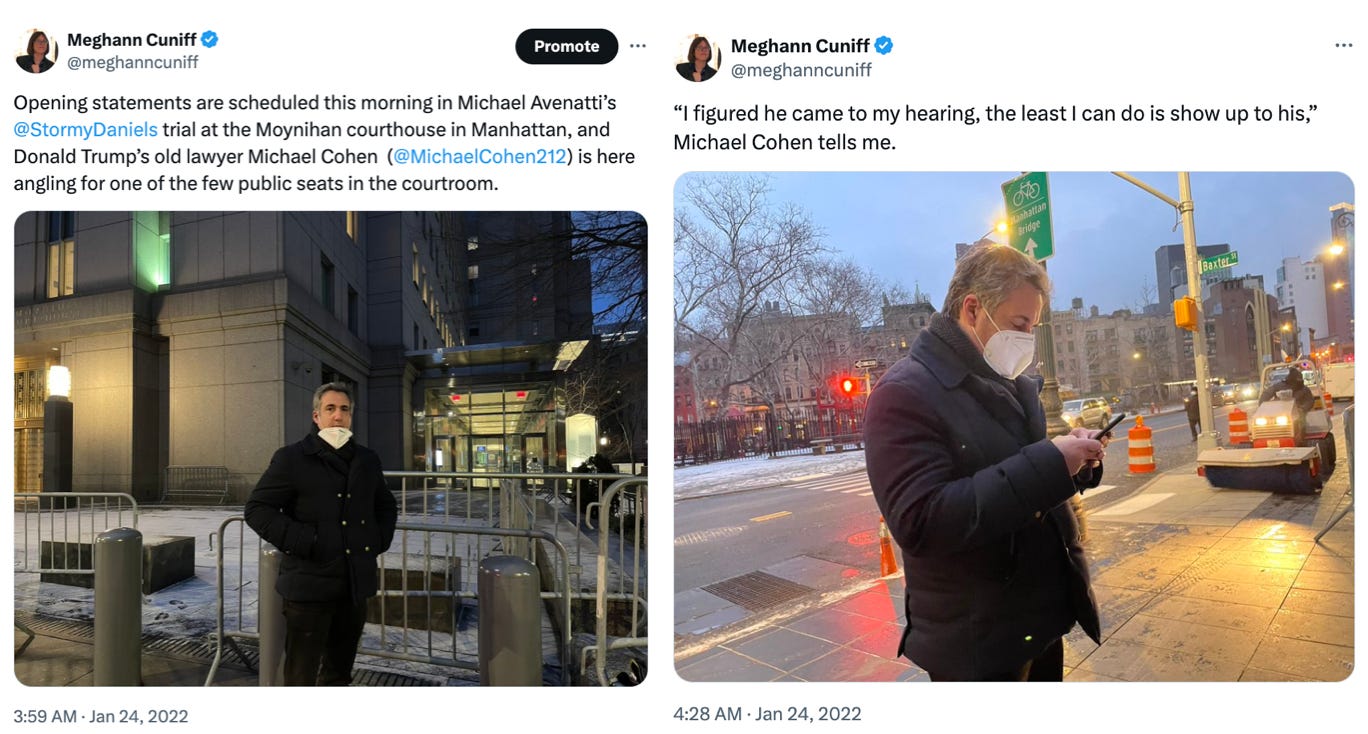
Avenatti’s crimes against Daniels did not relate to the payments from Trump, but the payments are the reason he met Daniels: He sued Trump on her behalf in 2018 to try to get her released from a nondisclosure agreement she signed with Trump’s personal attorney, Michael Cohen.
The agreement, struck 11 days before the 2016 presidential election, included Cohen paying Daniels $130,000, which is the payment at the heart of Cohen’s 2018 federal indictment and Trump’s New York state court charges. The money was to buy Daniels’ silence and prevent an interview with the National Enquirer.
At the time, Avenatti was deep in debt, his law firm was in bankruptcy and an Internal Revenue Service investigation was growing into unpaid taxes for his Tully’s Coffee venture. The IRS probe eventually became a criminal investigation that grew into a federal bankruptcy and wire fraud case that earned him a 14-year federal prison sentence, separate from his four-year sentence for the Daniels case.
Despite his mounting legal problems, Avenatti’s representation of Daniels in 2018 made him a social media star, cable news darling and, briefly, a possible contender for the Democratic presidential nomination. Luke Janklow, the literary agent who worked with Daniels on her Trump tell-all Full Disclosure, testified in Avenatti’s trial that he met Avenatti through CNN’s Anderson Cooper, whom Janklow has known since childhood.
Jurors in the Daniels trial saw a cache of messages between Janklow and Avenatti, including one in which Janklow told him: “You are not dependent on stormy. She was the foot you kicked down the door with.” Testimony revealed Avenatti at one point had a $2 million book deal with Janklow, but he only collected $475,000 and the book never happened. Janklow never said why: Judge Furman halted the questioning at the request of Avenatti’s federal defenders (he had not yet moved to represent himself).
Avenatti’s defrauding of Daniels related to payments for Full Disclosure, which he intercepted by using her signature plate on a document without her permission.
According to trial testimony, Avenatti spent Daniels’ second book payment of $148,750 on himself, then paid her a few weeks later on the same day he got a $250,000 loan from Los Angeles attorney Mark Geragos through the lawyer who introduced him to Daniels, Sean Macias of Glendale. Then when Avenatti received her next $148,750 payment, he stole that, too, and she to this day has never received it.
Daniels in October 2023 settled a lawsuit against Janklow, founder of Janklow & Nesbit and the son of the late book publishing powerbroker Morton Janklow. The settlement followed a judge granting Janklow’s motion to dismiss claims against Janklow personally. The order kept in place a breach of contract claim against his company.
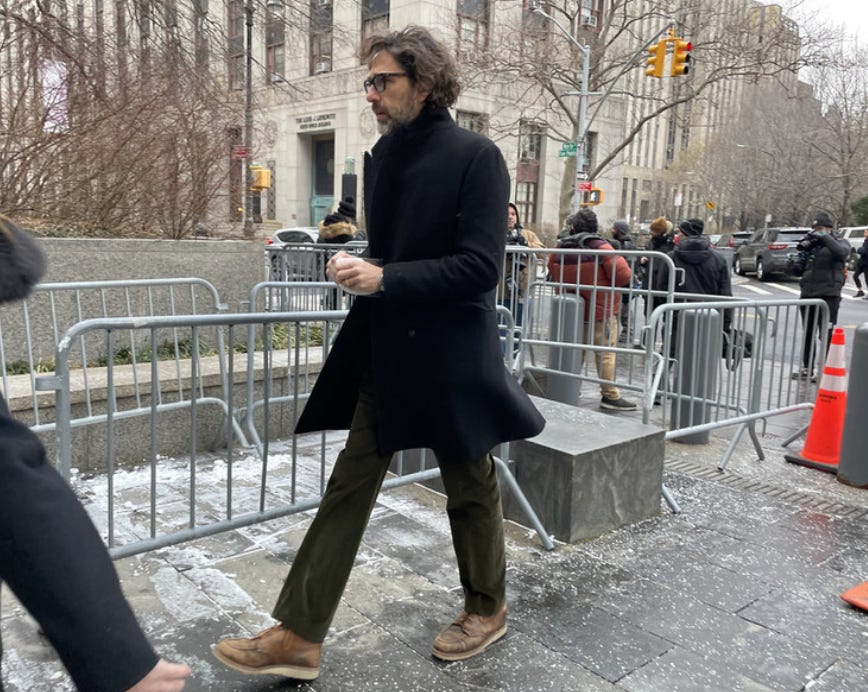
Janklow testified as a prosecution witness, and Wednesday’s ruling underscores his key defense against claims of personal wrongdoing because he wouldn’t send Avenatti the money for Daniels’ book without written permission from Daniels herself. Avenatti’s use of Daniels’ signature is the basis for his aggravated identity theft charge, which carried a mandatory two years in prison in addition to the sentence Judge Furman imposed for the wire fraud conviction.
Furman ordered Avenatti’s four-year sentence to be served partly concurrently with the 30-month sentence imposed by U.S. District Judge Paul Gardephe for extorting Nike. A separate 2nd Circuit panel upheld his convictions in sentence in that case last August.
Judges Steven J. Menashi, Eunice C. Lee and Sarah A. L. Merriam heard oral argument in the Daniels appeal on Jan. 5. Avenatti’s lawyer, Kendra L. Hutchinson of the Federal Defenders of New York, Inc., argued Furman errored in his jury instruction about the ethical duties of lawyers, but the 2nd Circuit judges said if he did error, it was harmless.
“The evidence against Avenatti was overwhelming,” according to Wednesday’s order.
The judges cited Avenatti’s method of routing money from Geragos’ loan to Daniels.
“He purchased a cashier’s check, for example, to make it appear to his client that money he had borrowed from a friend had been paid by his client’s publisher,” according to the order.
Avenatti also focused on the instructions Judge Furman read to jurors after they announced a deadlock four hours into deliberation, then later said a juror was refusing to deliberate. The instructions were Allen charges authorized under the 1896 U.S. Supreme Court decision in Allen v. United States that says a court can instruct deadlocked jurors to reexamine their views.
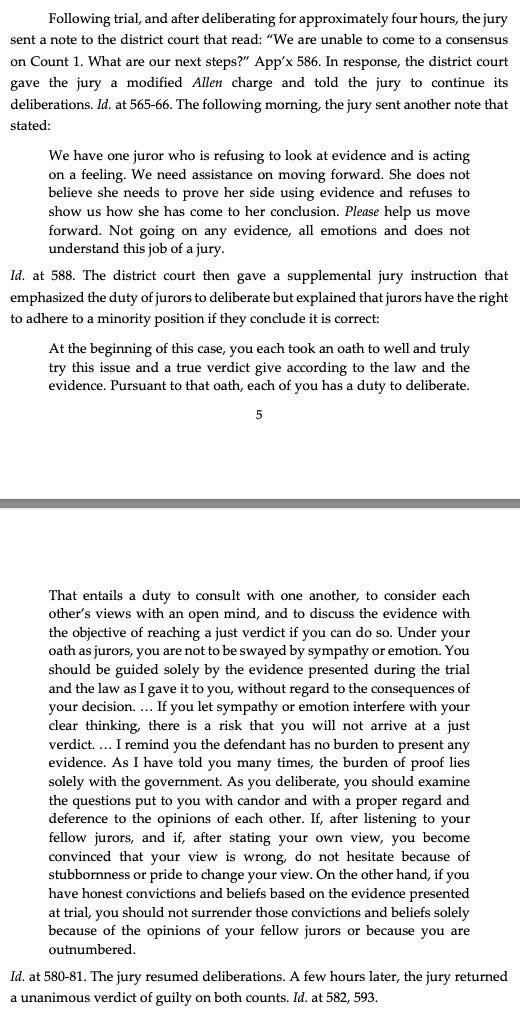
Avenatti’s opening brief said Furman’s instructions were “impermissibly coercive,” but Wednesday’s order said the language Furman used “resembles other jury instructions that we have judged permissible.”
“Nor was there anything improper, in these circumstances, about the district court’s decision to instruct the jury twice,” according to the order.
The order also says Furman didn’t error when, two months after sentencing, he approved a new restitution order requiring Avenatti to pay Daniels her $148,750 restitution before he pays Nike its restitution for the money the company spent on Big Law attorney fees.
On appeal, Avenatti argues that we should vacate the restitution order because it directs restitution payments to be paid in this case before the previous one.
“Because the government consulted with Avenatti prior to proposing the restitution order, and because Avenatti’s counsel ‘made a considered decision not to object,’ Avenatti has waived this objection,” according to the order, quoting a 2022 2nd Circuit decision.
Avenatti is incarcerated at the Terminal Island federal prison in San Pedro, near Los Angeles. His release date is listed as January 2036. Avenatti has not been disbarred in California, but he agreed to inactivate his license, and he was suspended in 2022 after his convictions.
Meanwhile, in the New York state case, Trump’s lawyers are arguing Daniels’ testimony would be “unduly prejudicial,” but prosecutors in their opposition said Daniels “has personal knowledge of evidence” regarding the payments that are the core issue in the case.
“There is absolutely no basis to exclude such indisputably probative evidence on the basis of rank speculation that Daniels will provide—and this Court will somehow allow—only improper testimony instead,” according to a brief filed Tuesday in Manhattan Supreme Court.
Judge Juan Manuel Merchan has not yet ruled on the motion. Trial is to begin on March 25.
The same brief opposes Trump’s bid to exclude testimony from Cohen, his former personal attorney who brokered the nondisclosure agreement with Daniels.
I also profiled Judge Furman for the Foward Jewish news publication in February 2022: Meet the Jewish judge who sent Michael Avenatti to jail
Court documents:
Dec. 16, 2022: Avenatti’s opening brief
March 17, 2023: Prosecutors’ reply
April 21, 2023: Avenatti’s reply
March 6, 2024: 2nd Circuit order
Previous article:
My article from April 2023 explains the Trump case’s connections to Los Angeles, a notable ruling by Los Angeles County Superior Court Judge Robert Broadbelt and explains the money Daniels owes Trump for attorney fees.
The Los Angeles connections to Donald Trump’s hush payment to porn star Stormy Daniels

UPDATE: Update: 9th Circuit Commissioner Lisa Fitzgerald issued her ruling today on Trump’s final fee request, ordering Daniels to pay …
Thank you for supporting my independent legal affairs journalism. Your paid subscriptions make my work possible. If you’re not already a paid subscriber, please consider purchasing a subscription through Substack. You also can support me through Venmo (MeghannCuniff), CashApp ($MeghannCuniff) and Zelle (meghanncuniff@gmail.com). Thank you!
Keep up the great reporting Meghann