


Rapper Tory Lanez’s lawyers want him released from jail into a residential drug treatment program when he’s sentenced next week for shooting Megan Thee Stallion, saying he will benefit from therapy for his alcoholism and traumatic childhood.
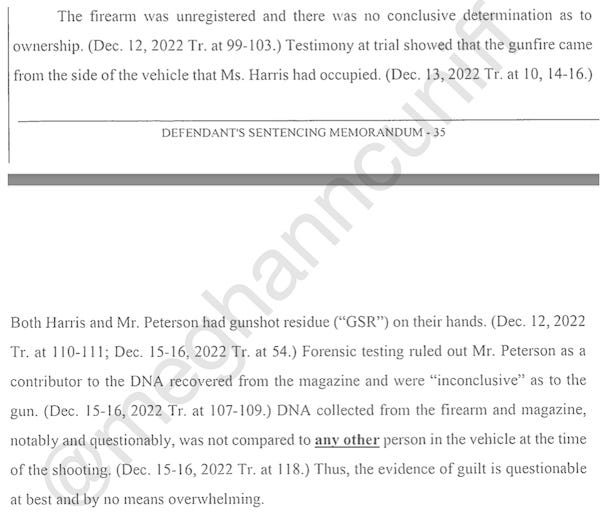
A 41-page memo filed Tuesday questions the quality of the investigation that concluded Lanez is the one who fired five rounds at Megan, injuring her feet, early July 12, 2020, in the Hollywood Hills. It says the evidence of Lanez’s guilt “is questionable at best and by no means overwhelming,” so Lanez’s “lack of remorse” can’t factor into his sentence.
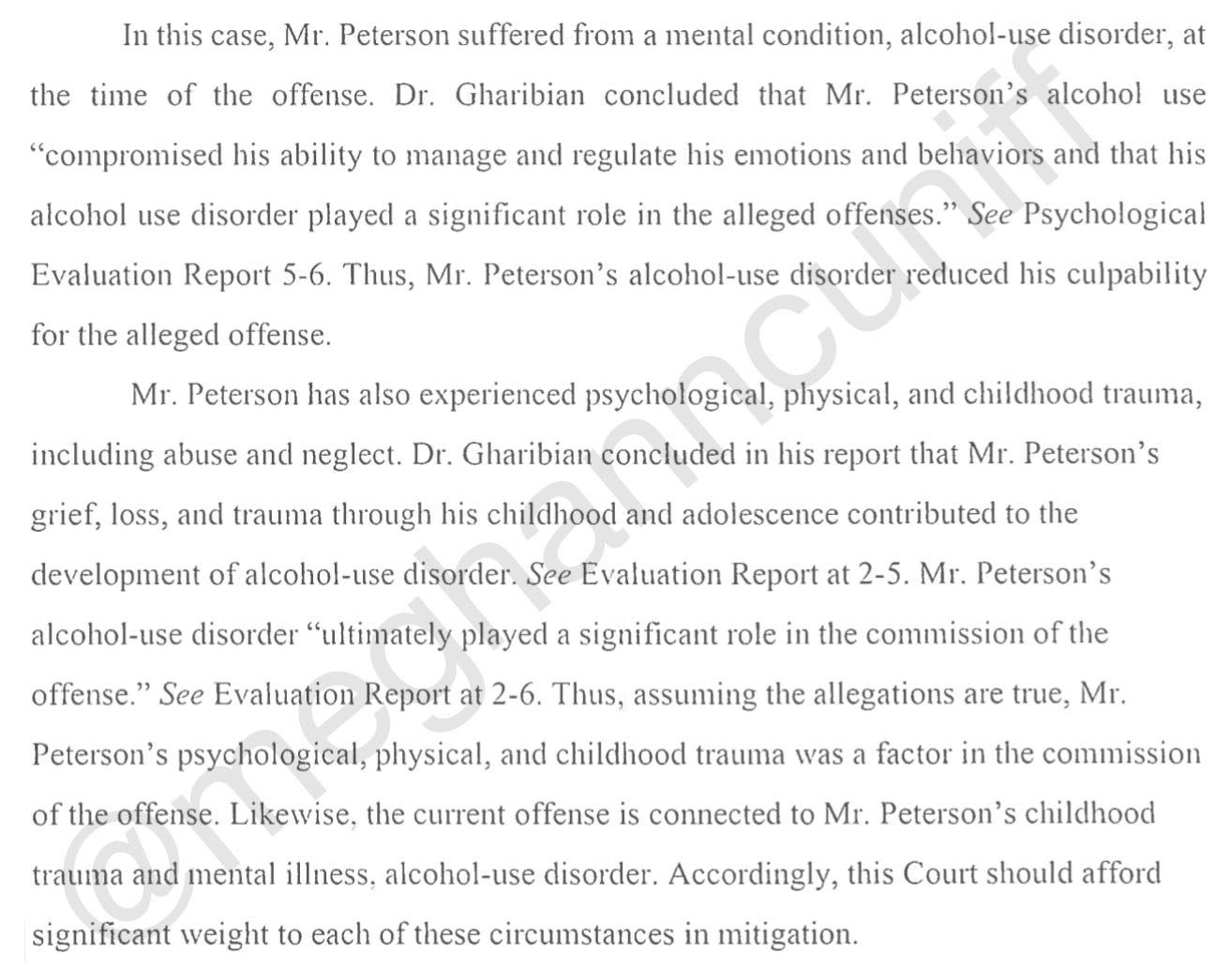
But, it says, “assuming the allegations are true, Mr. Peterson’s psychological, physical, and childhood trauma was a factor in the commission of the offense. Likewise, the current offense is connected to Mr. Peterson’s childhood trauma and mental illness, alcohol-use disorder,” referring to Lanez’s legal name, Daystar Peterson.
“Mr. Peterson’s alcohol-use disorder, although not amounting to a defense, reduced his culpability,” according to the memo from Lanez’s defense lawyers, Jose Baez of Miami, Florida, and Ed Welbourn of Newport Beach, California.
Lanez is scheduled to be sentenced at 10:30 a.m. on Monday before Los Angeles County Superior Court Judge David Herriford at the criminal courthouse in downtown Los Angeles.
Welbourn’s and Baez’s request for probation is a stark departure from the 13-year prison sentence requested by prosecutors, who cite the jailed rapper’s lack of acceptance of responsibility and his “campaign of misinformation” aimed at humiliating and re-traumatizing Megan.
“His online reach is worldwide (millions of followers plus casual observers) and the defendant’s statements embolden his followers so that they too have been complicit in re-traumatizing the victim,” prosecutors wrote in their memo. “He is responsible for the effect of his words and his actions.”
Welbourn and Baez say the 13-year recommendation contradicts Los Angeles County District Attorney George Gascón’s policies, which if followed would result in a recommended three-year prison sentence. They want Judge Herriford to sentence Lanez to three years instead of 13 if he won’t release him on probation.
They filed their memo with a confidential report from a psychologist who met with Lanez in jail last month and believes he’s amenable “to managing his risk for violence in the community with the support that will be available to him.” The report is not publicly available, but Lanez’s attorneys quote some of it in their memo, including the finding that Lanez’s alcoholism “compromised his ability to manage and regulate his emotions and behaviors and that his alcohol use disorder played a significant role in the alleged offenses.”
The memo says Lanez “presents a low risk for violent recidivism in the community.”
“Mr. Peterson has a history of prosocial conduct and behavior, including active involvement in charitable and community organizations serving underprivileged communities,” according to the memo.
The memo also cites Lanez’s solitary confinement and deprivation of recreation time, and it says imprisonment “will most certainly have a devastating impact on both him and his six-year-old son, Kai.”
The boy was in the courtroom for much of his father’s trial, including when Megan testified.
“Prior to his incarceration, Mr. Peterson not only provided for his son financially, but also acted as Kai’s role model and pillar of emotional support,” according to the memo. “Mr. Peterson’s incarceration has significantly interfered with his ability to actively participate in his son’s growth.”
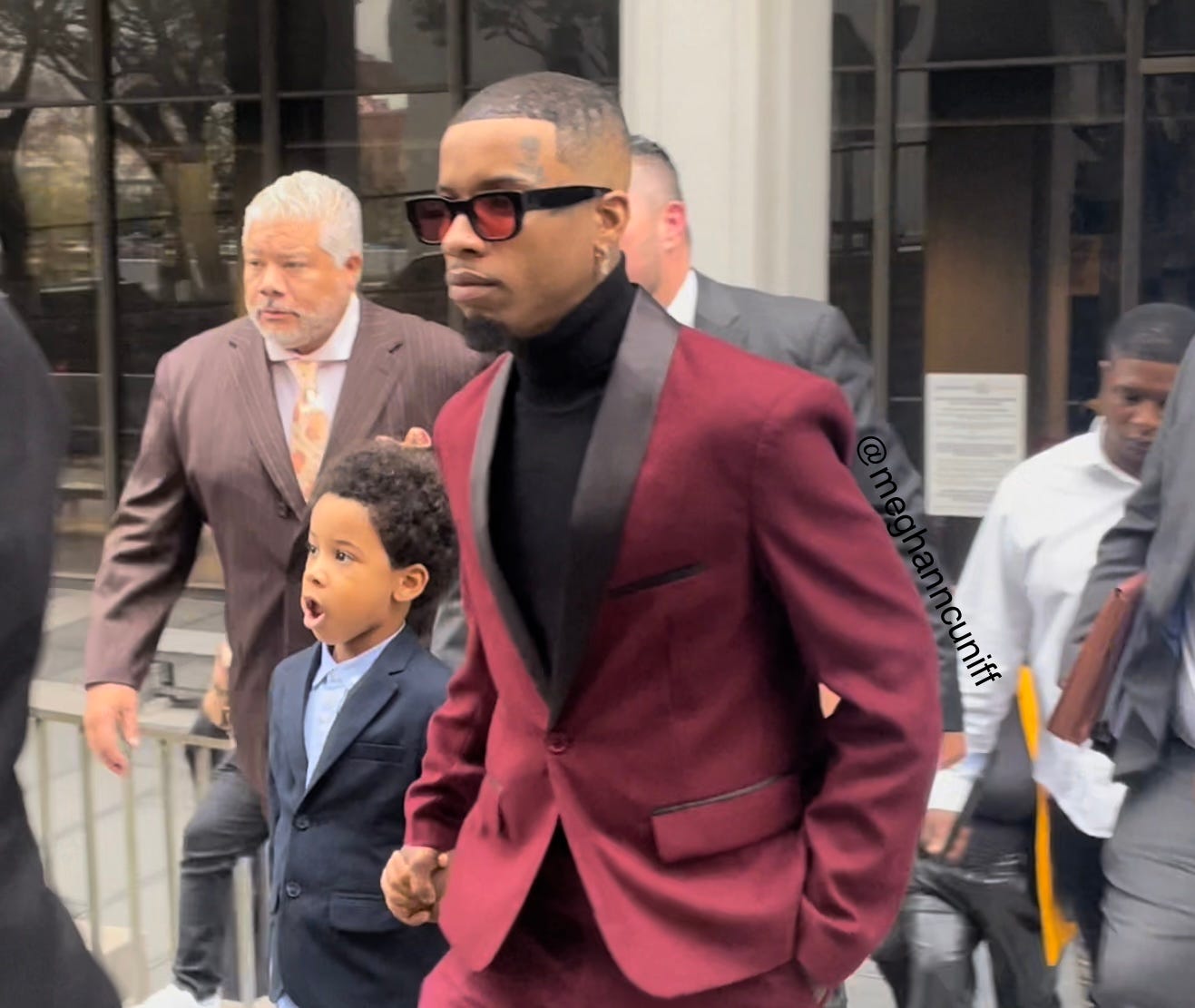
Baez and Welbourn also cite Lanez’s charity work, which has ceased “due to his recent incarceration.”
“If sentenced to a term of probation, Mr. Peterson will be able to resume his charitable activities and provide much needed support for underserved communities in Los Angeles and beyond,” the memo reads.
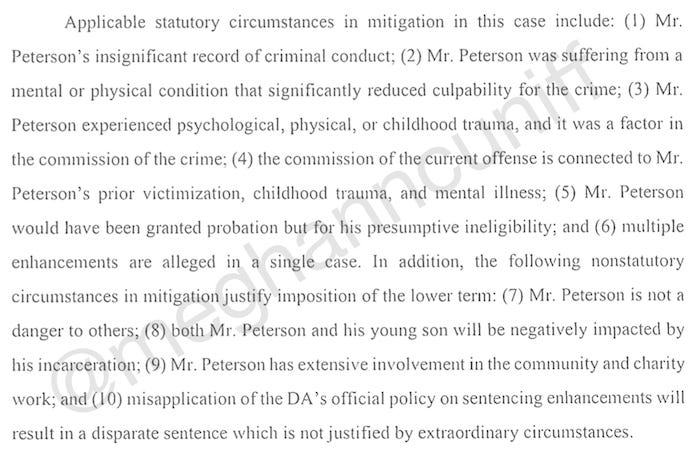
Baez and Welbourn acknowledge that Lanez is “presumptively ineligible for probation” because jurors found true two aggravating circumstances: That he used a firearm and that he inflicted great bodily injury on Megan when he shot her. But California law allows for exceptions in unusual cases, and they say Lanez’s case “is an unusual case in which the interests of justice would best be served if Mr. Peterson is granted probation.”
“Accordingly, this Court should find that Mr. Peterson has overcome the presumption of ineligibility and exercise its discretion to sentence him to a term of probation,” according to the memo.
Here’s a summary of the arguments:
Los Angeles County Deputy District Attorneys Alexander Bott and Kathy Ta’s 12-page recommendation, filed June 7, says Lanez’s conduct after the shooting shows he’s incapable of supervision. It cites his “unprovoked attack” on singer August Alsina in September 2022 and says his “lack of remorse is insidious, leaving this Court no assurances that the defendant will not repeat this type of behavior in the future.”
Tuesday’s defense memo, however, says Lanez “has consistently and steadfastly denied guilt,” and it argues the case against him is so shoddy that his so-called lack of remorse can’t be used against him. It also dismisses prosecutors’ position that Lanez’s post-shooting text messages to Megan and his jail call to her friend Kelsey Nicole Harris were admissions of guilt.
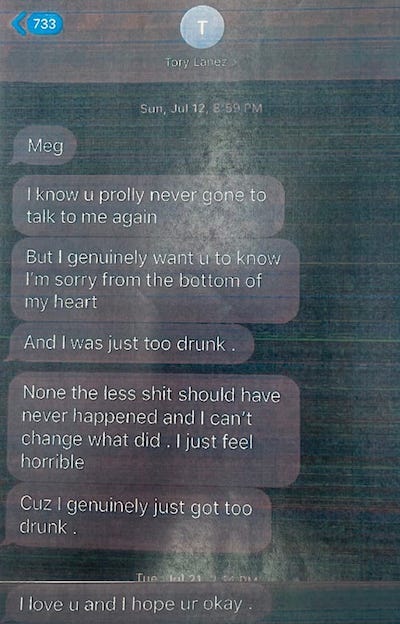
“The defense posed a plausible explanation for the jail call and text message — that Mr. Peterson was apologizing for the argument in the car before the shooting for having a sexual relationship with both Ms. Harris and Ms. Pete,” according to the memo, referring to Megan’s legal name, Megan Pete.
“In fact, the trial court sustained the defense’s speculation objection when the People asked Ms. Pete to testify as to what Mr. Peterson was ‘referring to when he was apologizing’ to her. Mr. Peterson did not make any admissions that he shot Ms. Pete and the People’s assertions as to the reasons for the apology is pure speculation,” the memo continues.
Lanez’s trial lawyer, George Mgdesyan, argued it was Harris, not Lanez, who fired five rounds at Megan from a semi-automatic firearm as Megan walked away from Lanez’s Escalade on Nichols Canyon Road about 4:25 a.m. on July 12, 2020, after they left a gathering at reality star Kylie Jenner’s Hollywood Hills home. (Recently released emails between Lanez and his original lawyer, veteran celebrity criminal defense lawyer Shawn Holley, show Holley told him she didn’t think blaming Harris was a “viable strategy” and that he should see if Mgdesyan would be willing to pursue it.)
Megan testified that she heard Lanez say, “Dance, bitch,” before turning around and seeing him open fire.
Lanez was arrested on a gun charge shortly after the shooting but released later that day on bail. Megan, bleeding from her feet, was taken to a hospital by ambulance, while Harris, her best friend and assistant at the time, was taken to a police station with Lanez and his driver, Jaquan Smith. Harris later went to the hospital where Megan was at and waited outside her room, which is where she was when Lanez called her from jail.
A Los Angeles County jury convicted Lanez on Dec. 23 of first-degree assault with a firearm, discharge of a firearm with gross negligence and three years for having a concealed and unregistered firearm in a vehicle. He was remanded to the Men’s Central Jail in Los Angeles after the verdict, where he celebrated his 31st birthday last week.
Childhood trauma, then an adulthood ‘invigorated’ by music
Lanez’s memo describes a traumatic and tumultuous childhood that included the unexpected death of his mother from the blood condition amenia when he was 11 years old. She and Lanez’s father were missionary preachers, and Lanez was born in Toronto, Canada, as the youngest of six children. His family relocated often, the memo says, and Lanez “was subject to corporal punishment, including use of a belt or tree branch which would result in welts on his body.”
Lanez “struggled with his emotions and started to ‘act out’” after his mother died, according to the memo, and he spent ages 11 to 15 being “shuffled from relative to relative in various U.S. states and in Canada.” His grandmother kicked him out when he was 14, and he went to live with three of his brother’s friends “in an area that was ‘crack infested’ and plagued by violence.”
“Mr. Peterson felt abandoned by his family and continued to act out,” according to the memo. “Mr. Peterson ultimately turned to music during this time.”
The memo says Lanez was the victim of violence as a teenager, including “being ‘jumped,’ hit in the head with a wrench, stabbed, and shot at.”
“In one instance, someone pulled a gun on Mr. Peterson, put the gun next to his hooded sweatshirt, and pulled the trigger. Mr. Peterson believed that he was going to die, before realizing that the gunshot only blew out a portion of his hooded sweatshirt,” the memo reads. “Mr. Peterson also suffered loss when two of his friends were shot and killed.”
Lanez dropped out of 10th grade to focus on music, moving in briefly with his father then with a friend and a friend’s aunt when he was 16 or 17.
“It was during this time that Mr. Peterson turned to alcohol and marijuana as a means of coping with his emotions and his pain,” according to the memo.
Lanez was 18 when he signed with “Beautiful Girls” singer Sean Kingston. He moved to the U.S. to pursue his music career, and the memo says he was so “invigorated” that he “stopped acting out and focused instead on his career.”
“Mr. Peterson’s manager was instrumental in providing him mentorship and teaching him how to manage his anger and emotions,” the memo reads. “As he grew more successful in the music industry, Mr. Peterson became active in donating funds and volunteering time with local charities serving underprivileged communities.”
Still, Lanez continued using alcohol “as a means of coping with stress and unresolved traumas from his childhood,” and Emin Gharibian, a psychologist who met with him last month, said he “meets the diagnostic criteria for Alcohol-Use Disorder, Severe.”
“Dr. Gharibian is not able to determine guilty or innocence in this case or to verify Mr. Peterson’s version of events,” according to the memo. “Dr. Gharibian, however, has made several key findings which show that, assuming that the allegations in this case are true, Mr. Peterson’s childhood trauma and alcohol-use disorder were contributing factors in the offense.”
Memo cites Lanez’s charity work and ‘wide support system’
The memo does not address Lanez’s alleged assault of Alsina last year, which led to him being placed on pre-trial house arrest in the shooting case. Nor does it address his other pre-trial violations, including his breach of a protective order at the Rollin Loud Music Festival in Miami in July 2021 and his brief jailing in April 2022 for posting a DNA evidence report online along with derogatory comments about Megan, in violation of a discovery protective order.
Instead, it says prosecutors acknowledge Lanez “has an insignificant record of criminal conduct,” and it argues he hasn’t shown “a pattern of regular or increasingly serious criminal conduct.” It says Lanez is willing to comply with probation and has demonstrated he’ll comply with a residential drug treatment program as well as random drug and alcohol tests. He earned his General Education Diploma from the Peel Adult Learning Center in Brampton, Ontario, Canada, and, “other than his mental health diagnoses, Mr. Peterson is in good health, is able to work, and has demonstrated an insurmountable work ethic throughout his music career.”
“Mr. Peterson has a wide support system, which includes family, friends, personal staff, entertainment managers, artists and other professionals within the entertainment industry, and other individuals in the charity and activist communities,” according to the memo.
Lanez’s lawyers also cite his charity work, such as his membership on the advisory board for Unite the People, which helps underprivileged communities, “including individuals who are incarcerated and their loved ones.” He’s donated money as well as his time and energy to the charity, volunteering at supply drives in Long Beach and Compton and mentoring Unite the People clients.
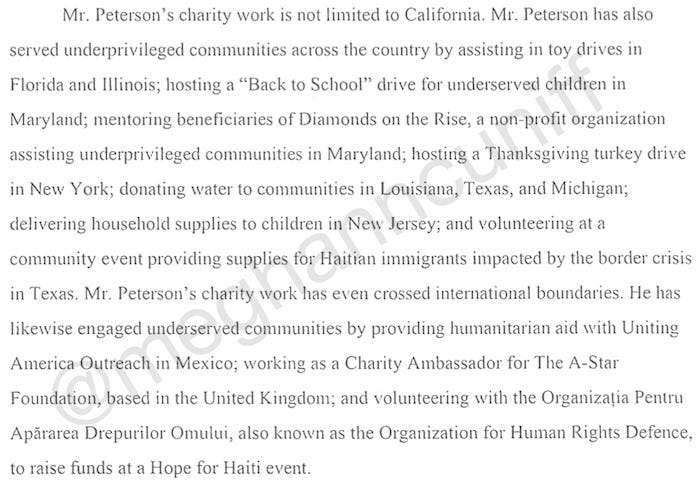
“During the COVID-19 pandemic, Mr. Peterson established the Tory Lanez Dream City Fund to assist struggling families. Prior to his incarceration, Mr. Peterson was beginning the process of founding Confidential Pharma, an independent pharmacy providing affordable access to healthcare for underserved communities in Hallandale Beach, Florida,” according to the memo. “Due to Mr. Peterson’s incarceration, however, Confidential Pharma was unable to open its doors and currently remains in limbo.”
Lanez’s lawyers say Megan is not ‘particularly vulnerable’
Lanez’s memo calls prosecutors’ 13-year recommendation an “extreme deviation” from Los Angeles District Attorney Office, including on not seeking sentencing enhancements.
One directive says two extraordinary circumstances can justify sentencing enhancements: One is an “extensive” physical injury and the other is a weapon being used in a manner showing extreme and immediate threat to life.
Another D.A. directive says that if a defendant isn’t eligible for probation, “the presumptive sentence will be the lower term, unless extraordinary circumstances justify the middle term.”
“This is not a case in which the application of sentencing enhancements is justified under the D.A.’s own policies,” the memo reads, arguing Megan is not a vulnerable victim.
D.A. Gascón’s policies don’t define “the most vulnerable victims,” but Lanez’s memo says “common understanding would include children, senior citizens, and people with disabilities.”
“Ms. Pete does not fall under any of those categories,” the memo reads. “Had DA Gascon’s Special Directives been honored by dismissing and withdrawing the enhancements, Mr. Peterson would be facing a lower term of three years, as opposed to the thirteen-year middle term recommended by the People.”
Not only is Megan not a vulnerable victim, the memo argues, the shooting didn’t involve a “high degree of cruelty, viciousness or callousness.”
“Indeed, there must be additional facts, such as the defendant holding a firearm to the victim’s head, mutilation of the victim, and/or prolonged attacks on the victim,” according to the memo. “Here, there is no evidence that the defendant held a firearm to Ms. Pete’s head. … The fact that only bullet fragments were recovered from Ms. Pete’s feet further supports a finding that the perpetrator pointed the firearm toward the ground. Moreover, the shooting itself was brief, distinguishable from prolonged, torturous attacks present in other cases.”
Prosecutors in their memo cited a 1979 California Courts of Appeal case in which a healthy, armed police officer was found to be “particularly vulnerable” when he was ambushed. But Lanez’s lawyers say his case is different because Megan “was not shot at point-blank range, nor was she mentally distracted while operating a vehicle.” And even if Judge Herriford believes the cases are similar, Lanez lawyers say he should find the 1979 case “was wrongly decided.”
The memo acknowledges that Megan “was unarmed and her back turned” when she was shot but says she “was as vulnerable as any other individual would have been under the circumstances” and doesn’t qualify as “particularly vulnerable.”
‘The evidence of guilt in this case is not overwhelming’
The defense memo describes the immediate aftermath of the shooting differently from the prosecution memo.
Prosecutors say Lanez approached Megan after she was shot, “apologized for his actions and begged her not to say anything. He convinced the victim to get back in the car.”
“Ms. Harris confronted the defendant for shooting the victim, which caused the defendant to physically assault Ms. Harris. He grabbed her by the throat and pulled her by the hair before calming down again. Ms. Harris sustained injuries as a result of the defendant’s attack,” according to the memo.
Lanez’s lawyers say he and Harris ran to Megan “and attempted to provide her medical assistance before helping her back into the SUV.”
“The SUV then headed in the direction of Ms. Pete’s home,” they wrote. The defense memo notes that “the owner of the firearm was never determined,” and say the investigation raised questions about what actually happened.
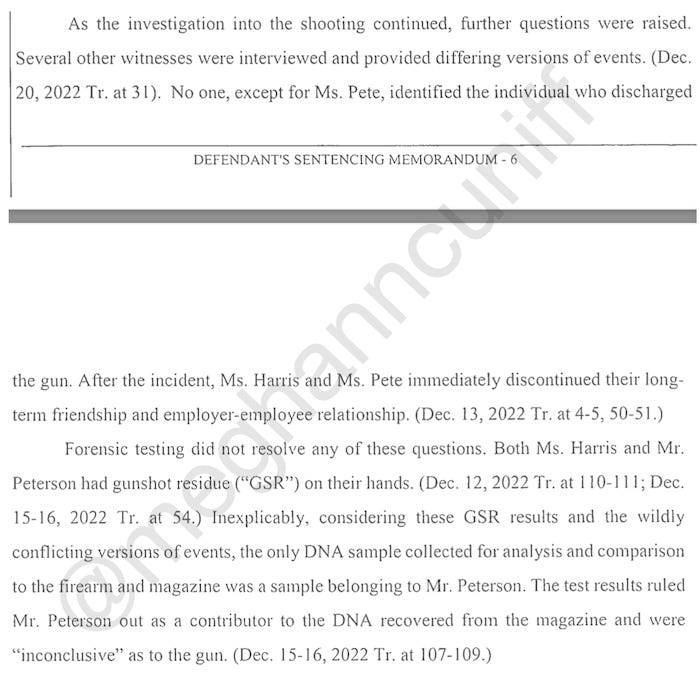
“No one, except for Ms. Pete, identified the individual who discharged the gun. After the incident, Ms. Harris and Ms. Pete immediately discontinued their long-term friendship and employer-employee relationship,” according to the memo.
“Forensic testing did not resolve any of these questions,” the memo continues. “Inexplicably, considering these GSR results and the wildly conflicting versions of events, the only DNA sample collected for analysis and comparison to the firearm and magazine was a sample belonging to Mr. Peterson. The test results ruled Mr. Peterson out as a contributor to the DNA recovered from the magazine and were ‘inconclusive’ as to the gun.”
The memo again dismisses Lanez’s apologies to Harris and Megan as “vague” and says they “could reasonably be interpreted as an apology for the argument in the car and mixed sexual relationships.”
“This evidence is speculative at best and by no means establishes the conclusions that Mr. Peterson shot Ms. Pete,” according to the memo. Further, “the evidence of guilt in this case is not overwhelming.”
“Several witnesses, including Ms. Pete herself, displayed significant issues with credibility at trial and gave conflicting versions of events,” the memo continues, citing a Dec. 20 trial transcript — one week after Megan testified — but offering no details.
“In addition, the primary alternative suspect, Ms. Harris, despite being offered immunity in exchange for her testimony, pleaded lack of recollection and otherwise avoided answering questions,” according to the memo.
The memo does not mention Harris’ September 2022 interview with prosecutors in which she clearly identified Lanez as the shooter. The interview was played for jurors in its entirety. It also does not mention texts Harris sent Megan’s bodyguard immediately after the shooting that read, “Help. Tory shot meg. 911.”
Judge Herriford addressed some of the defense arguments about Lanez’s convictions when he rejected Lanez’s motion for new trial in May. The judge hasn’t outright opined on Lanez’s guilt, but he dismissed all arguments in the motion for new trial and noted that it didn’t mention all the evidence against Lanez. Herriford said his job as a judge is to focus on the totality of the case, “not cherry pick very small portions.”
“Even if all these rulings had gone your way, the outcome wouldn’t be different,” Judge Herriford said at the hearing.
A licensed California lawyer since 1982, Herriford earned his bachelor’s and law degrees from Stanford. He’s a former Los Angeles County deputy district attorney and former criminal defense attorney. He’d operated his own firm for 20 years when then-California Gov. Arnold Schwarzenegger appointed him to the Los Angeles County Superior Court bench in 2010.
Needless to say, Monday is going to be a big day. The memo says the hearing is at 8:30 a.m., but the court’s public information office confirmed with me today it’s at 10:30 a.m. I plan to have an article prewritten enough that I’ll be able to blast it out ASAP. Please subscribe!
I’m also going live on YouTube at 5 p.m. Pacific today. (Soon!) Tune in here or watch later:
Previous coverage:
After public spat, new lawyer joins Tory Lanez's defense team as would-be lawyer steps aside

A lawyer who wanted to free Tory Lanez from jail because of cruel and unusual punishment will not represent the rapper after he chose Wednesday to hire another attorney. Rond…
Thank you for reading Legal Affairs and Trials with Meghann Cuniff. If you think my work has value, please consider purchasing a subscription. You can pay through the Substack option below, or you can use Venmo (MeghannCuniff), CashApp ($MeghannCuniff) or Zelle (meghanncuniff@gmail.com).