
Jury in defamation trial awards Megan Thee Stallion $75,000 in damages for three claims
The future of the defamation liability is in doubt because jurors also said Milagro Cooper should be treated as media, but Megan's lawyers didn't notify her before they sued.

MIAMI — A jury in Miami, Florida, on Monday found an online commentator liable for defaming rapper Megan Thee Stallion and intentionally inflicting emotional distress on her by coordinating with the rapper who’s in prison for shooting her five years ago.
Milagro Cooper also was found liable for promoting a digitally altered sexual depiction of Megan.
Jurors awarded Megan $75,000 in damages, though that will drop to $59,000 if U.S. District Judge Cecilia M. Altonaga agrees with the jury Milagro qualifies as a media defendant and dismisses the defamation claim because Megan’s lawyers at Quinn Emanuel Urquhart & Sullivan, LLP, didn’t notify her before they sued her. (UPDATE: The judge entered final judgment on Tuesday for only the sexual depiction and emotional distress claims.)
Milagro’s total amount due could increase substantially, however, because the sexual depiction claim allows Megan to recoup attorney fees.
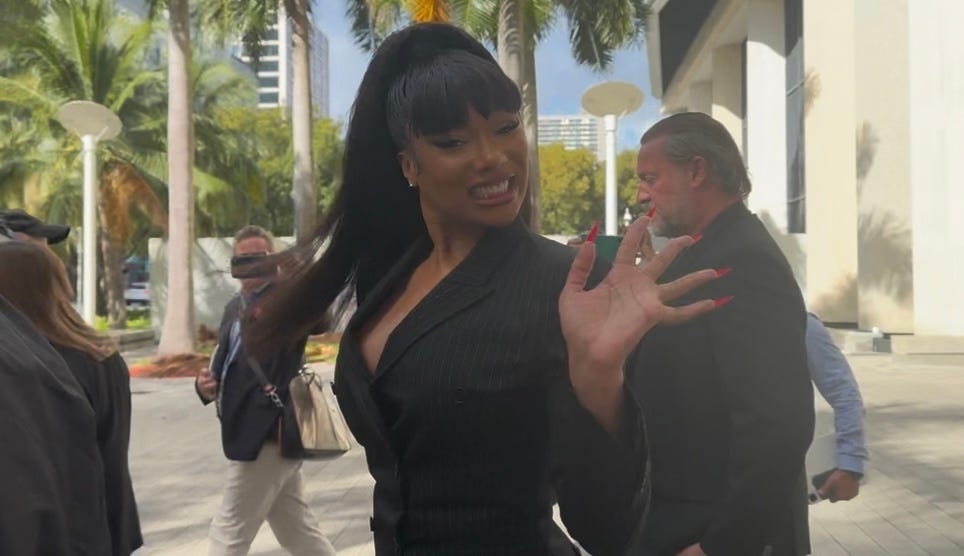
“I’m just happy,” Megan, legal name Megan Pete, said as she exited the courthouse.
Her Instagram account later shared a photos of her in her nine courthouse outfits.
Milagro told reporters she’s “not ecstatic.”
“Of course you want things to go your way. But like I said, I respect the jury and what they decided,” said Milagro, who lives in Houston, Texas, and streams under the names Milagro Gramz and Mobz Radio.
Asked if she’s concerned about paying Megan’s attorney fees, Milagro said, “I’m just happy to be moving forward.”
“Things will get handled. It wasn’t a multimillion dollar verdict. So I think that’s a blessing. God is good through and through,” she said.
The jury of five men and four women deliberated about 4 1/2 hours on Monday and 5 1/2 hours last Wednesday.
They said Milagro regularly disseminated news to the public but did not provide “disinterested and neutral commentary, rather than advocacy for a particular client or personal interest,” nor did she impartially disseminate information.
But they also agreed she “operated for the purpose of informing the public about matters of public concern through news reporting, analysis, or commentary,” and they agreed she “functioned in a similar manner to traditional news media, such as newspapers, magazines, television, radio, or their online equivalents.”
Those answers led them to conclude Milagro “should be treated as a media defendant with regard to the statements made in this case.”


Judge Altonaga, a 2003 George W. Bush appointee and the chief judge in the Southern District of Florida, ruled in February that Megan’s lawyers didn’t need to serve Milagro with “pre-suit notice” as required by Florida law because she’s not a media defendant, but the judge said during trial she’d analyze the issue again based on the trial record and after the jury decided.
She said after the jury left on Monday that she’d enter a judgment for only the emotional distress and sexual depiction claims because the jury said Milagro should be treated as a media defendant. Megan’s lawyers asked Altonaga to conclude that Milagro is not a media defendant, but she said that’s an issue for a “post-judgment motion.”
In other cases I’ve covered the attorneys write motions for judgment post-verdict that lay out all their issues before the judge enters final judgment. This is what Senior U.S. District Judge James V. Selna in the Central District of California did in hip-hop mogul T.I. and Tiny Harris’ lawsuit against toymaker MGA Entertainment over the OMG Dolls and Tiny’s daughter Zonnique’s OMG Girlz music group. But Judge Altonaga indicated Monday she’s not doing that.
“We will have additional post-judgment matters that will be briefed by the lawyers,” Altonaga said.
Milagro’s lawyers said in a press release that the final judgment doesn’t find Milagro liable for defamation. No final judgment had been filed as of Monday evening.
“Ms. Pete and her attorneys asked the jury to send a message to the community by awarding Ms. Pete with an astronomical amount of damages. Indeed, the jury rejected Ms. Pete’s request and refused to send any such message as shown by the nominal damages that Ms. Pete recovered,” according to the release. “Evidently, the jury did not believe that Ms. Cooper was the sole cause of Ms. Pete’s emotional distress and that is reflected in their verdict.”
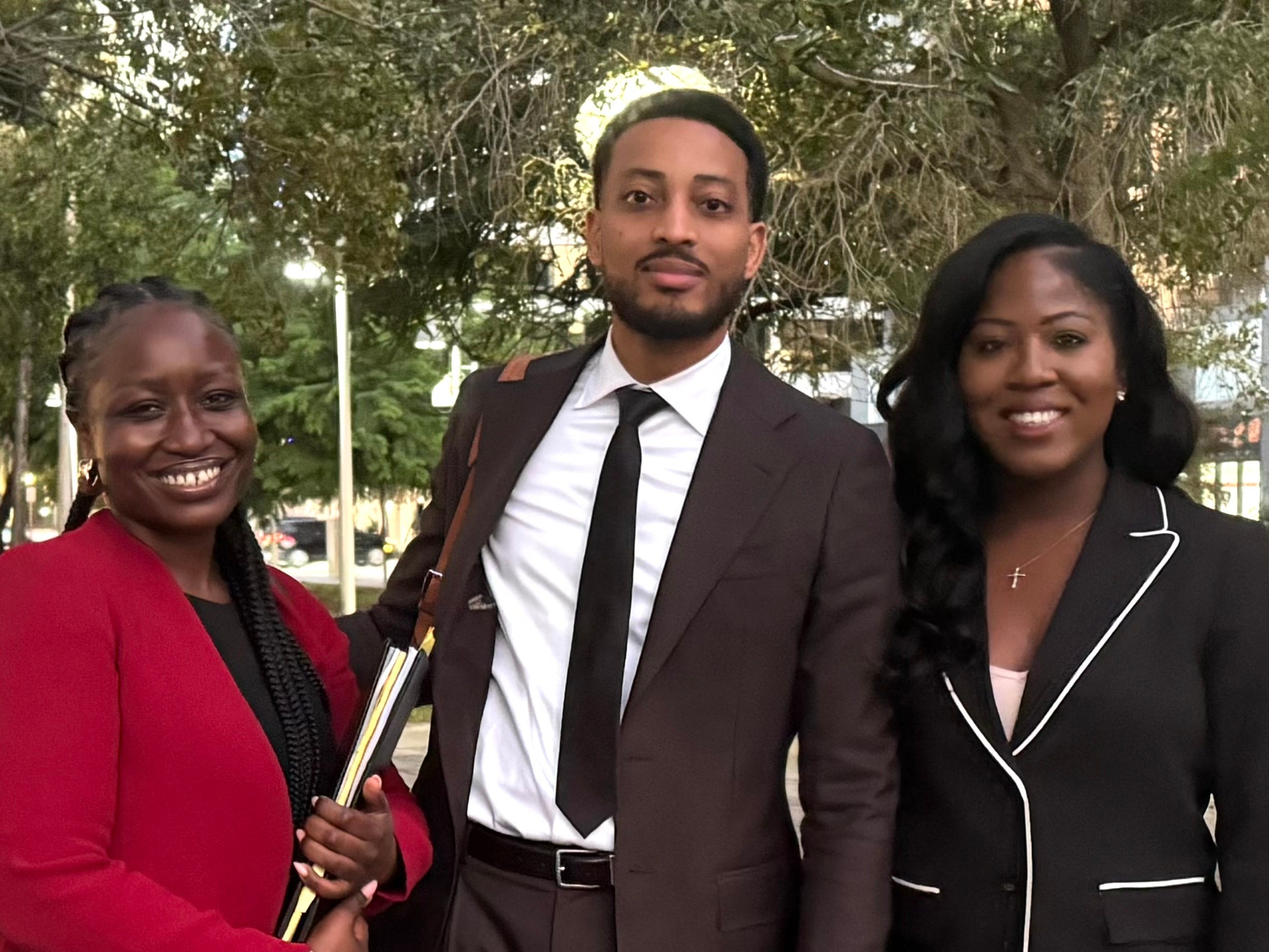
Megan’s lawyers thanked the jurors for their “commitment to reinforcing the importance of truth, accountability and responsible commentary on social media.”
“This verdict sends a clear message that spreading dangerous misinformation carries significant consequences,” said Marie Henderson, a partner in Quinn Emanuel’s Los Angeles office.
The press release states, “Contrary to public statements issued by Milagro’s attorneys, the court has not issued a final judgment regarding the defamation count.”
“The judge will make a final ruling and determine the entire financial amount that Milagro will be required to pay Megan, inclusive of legal bills and the defamation count, at a later date,” according to the release.
The release says Megan’s legal team “has also submitted a formal letter to Milagro’s team counsel, highlighting their blatant misrepresentation of the jury’s verdict, noting they are continuing to post defamatory content and requesting they retract the comments immediately.”

If Judge Altonaga dismisses the defamation claim, their damages award will drop to $59,000 because jurors awarded $15,000 in compensatory damages and $1,000 in punitive damages.
Jurors also awarded $8,000 in compensatory and $1,000 in punitive for intentional infliction of emotional distress, and they awarded $50,000 in punitive for promotion of an altered sexual depiction.
The verdict is a fraction of what Megan’s lawyers hoped jurors would award when they elicited testimony about multimillion-dollar marketing deals for the Call of Duty video game, Google’s Pixel phone, Grub Hub’s owner Just Eat Takeaway and the U.S. Women’s Soccer Federation that fell through while Megan was distraught over cyberbullying related to her being shot and Tory Lanez’s criminal convictions in Los Angeles County Superior Court.
Milagro was paid $6,300 a month by the streaming platform Stationhead to stream live five days a week; she testified the deal ended after Megan sued her.
The seven-day trial began Nov. 17 and included testimony from Lenore Walker, a psychologist and pioneering researcher on abused women who testified about diagnosing Megan with post-traumatic stress disorder that she said was caused by the shooting and exasperated by online harassment. Megan’s friend Travis Farris also testified about her anguish and said he helped her check into a therapy facility that charged $240,000 for one month.
Jurors heard from Milagro’s former live stream comments moderator Amiel Holland-Briggs, who testified that Milagro told him Lanez said he was wrestling over the gun with Megan’s now-former friend Kelsey Harris when it accidentally discharged. Holland-Briggs started to sob as he described quitting amid increasing online vitriol and disagreement with Milagro over her approach.
Another witness, Antonio Tolefree, testified via video deposition that Milagro said Lanez promised her a podcast with him and popular online streamer DJ Akademiks in exchange for her appearing on a documentary about the case. Lanez’s friend Ceasar McDowell also repeatedly answered “I don’t remember” to basic questions about his legal services entity’s initial representation of Milagro.
Jurors also learned of $3,000 Lanez’s father, Sonstar Peterson, sent Milagro between Oct. 28, 2020, and March 3, 2022, in six payments from $200 and $1,000. Milagro said the money was for her birthday and for her two daughters’ birthdays “on one of one occasion, maybe two or three.” Peterson also paid her for “promotional services” for his podcast and “I believe he had written a book on a separate occasion,” she testified.
Jurors heard many recordings of Milagro profanely discussing Megan, and they saw Twitter posts and other writings criticizing her. Only a few, however, were part of the defamation claim, which asked if jurors “find, by a preponderance of the evidence, that Ms. Cooper defamed Ms. Pete by accusing Ms. Pete of perjury—a felony—by lying under oath in a criminal trial?”
The statements at issue were:
Milagro’s tweet on Dec. 21, 2022, “All this case taught anyone was you father, brother, cousin or son could face over 20 years in prison without proper evidence, a botched investigation, & another likely suspect just because non credible witnesses said you did something. & y’all slow asses cheering.” The jury instructions say Megan is claiming that Milagro said she “was a non credible witness.”
Milagro’s statement to DJ Akademiks that she “could go down the list of all the different shit that was not true” from Megan’s testimony.
Milagro’s tweet asking “Was Megan Thee Stallion caught trying to deceive the courts again?” and explaining a filing in a lawsuit against Megan by her former photographer Emilio Garcia that accused Megan of lying about her Florida residency.
Milagro’s lawyer Jeremy McLymont tried to persuade jurors that Milagro wasn’t wrong when she said Megan lied by focusing on Megan’s testimony that she was not drunk and that she had nerve damage in her left foot, despite a doctor’s report that said there was no “nerve involvement” in her left foot. But Megan’s lawyers focused on Milagro’s many statements implying or outright saying that Megan wasn’t shot at all.
Megan testified that a witness in Lanez’s criminal trial likely mistook Lanez for a woman when he recounted seeing two women fighting before a “short guy” with a gun fired shots.
“Tory Lanez is about 5-2, 5-3, and was very petite at the time, which is why people probably thought that two women were fighting,” Megan testified.
Megan said she’s suing Milagro because she’s tired of her “carrying on this narrative that I’m just such a bad person and I would lie to put an innocent man in jail.”
“I don’t like the way she speaks about me, my family, my friends, my fans,” Megan said. “I really don’t like the way that she made everybody go watch a very disgusting fake pornographic video of me.”
She tearfully recalled not “feeling like existing anymore.”
“I don’t want to be here. I’m tired of waking up. I didn’t care what happened. I just wanted to die. I was so tired of being alive,” she testified.
She cried as she said she thinks Milagro and Lanez want her to kill herself.
“So I can’t kill myself because I don’t want to give them what they’re looking for,” she said.
She said maybe she’s experiencing this pain because there could be “another woman out there going through that” could draw courage from seeing her “come out the other side.”
“All the things that I went through and I’m still going through hopefully can inspire other women to want to tell their truth,” she testified.
Legal Affairs and Trials with Meghann Cuniff is a reader-supported project that utilizes my 20 years of reporting experience in traditional media to bring you in-depth news about major legal issues. If you want to support my work, consider upgrading to a paid subscription.
Megan testified in direct-examination for about 90 minutes on Nov. 20. McLymont’s cross-examination of Megan was almost three times as long, and Megan’s lawyers did not ask her any questions in re-direct. They also didn’t object to copious amount of hearsay McLymont questioned Megan about, including having her read aloud emails from a Roc Nation executive about her missed marketing opportunities that Megan repeatedly said she’d never before seen.
Milagro testified as the first witness in Megan’s case in chief, then testified again as the first witness in her defense case in chief. Attorneys agreed before trial that each witness would be called to the stand only once, but Judge Altonaga allowed Milagro to testify again after McLymont complained that Megan’s lawyers tried to “pull a fast one” by calling Milagro in their case in chief.
“I’m not sure I would call it a fast one. That’s pretty extreme, Mr. McLymont,” the judge said.
However, she said his initial questioning of Milagro was “quite short” so “if you want to call your client, I don’t see why you can’t.”
Milagro testified about her childhood with her verbally abusive grandmother and her transition from reviewing television shows on YouTube as a hobby to full-time streaming as a career. She testified she believed the digitally altered video she promoted online of Megan in a sexual position was authentic. She repeatedly questioned on her stream if it was made with artificial intelligence, but she testified she only said that in a scolding way because she knew it was real.
Milagro also said Lanez already is “in prison.”
“My God deserves to say what his judgment is. He already has punishment,” she testified. “So somebody wants to be his friend … to advocate for him.”
“She doesn’t get to decide that he can’t, you know, still fight for his life and his freedom,” Milagro said of Megan. “And it just feels like that’s what she’s been doing.”
Milagro testified she’s “new media” and cited me in an HBO Max documentary about this case describing her and others as non-traditional reporters. She testified the comment led her to believe that, “I am considered a reporter by legacy media.”
Jurors heard from Megan again briefly when McLymont questioned her about speaking to people outside the courthouse, which the judge ruled violated the gag order, and about her “Cobra” music video. Jurors saw a portion of it, and Megan testified she’s “really speaking to my mental state at the time” and “all the drama” around the shooting.
Megan said “one of the things that I wanted to address is the allegation that I’m just such a drinker” with the line “I drink, so what.”
“I guess I was just being clever there,” she testified.
McLymont and Megan’s lawyer John F. O’Sullivan gave closing arguments last Tuesday, with O’Sullivan’s rebuttal going into Wednesday. Jury instructions included an instruction that Milagro deleted messages in violation of a court order.
“In reaching your verdict, you should assume and infer that Defendant intended to deprive Plaintiff of the evidence in the deleted messages and chats, that at least some of the deleted messages related to the claims in this case and were about Plaintiff, and that these deleted messages • were unfavorable to Defendant.”
Judge Altonaga did not give the instruction that U.S. Magistrate Judge Lisette M. Reid recommended when she held Lanez and his lawyer Crystal Morgan in contempt of court for their behavior in a Nov. 14 deposition.
You can read the jury instructions here.
Previous articles:
Ceasar McDowell, Daniel Kinney, Lenore Walker
Opening statements and Milagro
Thank you for supporting my independent legal affairs journalism. Your paid subscriptions make my work possible. If you’re not already a paid subscriber, please consider purchasing a subscription through Substack. You also can support me through my merchandise store and by watching my YouTube channel. Also, please follow me on Facebook and Instagram as I grow my Meta presence. Thank you!