
Jury acquits YSL defendants on murder, gang and racketeering charges
The verdicts end a year-long trial that included rapper Jeffery "Young Thug" Williams until he left jail on 15 years probation. Jurors began speaking out Tuesday evening.

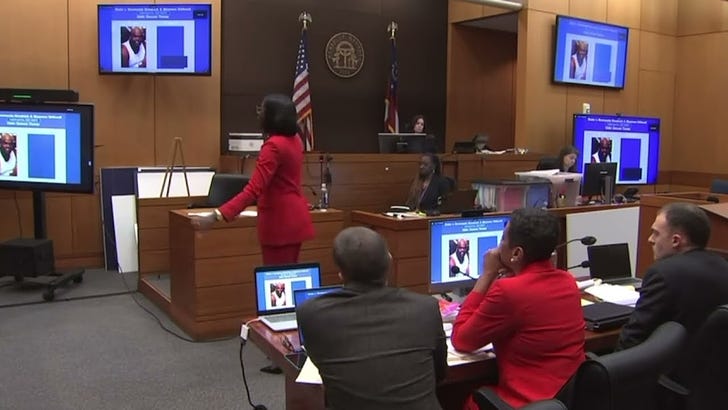
Jurors in Atlanta, Georgia, on Tuesday acquitted the two remaining defendants in rapper Jeffery “Young Thug” Williams’ gang racketeering trial of all major charges, including three counts of murder for two drive-by shootings seven years apart.
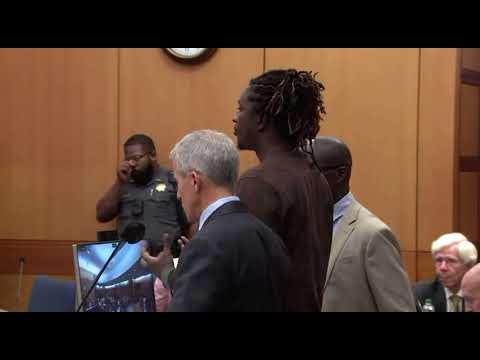
Deamonte “Yak Gotti” Kendrick was acquitted of all counts while Shannon “SB” Stillwell was convicted only of possessing a gun that police said he tossed while fleeing before his arrest in March 2022.
Georgia law required Fulton County Superior Judge Paige Reese Whitaker sentence Stillwell to the maximum 10 years because prosecutors declared him a career criminal, but the judge used her discretion to commute the sentence to credit for time served and the balance on probation.
Neither man will leave jail yet, however, because each has criminal charges in unrelated cases. Stillwell is charged for a hit-and-run car crash and for Ecstasy, Apple AirPods, Newport cigarettes and a cellphone found in his jail cell while awaiting trial in the gang case; Kendrick’s charges include assault.
Their lawyers said they hope to resolve the cases shortly.
“He could be home by Christmas. I’m hoping that’s not unrealistic,” Stillwell’s lawyer Max Schardt told reporters outside the Fulton County Courthouse. Stillwell reportedly accepted an offer for probation and time served later Tuesday.
Kendrick’s lawyer Doug Weinstein said they’re “thrilled” by the verdict but not surprised.
“Given that the jury had clearly been looking at all the evidence, we thought that this was the only outcome they could really come to,” Weinstein said.
Another inmate stabbed Kendrick in the head on Sunday but appeared to be in good condition in court on Monday. Weinstein told reporters he “had a few staples in his head” but was more concerned about the jury deliberations.
Prosecutors offered Kendrick, a rapper who is signed to Williams’ Young Stoner Life music label, a plea deal last month that would have sent him to prison for 15 years for voluntary manslaughter for the 2015 fatal shooting of Donovan Thomas, a rival gang leader whose murder set off what gang investigators described as years of violence that culminated in the murder of Shymel Drinks on March 14, 2022.
Stillwell was arrested three days after Drinks was murdered; Kendrick was arrested in May 2022 after prosecutors secured a grand jury indictment charging him and more than two-dozen others, including Williams, a six-time Grammy winner, with conspiring to violate Georgia’s Racketeer Influenced and Corrupt Organizations (RICO) Act.
Kendrick was not accused of murdering Drinks, but both he and Stillwell were charged with Thomas’ murder.
Jury selection took 10 months and testimony lasted a year. The trial was marred by long disruptions until Judge Whitaker took over in July, and she sometimes commented on problems with the case and prosecutors’ mismanagement.
The judge suggested in October she might declare a mistrial if defense attorneys requested one, which led to plea agreements for three defendants, Quamarvious Nichols, Marquavius Huey and Rodalius Ryan. Williams rejected a deal that would have immediately released him from jail on 15 years probation, then pleaded guilty or no contest to all charges and received 15 years probation, anyway.
Prosecutors offered Kendrick rejected an offer from prosecutors for a 15-year recommended prison sentence with five years probation for racketeering conspiracy and voluntary manslaughter. Stillwell rejected a 40-year prison recommendation that would have reduced his two murder charges to two counts of voluntary manslaughter.
Outside court on Tuesday, Kendrick’s mother, Tasha Kendrick, told reporters she fully supported her son’s decision to take his charges to the jury.
“I stood down — 10 toes down — every day. Day in, day out, I stood by my son,” she said.
She recalled going to work while still attending court every day, sometimes being woken by deputies after falling asleep in the courtroom.
“My son stood up; 30 months my son stood up, and we was victorious. I’m thankful to God that a mother’s love went beyond the world, and I’m thankful I never gave up on my son. He said, ‘Mama, I’m not taking it. I’m standing up.’ And I stood by him every day. Every day of the week. I stood by my child,” she said.
Thomas’ mother, Shawonna Edwards, visited her son’s grave after the verdict and wept.
“They might not be guilty in the eyes of the law and those fake ass jurors they had up there, but guess what? We got this because we know — we know the truth,” Edwards said in a video posted on Instagram. “We know what happened, and I just had to come see my baby and let him know that we got this.”
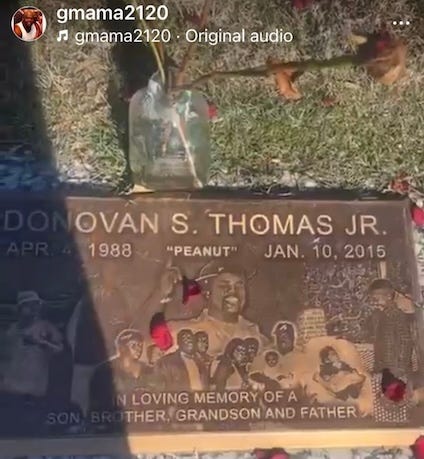
Edwards said the case was “tried basically on social media bullshit.”
“All those bloggers think they know the system and what happened. We as a family, we, the people know how we really know what happened. Like I said, end of the day, we as a family, we’re gonna be OK,” she said.
A gunman killed 26-year-old Thomas on Jan. 10, 2015, as he stood outside a barbershop on McDaniel Street in Atlanta. The drive-by shooting was captured on video, and prosecutors say the gunfire came from an Infiniti car rented by Williams days earlier.
Police arrested several suspected associates of the Young Slime Life gang in 2015, including Stillwell, but most had their charges dismissed after a preliminary hearing. Stillwell didn’t, but he eventually was released on bond and the charge went untouched until it merged with the 2022 gang racketeering indictment.


Prosecutors also made Thomas’ murder the basis for several of the 191 alleged overt acts supporting the racketeering conspiracy charge, just as they did with Drinks’ murder. But instead of focusing on the murders, prosecutors focused on the racketeering and gang charges while showing jurors years-old social media posts and calling multiple witnesses about shootings and threats that didn’t directly involve the defendants. Jurors didn’t hear much evidence about Drinks’ murder until August.
After last month’s plea deals, a juror asked to be removed “due to the length of this trial and how the state has handled this case” and said he would “be biased toward any decisions moving forward.”
It was his second request to leave the trial, and prosecutors asked Judge Whitaker to let him go. But the judge declined and instead told the man that the trial would finish before the end of the year.
The man, flight attendant Jason Collins, ended up being the jury foreman.
He told reporter Michael Seiden of WSB TV in Atlanta that his service was “long — extremely, extremely long.”
“You pretty much put your whole life on the side,” Collins said. He and four other jurors had family members die during the trial, and the jury “pretty much become a family with each other inside the jury room.”
“You’re talking about your whole entire life placed on hold,” Collins said.
An alternate juror said she believed Stillwell and Kendrick were guilty and would have forced a mistrial because of a deadlocked jury because she’d refuse to vote not guilty.
Attorneys gave closing arguments on Nov. 25. Jurors deliberated for about 16 hours over four days beginning Nov. 26. They watched video on Nov. 27 of Kendrick entering a car at a gas station before Thomas’ murder as well as video of the fatal shooting, then unanimously agreed on Monday to acquit him.
They didn’t decide Stillwell’s charges util early Tuesday.
On Monday, jurors listened to two songs Stillwell recorded that prosecutors allege boasted about Thomas’ murder. They also watched video from the scene of Drinks' murder and listened to a phone call Stillwell made from jail in 2015 after a hearing in the Thomas case in which he lamented friends as “rats” for talking to police about the murder.
They also asked to listen to a recording from a wire tap police had on the phone of YSL associate Damekion Garlington, who is in jail awaiting trial. But they mistakenly believed the call was with Stillwell, then said they didn’t want to hear it when, over the objection of prosecutors, Judge Whitaker informed them it wasn’t. A juror also later said on YouTube that they couldn’t understand much of what was said in the calls and grew frustrated trying to do so. She said prosecutors provided them a transcript only once.
Video showed Stillwell at a gas station where Drinks was shortly before the murder, and his rented Audi was shown briefly stopped by Drinks’ car at the intersection where Drinks was later found shot to death, then accelerating suddenly.
Prosecutors argued Stillwell shot Drinks to avenge the murders of YSL associates Christian McMiller and Darius Ford, who were shot to death three days before Drinks. Members of the rival gang associated with Thomas celebrated the murders on social media, including in a photo with Drinks.
Stillwell, meanwhile, mourned McMiller and Ford on social media while texting about going “opp hunting” and writing on social media that he wouldn’t be the only one crying.
But police never identified a third car that approached Drinks’ vehicle after Stillwell’s Audi sped away. Stillwell’s lawyer Max Schardt suggested they overlooked the true killer in a rush to convict Stillwell.
A woman who served on the jury said on YouTube Tuesday night said she was surprised prosecutors barely mentioned the third car when showing them the video, then ignored a fourth car entirely. The jury didn’t hear about it until cross-examination.
“I was almost insulted. You guys didn’t even bring up that this car existed,” the juror recalled to Melanie Goolsby, who reports legal news under the name Imnotalawyerbut.
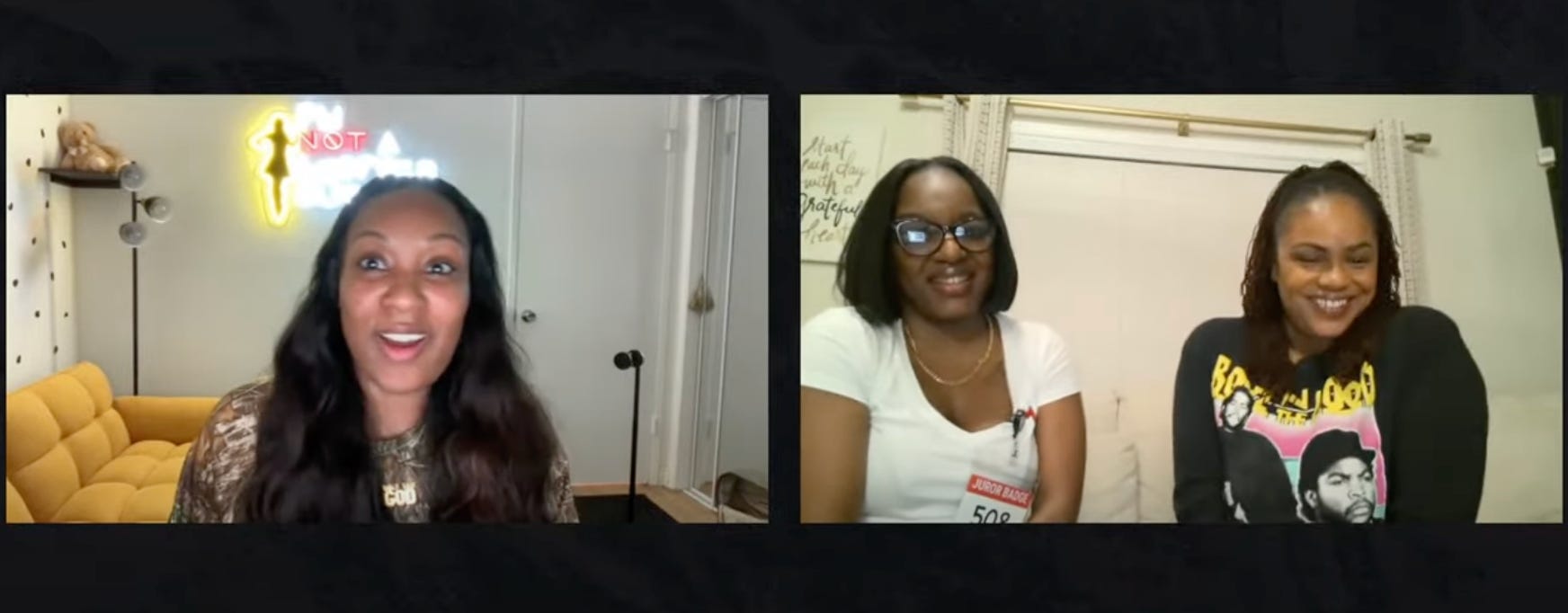
The woman said some jurors agreed YSL is a gang, but “are they an enterprise?”
“Was it this whole big organized thing, or was it just a bunch of people that were affiliated with each other doing individual stuff to take care of their families or to get revenge?” she said.
She said jurors discussed the racketeering conspiracy charges last because they thought it would be the most complex, but she said all quickly agreed not enough evidence existed.
“Most of the overt acts were Instagram pictures. A lot of us kind of feel like, I’m not about to put nobody in jail for, like, Instagram pictures,” she said.
One juror said she didn’t know much about Williams as a musician when trial began, and the trial made him seem like someone who “pulled himself up, you know, got himself out of the position that he was in, and tried to help other people.”
“It actually shined a more positive light in my eyes than what the state was trying to present,” she said.
Schardt, a licensed lawyer in Georgia since 2007, said on Twitter / X Tuesday night that he’ll visit Stillwell in jail Wednesday.
“My hope is to return him to his family within the week. As for my thoughts about this whole experience, just cherish the ones you love and try your best to love the ones you think you hate,” he wrote, ending with the hashtag NoOpps.
I’ll interview Schardt live Thursday on my YouTube channel, where you can find extensive coverage of the trial. Stay tuned for the time, and look for more coverage of the jury here on www.legalaffairsandtrials.com.
Previous article:
Thank you for supporting my independent legal affairs journalism. Your paid subscriptions make my work possible. If you’re not already a paid subscriber, please consider purchasing a subscription through Substack. You also can support me through Venmo (MeghannCuniff), CashApp ($MeghannCuniff) and Zelle (meghanncuniff@gmail.com). Thank you!