

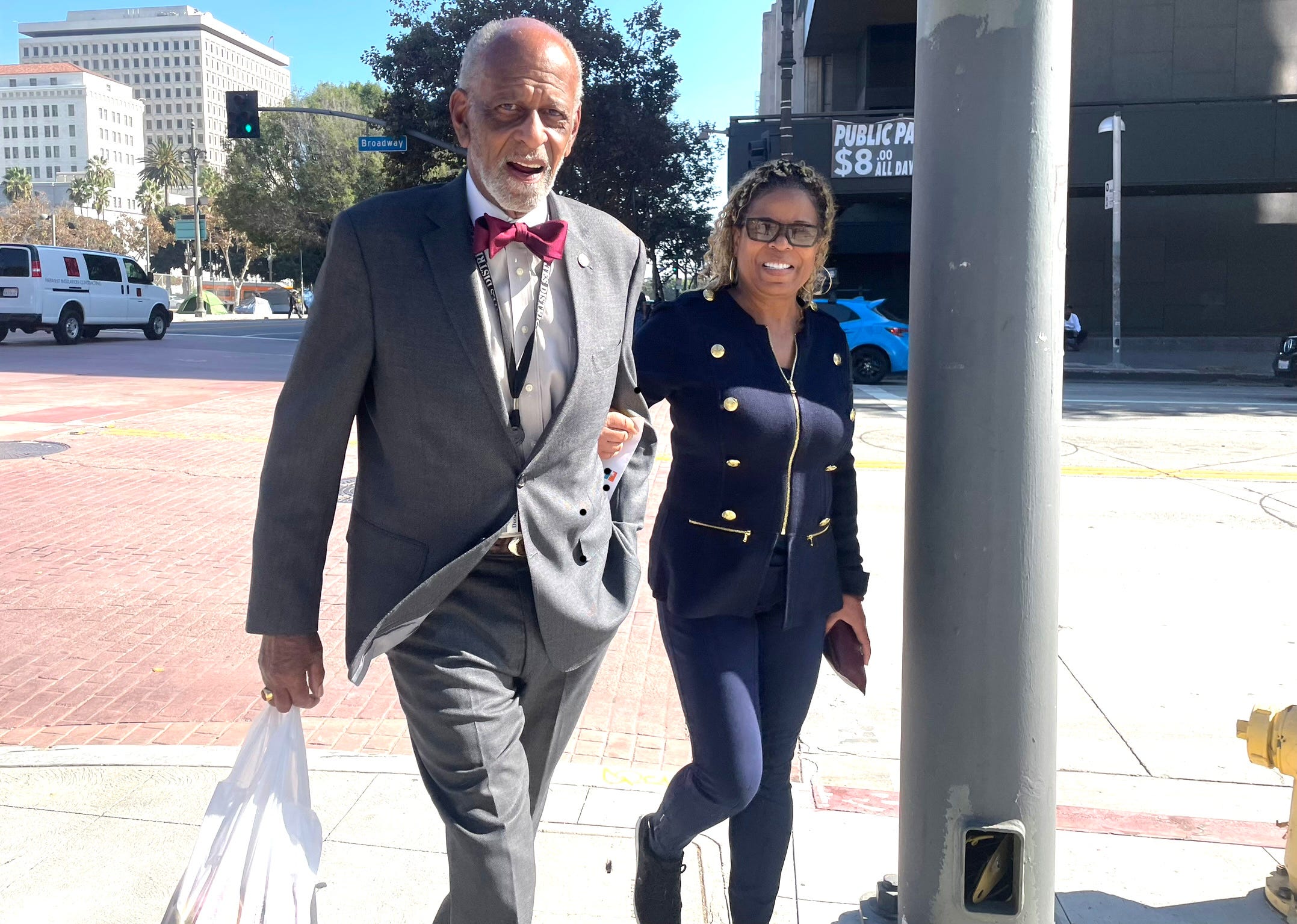
An order last week from a federal judge in Los Angeles set the stage for a hearing many political watchers predicted would be anything but boring.
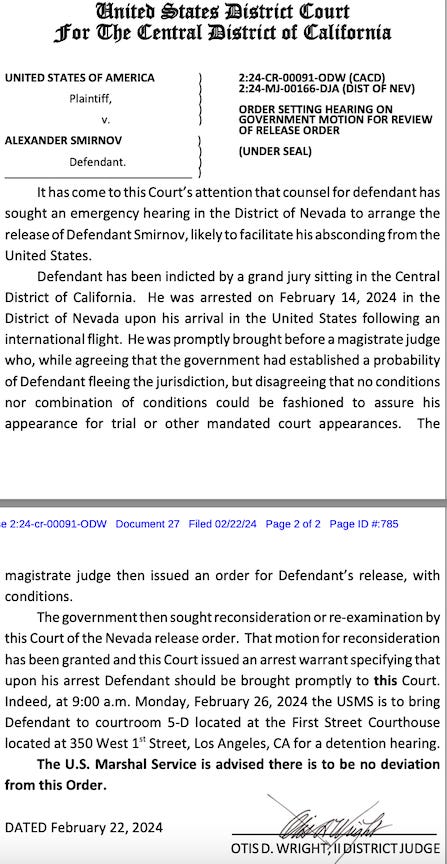
Lawyers for an ex-FBI informant accused of lying about President Joe Biden and his son Hunter secured the man’s release from jail, but U.S. District Judge Otis D. Wright II wrote it was “likely to facilitate his absconding from the United States,” and all needed to report to his Los Angeles courtroom at 9 a.m. Monday.
It was an attention-grabbing line from a powerful judge in a politically charged case with ties to Russian disinformation campaigns, and it stemmed from a routine release request granted by a U.S. magistrate judge in Nevada. Alexander Smirnov’s attorneys pushed back in a filing that told Judge Wright, “The suggestion that defense counsel is participating in an unlawful plot by advocating for release … is wrong.”
Amid the heightened attention, the comment went unaddressed Monday as 79-year-old Wright said he simply doesn’t see any way to ensure Smirnov “will not flee the jurisdiction” outside locking him up before trial.
Smirnov “will be remanded pending trial. Deputies!” Wright said as U.S. marshals stood by to return Smirnov to jail.
Smirnov’s lawyer David Chesnoff told reporters after court that the judge approved his out-of-state attorney application without question, and he believes the comment about facilitating Smirnov’s “absconding” is “a dead issue.”
“The judge admitted me to practice today, and I don’t think there’s any controversy,” said Chesnoff, a longtime Las Vegas criminal defense attorney whose clients include mobsters, poker stars, professional athletes and Hollywood celebrities.
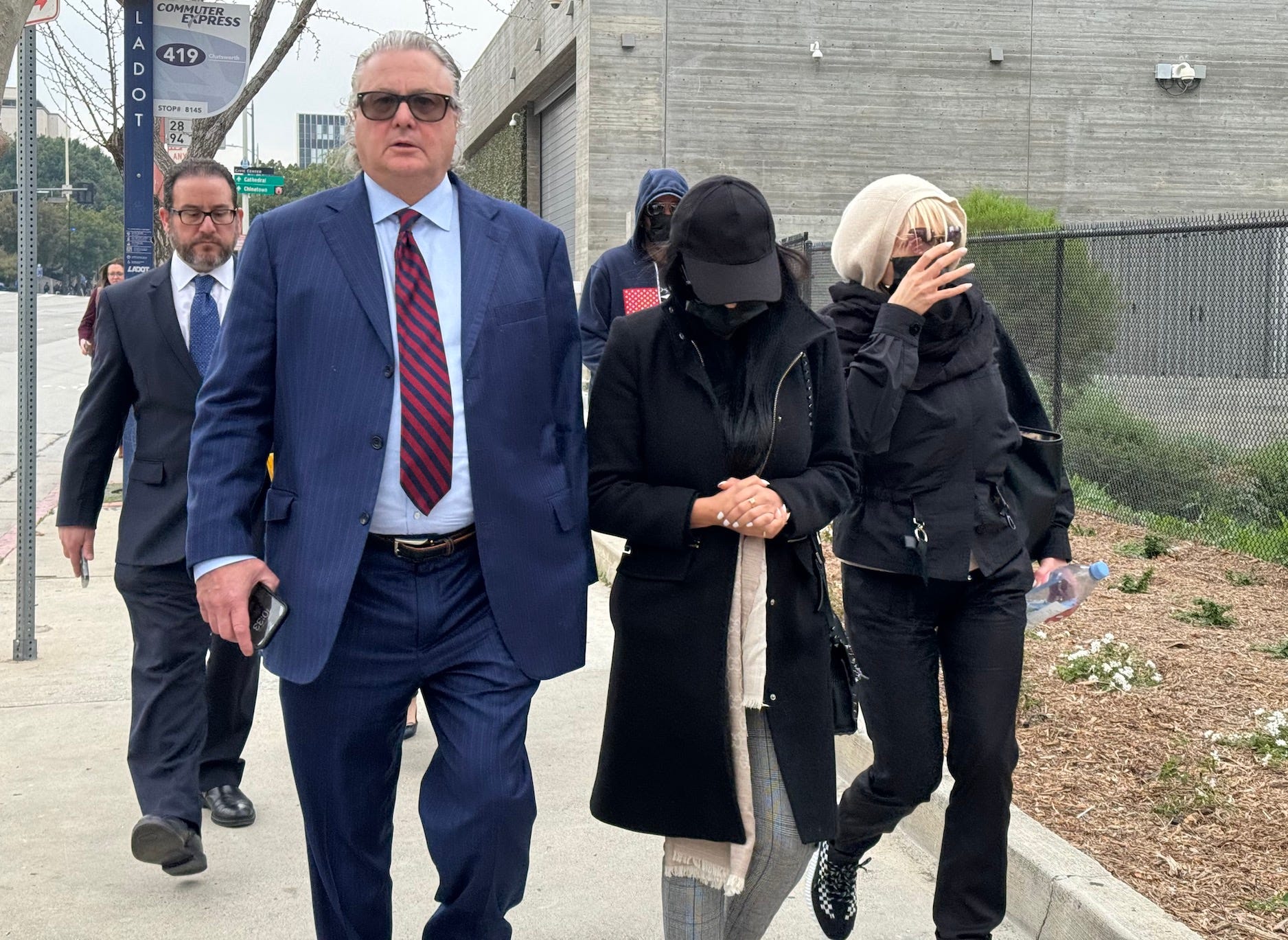
Chesnoff left the courthouse with Smirnov’s supporters, including his girlfriend of 20 years, Diana Lavrenyuk, and a cousin from Miami, Linor Shefer, who both tried to conceal their faces from cameras. Lavrenyuk’s son, a retired U.S. Marine Corps sergeant, also told Judge Wright in a letter that Smirnov “would not disobey a court’s order or flee.”
Wright never indicated during Monday’s 35-minute hearing that he suspects Chesnoff and Schonfeld are trying to help Smirnov flee. The order he issued last week could be read to mean he simply believes the release arrangement will facilitate Smirnov’s fleeing the country, not that his lawyers would play any devious role in it.
The judge on Monday focused first on basics already covered in Smirnov’s arraignment in Las Vegas before hearing argument on whether he should remain in jail pending trial. Wright said the 37-page indictment is “longer than it needs to be because it’s all kinds of copies of things, screenshots.”
Senior Assistant Special Counsel Leo Wise said nothing can ensure Smirnov won’t flee. Lavrenyuk, who lives with Smirnov in Las Vegas, offered to be his third-party custodian, but Wise pointed out that she told U.S. District Court pre-trial services she doesn’t know how much money is in the savings accounts that pays her living expenses.
“Well, we know how much is in that account: As of February 20 … it was $3.7 million,” Wise said. “How could someone who doesn’t know they have access to $3.7 million be asked to act as a third-party custodian?” Wise said the account paid $108,000 in credit card bills for Smirnov in 2022 and $275,000 in 2023, but Smirnov disclosed to pre-trial services only a few thousand dollars in monthly expenses. Smirnov also didn’t disclose a business account called Avalon Group with nearly $3 million, Wise said.
Chesnoff suggested electronic monitoring that can limit Smirnov’s access to airports, but Wright said the device generally entails a “plastic strap.”
“But, Your Honor, it’s regularly used throughout the federal courts in the United States,” Chesnoff said.
Before he ordered Smirnov detained, Wright said, “There is nothing garden variety about this case.”
And, as the judge regularly demonstrates, there’s nothing garden variety about him. The 2007 George W. Bush appointee has a reputation for abruptness that includes brash comments and a willingness to intervene in front of juries that can flummox attorneys and influence plea deals.
In May 2022, Wright derailed a criminal sex trafficking trial by recusing himself during the proceeding and telling a defense attorney he could no longer trust anything she says.
And last October, attorneys for a man on trial for driving his car through a March 2021 “Stop Asian Hate” rally in Los Angeles accused Wright of misconduct for questioning a sheriff’s sergeant about the consistency of video evidence and statements made by the defendant.
The case file shows Wright rejected a mistrial request and instructed the jury not infer any opinion of the case from his questions, but prosecutors struck a plea agreement with defendant Steve Lee Dominguez the next day that ended the trial.
They did so amid a dispute with Dominguez’s lawyers after suggesting a second additional jury instruction beyond the curative instruction the judge read after the defense first complained about his questions. Federal Deputy Public Defenders Kate Morris and Ijeoma Eke argued Wright “posed a leading question clearly expressing the Court’s opinion that the defendant lied to 911.”
A transcript excerpt shows Wright quoted the 911 call, then asked the witness in front of the jury, “This wasn’t really what happened out there, is it?”
Morris and Eke said Wright “compounded” his error by “highlighting the question, along with its own opinion of the evidence -- before instructing the jury to disregard it.”
“In short, the Court expressed its view to the jury that Mr. Dominguez’s entire defense is a lie,” Morris and Eke wrote on Oct. 26.
Wright accepted Dominguez’s guilty plea that day for one felony count of bias-motivated interference with federally protected activities. The agreement calls for prosecutors to recommend between one year to 18 months in prison when he’s sentenced May 6, though Wright could buck that recommendation. The only mention of the 911 call that captured the judge’s interest was crossed out of the agreement’s factual basis.
In Smirnov’s case, Monday’s hearing was Wright’s first face-to-face with Smirnov, his lawyers and the prosecutors from the U.S. Department of Justice Special Counsel’s Office that also is prosecuting Hunter Biden in Los Angeles for alleged tax fraud.
Smirnov, 43, was arrested at the Las Vegas airport on Feb. 14 after a grand jury returned an indictment on charges of make a false statement to federal officials and creating a false and fictitious record. He’s accused of providing “false derogatory information” to the FBI about the Bidens, including about their supposed acceptance of bribes from the Ukrainian energy company Burisma. The Burisma allegations have helped fuel Republican impeachment efforts against Biden and are a frequent campaign talking point for Donald Trump.
U.S. Magistrate Judge Daniel J. Albregts in the District of Nevada allowed Smirnov to leave jail on his own recognizance (no bail required) on Feb. 20, saying that “while one may argue the underlying politics of the case or the danger to our system … they aren’t a consideration for this Court under the Bail Reform Act as it relates to clear and convincing evidence of danger.”
Albregts said Smrinov was a risk to flee, but he also said conditions exist such as location monitoring that will ensure he shows up for his court appearances.
“I understand the concern about foreign intelligence agencies potentially resettling Mr. Smirnov outside of the United States — his connections to them — but I think to some level that’s speculative as well because, as Mr. Chesnoff points out, I don’t know what Mr. Smirnov will be thought of in Russia,” Albregts said, according to a court reporter’s transcript. “But my guess is, at this stage, he probably thinks that’s not the most attractive place to go either if he was in fact inclined to go hide somewhere”
Albregts declined to stay his request while prosecutors appealed, and Smirnov left jail on Feb. 20. His freedom didn’t last long: Prosecutors moved to reopen the detention hearing before Judge Wright in Los Angeles, and Wright issued his three-paragraph order the next day that said the release arrangement for Smirnov was “likely to facilitate his absconding from the United States.” The order said Wright was granting prosecution’s motion for reconsideration but would still hold a hearing on Monday.
U.S. Marshals arrested Smirnov at Chesnoff’s office, and Chesnoff and his law partner Richard Schonfeld filed an emergency motion with Judge Albregts that said Smirnov shouldn’t have been arrested again after being released. Chesnoff and Schonfeld also filed an emergency motion seeking a court order preventing U.S. marshals from transporting Smirnov to Los Angeles, but Albregts cited Judge Wright’s order when rejecting them as moot.
U.S. 9th Circuit Court of Appeals Judges Richard R. Clifton, Consuelo M. Callahan, Holly A. Thomas rejected an emergency motion from Chesnoff and Schonfeld on Sunday.
Chesnoff and Schonfeld filed an opposition to Smirnov’s detention with Judge Wright that said Judge Albregts “issued a careful, balanced analysis.”
“Pointedly, when he was arrested for a second time, Mr. Smirnov was already free and working on his defense in his lawyers’ office,” they wrote. “This is hardly what would be expected of a person preparing to jump bail and flee the country; to the contrary, had he not been rearrested, Mr. Smirnov would have voluntarily traveled to Los Angeles with his lawyers to attend the upcoming hearing.”
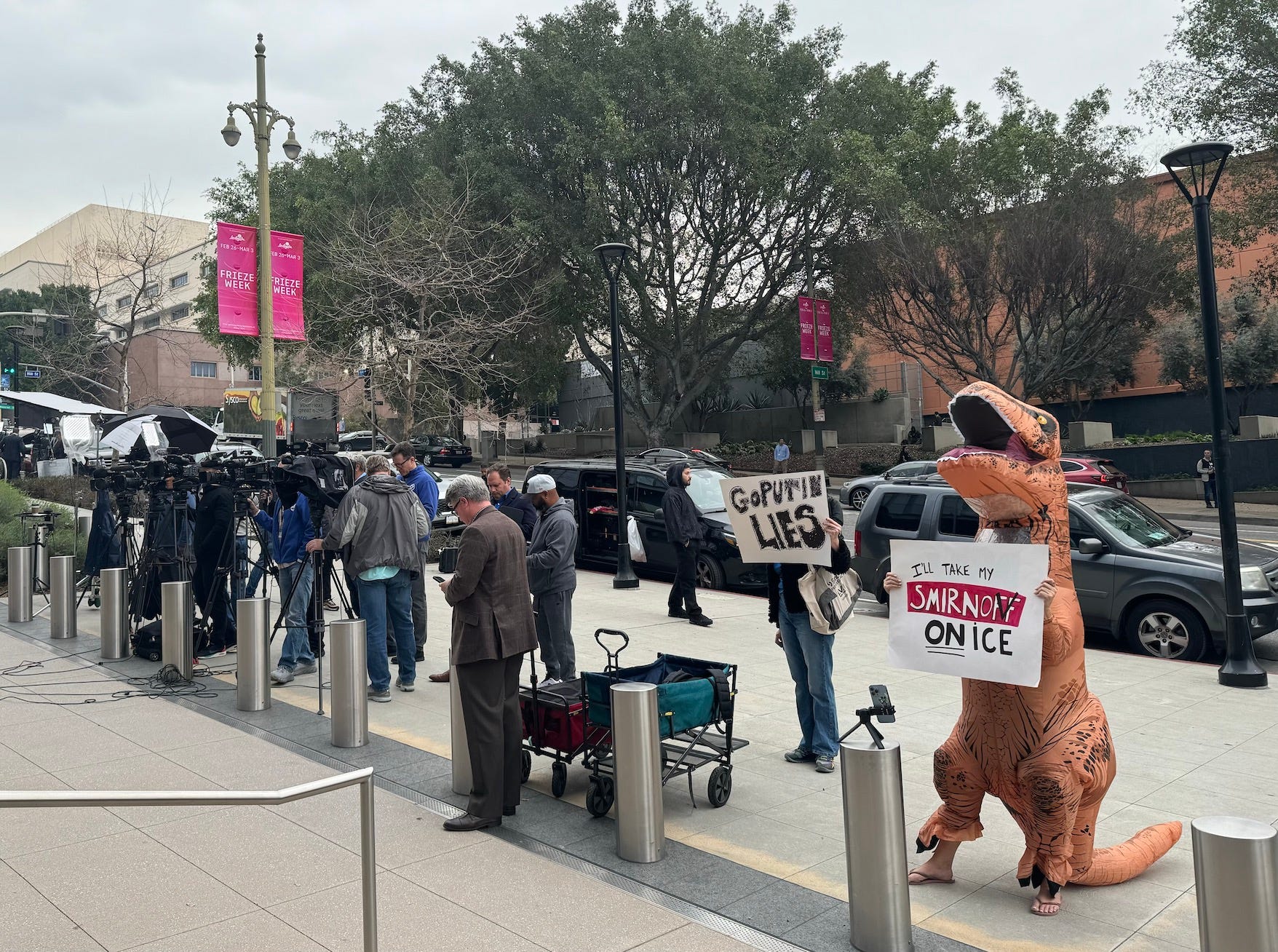
National media showed up in Wright’s courtroom Monday morning, greeted with the music Wright often plays when court isn’t in session and unsure of what to expect. Wright took the bench about 9 a.m. and indicated a big show wasn’t in order: “I’ve got a fairly busy calendar in this morning, so I want to be as efficient as possible.”
He also made clear that the prospects for Smirnov’s release weren’t good.
“I am concerned by what appears to me to be a habit or practice of making false statements,” Wright said. “And I take no comfort and assurances that you may offer.”
Smirnov is an American citizen who lived in Israel and has an Israeli passport that Chesnoff said he surrendered as part of his release conditions in Nevada. His native language is Russian, and he also speaks Hebrew and English.
“I remind the court he gave 10 years of service to the United States. And it’s now only argued by the government that he made a false statement about facts that occurred seven years ago,” Chesnoff said.
Wise said that isn’t true.
Smirnov was “peddling a new lie” and a “new disinformation story … from Russian intelligence” about a hotel in Kiev where Hunter Biden supposedly called his father. Wise also said federal agents chose to arrest Smirnov at his lawyers’ office “because had nine firearms, including an assault style weapon in his home.”
The case is “a fairly straightforward matter,” Wise said.
“The defendant claimed meetings that didn’t happen. The records are fairly clear … that he made it all up,” said Wise, a Harvard Law School graduate whose worked some of the biggest federal corruption cases in the U.S., including the Enron prosecution and the Gun Trace Task Force scandal in Baltimore.
When he introduced himself to Wright, Wright replied, “You’re with the DOJ? That’s surprising.”
“Why’s that?” Wise asked with a chuckle.
Wright said he’d tell him later.
Smirnov’s case could be the most high-profile of Wright’s career.
The Tuskegee, Alabama, native served in the U..S Marine Corps and was a deputy sheriff for 11 years before earning his law degree from Southwestern Law School in Los Angeles in 1980. He’s a former state deputy attorney general who was in private practice before Gov. Arnold Schwarzenegger appointed him to the Los Angeles County Superior Court bench in 2005.
Wright and his wife filed for bankruptcy in 2011, four years after he got a lifetime appointment to the federal bench under Article III of the U.S. Constitution. In 2021, the 9th Circuit affirmed that judicial immunity shielded Wright from civil rights claims brought by attorney Caree Harper after he ordered U.S. marshals to detain her for contempt of court during a status conference in 2015.
Previously, Wright’s most high-profile case as a federal judge was probably the civil case against Prenda Law and attorneys John Steele, Paul Hansmeier and Paul Duffy in which he ruled they were vexatious litigations and sanctioned them into dissolution. His $81,319.72 sanctions order in May 2013 was 11 pages and included several references to the science fiction series Star Trek.
I got to know Judge Wright a bit last August when I covered music legend Smokey Robinson’s trial in the breach of contract lawsuit brought by his former manager. I discussed the trial on YouTube with Law360 reporter Craig Clough, including Wright’s blatant hijacking of exams.
Here are some highlights:
This is the second Central District of California criminal case I’m covering right now that involves an emergency motion to the 9th Circuit and a defendant getting released then re-arrested again. I am due for another article on the Robert Rundo situation with U.S. District Judge Cormac J. Carney. Look for it later this week.
Thank you for supporting my independent legal affairs journalism. Your paid subscriptions make my work possible. If you’re not already a paid subscriber, please consider purchasing a subscription through Substack. You also can support me through Venmo (MeghannCuniff), CashApp ($MeghannCuniff) and Zelle (meghanncuniff@gmail.com). Thank you!
Thank you for this very informative post. For me, your work in tracking and explaining cases that involve public issues and the government bringing public corruption to justice are the most important and compelling. Not to say your posts on the drama of music industry folks is not interesting, just not as important to our civic life!