
As sentencing looms, Tory Lanez's lawyers quietly pursue an unusual appellate request
It's unclear if the appellate court will address the petition to disqualify Judge David Herriford before or after Lanez is sentenced for shooting Megan Thee Stallion.


Links to PDFs of the appellate documents, including the full transcript from the hearing on the motion for new trial, are available at the end of the article.
As prosecutors prepare for sentencing, rapper Tory Lanez’s lawyers have taken the unusual step of asking the California Court of Appeal to disqualify the judge who rejected their motion for new trial.
The May 19 appellate petition has sat untouched for nearly three weeks, and it’s unclear if the court will consider it before Los Angeles County Superior Court Judge David Herriford is to sentence Lanez on June 13 for his three felony convictions over the 2020 shooting of rapper Megan Thee Stallion. (UPDATE: The appellate court denied the petition on Thursday, June 8.)
In other cases, writ petitions about an upcoming superior court hearing have sat unanswered until after the proceeding, then been denied as moot. Los Angeles lawyer Matthew Barhoma did not originally ask the court to delay Lanez’s sentencing, but he filed a request to do so last Thursday that has not yet been addressed.
Barhoma and prominent Miami, Florida-based lawyer Jose Baez addressed their petition to the 2nd District Court of Appeal’s Division 6, which is based in Ventura and does not regularly hear Los Angeles cases. A court clerk assigned it to the L.A.-based Division 3.
Barhoma didn’t respond to an email asking why he tried to put the case in Ventura, but it’s the only division that isn’t regularly assigned Los Angeles County cases.
The Ventura division “does sometimes handle Los Angeles appeals,” longtime appellate lawyer David Ettinger told Legal Affairs and Trials.
“But you can’t on a writ petition pick your division,” said Ettinger, who is of counsel with Horvitz & Levy LLP and former president of the California Academy of Appellate Lawyers.
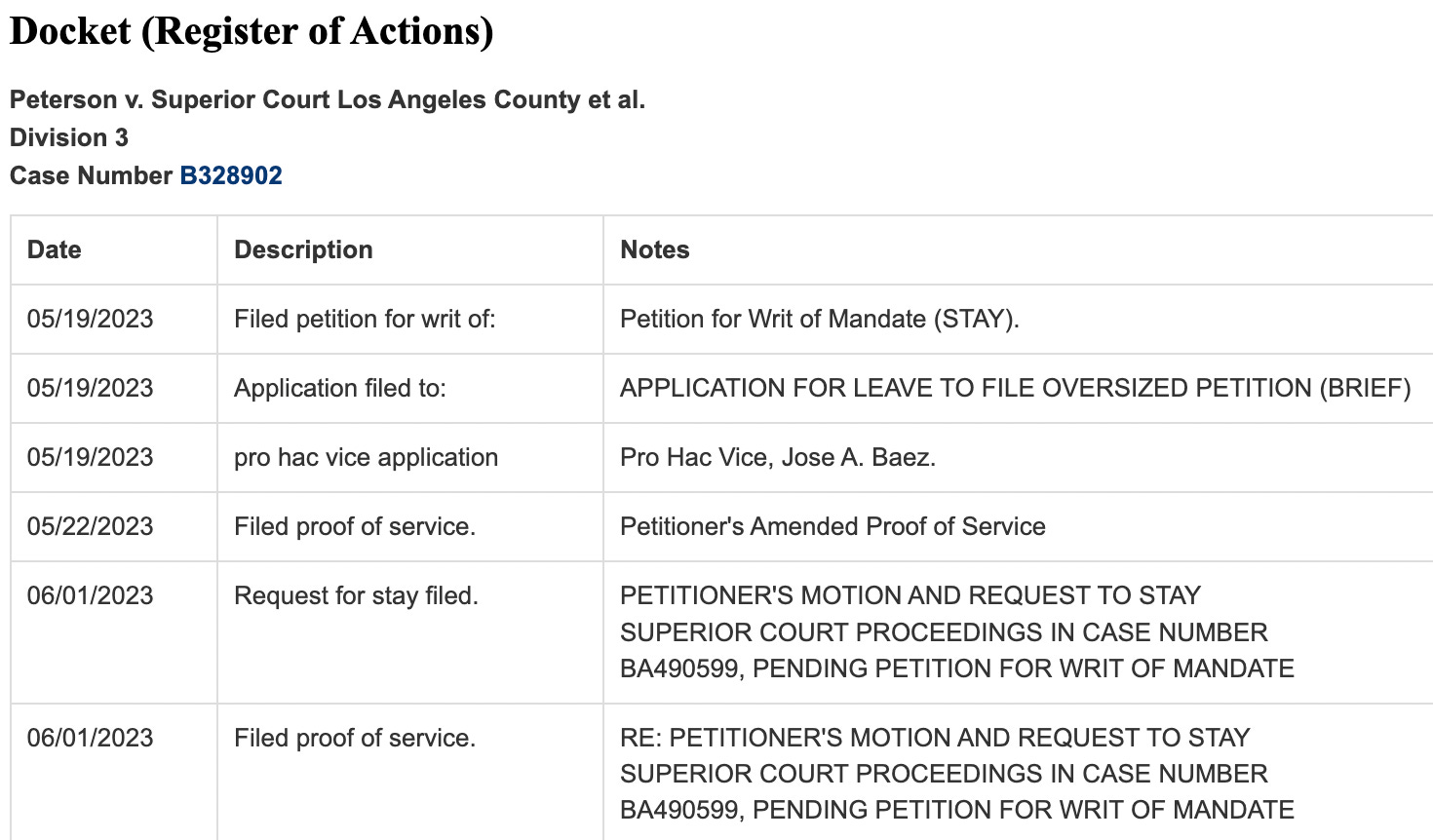
The filing itself has not affected Lanez’s scheduled sentencing. The appellate court has not stayed the proceeding, and Judge Herriford is not required to delay sentencing while the petition is pending.
Last month, Judge Herriford rejected Barhoma’s and Baez’s first disqualification statement against him during the second day of the hearing on Lanez’s motion for new trial. Herriford said in a written order that the statement “on its face discloses no legal grounds for disqualification.”
He didn’t stop there: Anticipating Barhoma and Baez would turn to the appellate court, the judge said he was including with his order a “verified answer” in the event “an appellate court determines that an answer should have been timely filed.”
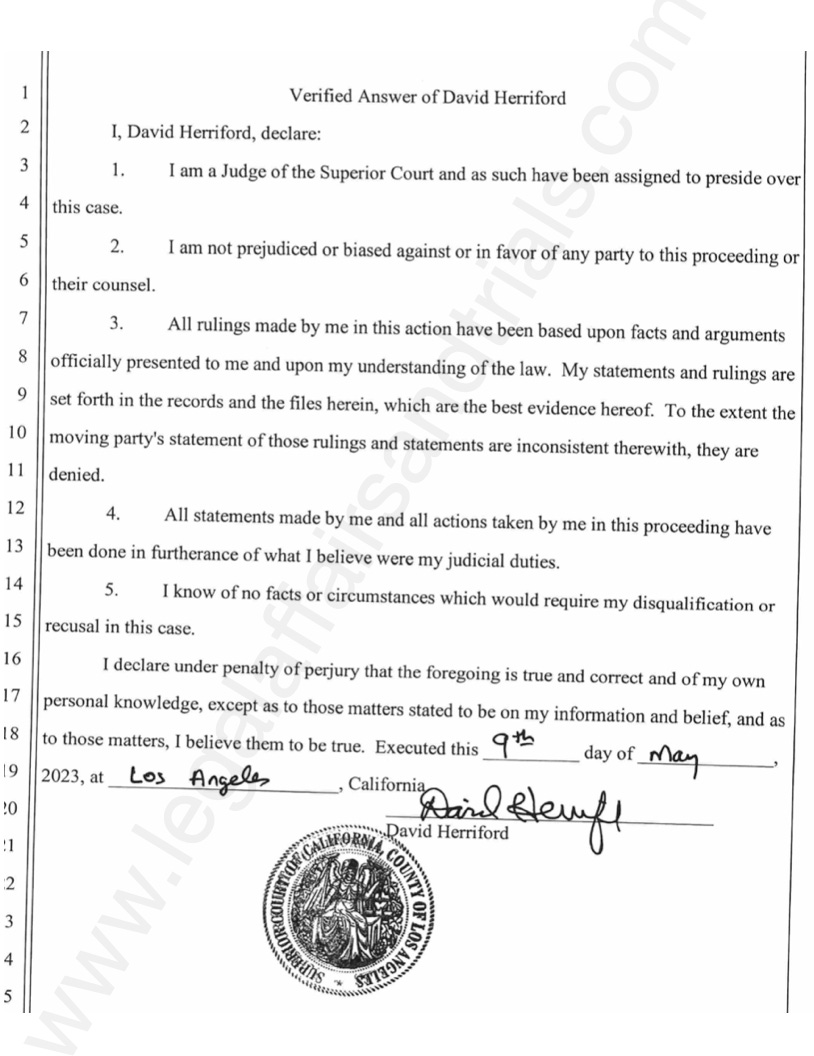
“I am not prejudiced or biased against or in favor of any party to this proceeding or their counsel,” the judge wrote. “All rulings made by me in this action have been based upon facts and arguments officially presented to me and upon my understanding of the law. … All statements made by me and all actions taken by me in this proceeding have been done in furtherance of what I believe were my judicial duties.”
By turning to the appellate court, Barhoma and Baez are wading deeper into an issue that’s drawn heightened attention in the last decade as California judges grapple with what some say is a rise in frivolous attempts to disqualify them.
“More often than not, judges are being challenged not because they are biased, not because they are unable to be fair, but because they ruled against that lawyer,” Judith C. Clark, presiding judge of the Riverside County Superior Court, said last month during a panel discussion at the California Women Lawyers’ annual conference in Costa Mesa.
Clark referenced “what I comfortably describe as an abuse by counsel of the use of a 170.6 to challenge a judge.” She told the attorneys in the room, “You need to exercise that authority as an officer of the court with the discretion and judgment and professionalism that it places upon you.”
Meanwhile, Los Angeles County prosecutors are preparing for a hearing that could put 30-year-old Lanez in prison for at least a decade and possibly more. They filed a five-page motion on May 23 that asks Herriford to consider Lanez’s use of a firearm and the great bodily harm he caused Megan to be aggravating factors in his sentence, which under state law would make it possible to send Lanez to prison for more than the middle range of his maximum sentence of 22 years and eight months. The motion says Lanez’s crimes show “a high level of callousness.”
“The brazenness of Defendant’s conduct is alarming but the conscious disregard for the well-being and safety of all those around him signifies a high degree of indifference for human life,” according to the motion.
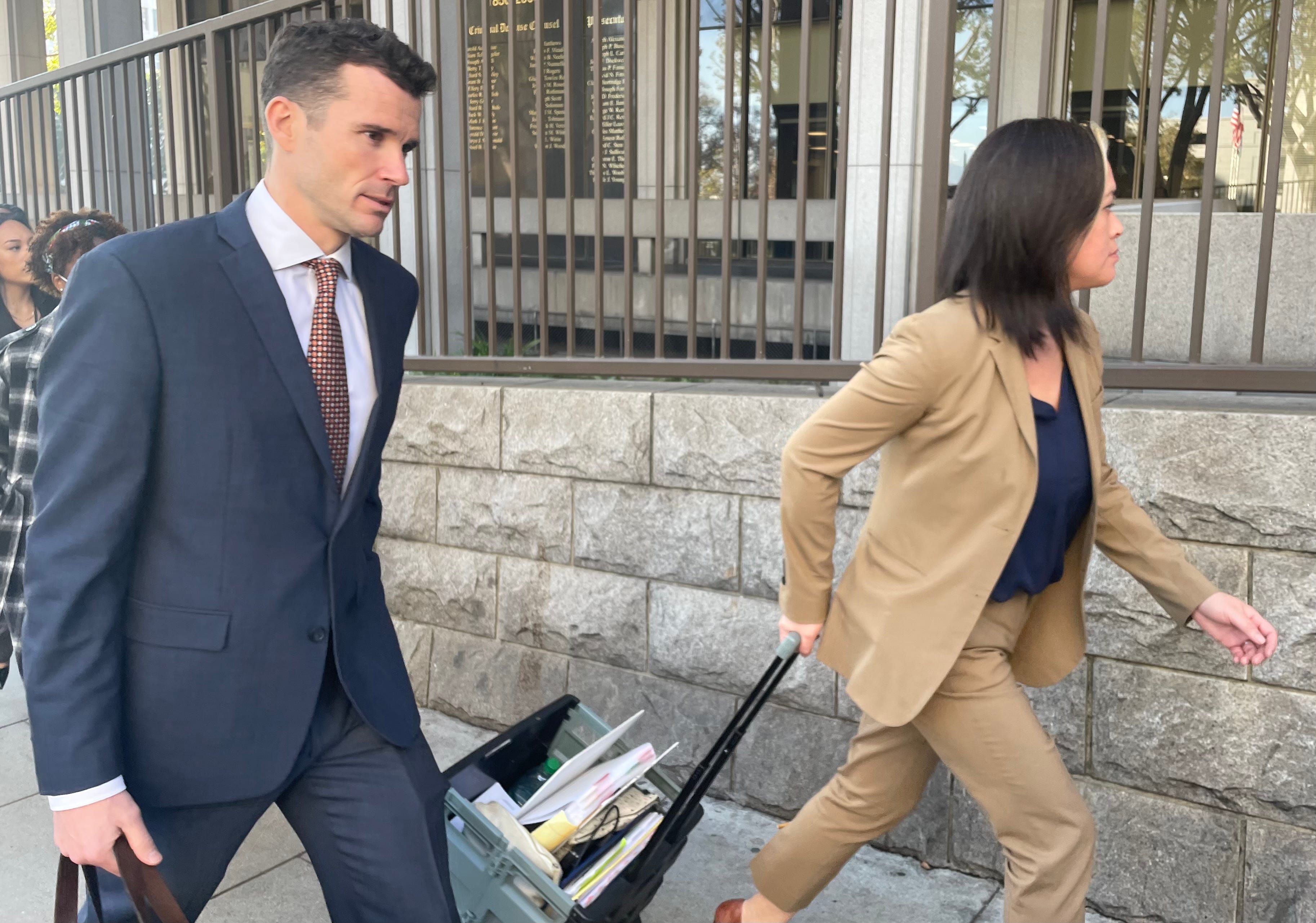
Deputy District Attorneys Alex Bott and Kathy Ta will detail their exact sentencing recommendation in a more expansive memorandum that’s due Tuesday. Barhoma and Baez can file an optional memorandum. They also can argue against the aggravating factors Bott and Ta are seeking and argue for a sentence below the middle range. They told Herriford during last month’s hearing that they likely will call witnesses, so Lanez’s sentencing could be a multi-day affair.
Barhoma said after the hearing that he was not thinking about sentencing and was instead focused on other litigation options. He filed his appellate petition a week later. He’s retroactively seeking permission to exceed the court’s 10-page limit, saying his 31-page filing is necessary “because the case has complex procedural and factual background covering over two weeks of trial and two days of post-trial proceedings ranging over multiple judicial and constitutional errors.” (UPDATE: It turns out there is no 10-page limit, as the court explained when it rejected the petition on Thursday, June 8.)
‘An extremely unorthodox approach to post-trial motions’
California has two procedures that allow for a judge’s disqualification. Code of Civil Procedure 170.6 is most often cited: It allows for attorneys to seek the disqualification of one judge per case if they believe the judge is biased.
It’s the procedure that’s drawn the most controversy: In 2016, Orange County Superior Court Judge Rick King, at the time the presiding judge of the felony panel, refused to grant several disqualification motions brought by prosecutors under 170.6 against then-Judge Thomas Goethals, who is now an appellate justice.
Prosecutors had been “papering” Goethals — judicial slang for 170.6 disqualifications — in dozens of homicide and other major felony cases, removing him from so many that he was nearly out of work. King determined the practice was disruptive and done by the Orange County District Attorney’s Office as bad-faith retaliation for decisions Goethals made in cases related to the illegal use of jail informants.
The 4th District Court of Appeal, Division 3, in Santa Ana upheld the legality of the repeat disqualification requests and ordered King to grant them. But the justices did so reluctantly: They essentially said their hands were tied by a 1977 California Supreme Court ruling. They asked the high court to reconsider the case, which it declined to do.
That means 170.6 challenges are here to stay. But in Lanez’s situation, Barhoma and Baez filed their 170.6 disqualification against Herriford long after the law allows because Herriford has made many substantive rulings and presided over the trial.
Despite this, Barhoma and Baez argue Herriford errored when striking their 170.6 bid as untimely. They also challenge Herriford’s original ruling that struck the disqualification motion brought under Code of Civil Procedure 170.1, which allows for attorneys to try to disqualify a judge at any time if they believe a bias has arisen. The code specifically cites financial interest to a case and personal ties to an attorney as constituting disqualification.
Barhoma and Baez don’t allege anything like that regarding Herriford. Instead, their petition repeats arguments made in Barhoma’s disqualification motions about Herriford’s approach to the hearing, which several experts told Legal Affairs and Trials likely would be doomed before any jurist.
“It appears, in fact, that defense counsel wanted to take an extremely unorthodox approach to the post-trial motions, and I think that most judges would have ruled exactly the way this judge ruled,” said Lawrence Rosenthal, a professor at Chapman University School of Law.
Brian Gurwitz, a criminal defense lawyer in Tustin, California, said Lanez’s lawyers’ began their initial disqualification motion “by correctly noting that judicial rulings don’t ordinarily constitute a basis for recusal (even if those rulings are wrong), but then entirely ignores that standard.”
“The motion doesn’t come remotely close to suggesting the type of bias that would require recusal,” Gurwitz said.
Barhoma and Baez may have tried to disqualify Herriford “thinking they will shame the judge into treating them differently.”
“But it could backfire. Saying that it would be unethical for a judge to continue presiding over a case because of his impermissible bias should be reserved for those cases where the law supports that position,” Gurwitz said.
A licensed California lawyer since 1982, Herriford is a Stanford Law School graduate, former Los Angeles County deputy district attorney and former criminal defense attorney. He’d operated his own firm for 20 years when then-California Gov. Arnold Schwarzenegger appointed him to the Los Angeles County Superior Court in 2010.
Barhoma’s appellate petition argues Herriford “demonstrated partiality in three ways” during the two-day hearing last month.
He directed Barhoma and Baez to present their arguments in the order he wanted instead of the order they wanted.
He didn’t allow them to call witnesses for live testimony. (He said the witnesses’ declarations were all he needed.)
He interrupted them and cut them off when they were arguing. “Conversely, the judge gave the People a full and fair opportunity to present argument uninterrupted, even when the case cited by the People did not stand for the proposition that they advanced.”
“Together, these facts reveal such a high degree of favoritism or antagonism as to make fair judgment impossible,” according to the appellate petition. “Given these facts, a reasonable person would fairly entertain doubts concerning the judge’s impartiality. As a result, disqualification is required.”
Rosenthal, a former federal prosecutor, said the argument contradicts established precedent regarding when judges must disqualify themselves from cases.
“It’s extremely well established that a judge should not be disqualified because of the judge’s rulings, and that’s essentially what the motion is based on,” Rosenthal said. “Judges are constantly going to be making rulings and favoring one side and not the other, and if that were the basis for disqualification, you could never finish a trial because the disappointed litigant could always seek disqualification.”
Ethics expert Carol M. Langford said the approach raises questions about Barhoma’s and Baez’s ability to effectively advocate for Lanez in a sentencing hearing that could send him to prison for 20 years.
“I don’t like the way they treated the judge, and I don’t think that is a way to act,” said Langford, an attorney and adjunct professor at the University of San Francisco Law School. “You’re not allowed to bring frivolous motions, and they set themselves up for a [state bar disciplinary] complaint by that judge.”
But Jeffrey Cunningham, a partner at Goldberg Segall LLP in New York, said Barhoma’s and Baez’s disqualification motion “stays away from directly challenging Judge Herriford’s qualifications or integrity, avoiding the Rule 8.2 minefield,” referring to the California Rules of Professional Conduct’s prohibition on attorneys making knowingly false statements challenging the integrity of a judicial officer.
“The timing of the defendant’s motion alone invites speculation that it may have been primarily tactical. That being said, assuming that the motion was thought to have merit, from the standpoint of professional responsibility it appears the defendant’s attorneys were within their rights to file the motion under both California’s Rules of Professional Conduct and the [American Bar Association’s] Model Rules of Professional Conduct,” Cunningham said in an email to Legal Affairs and Trials. “In fact, the attorneys’ duties of competence (Rule 1.1) and diligence (Rule 1.3) require such a motion if they believed the Court was biased against their client.”
A young attorney partners with a prominent veteran
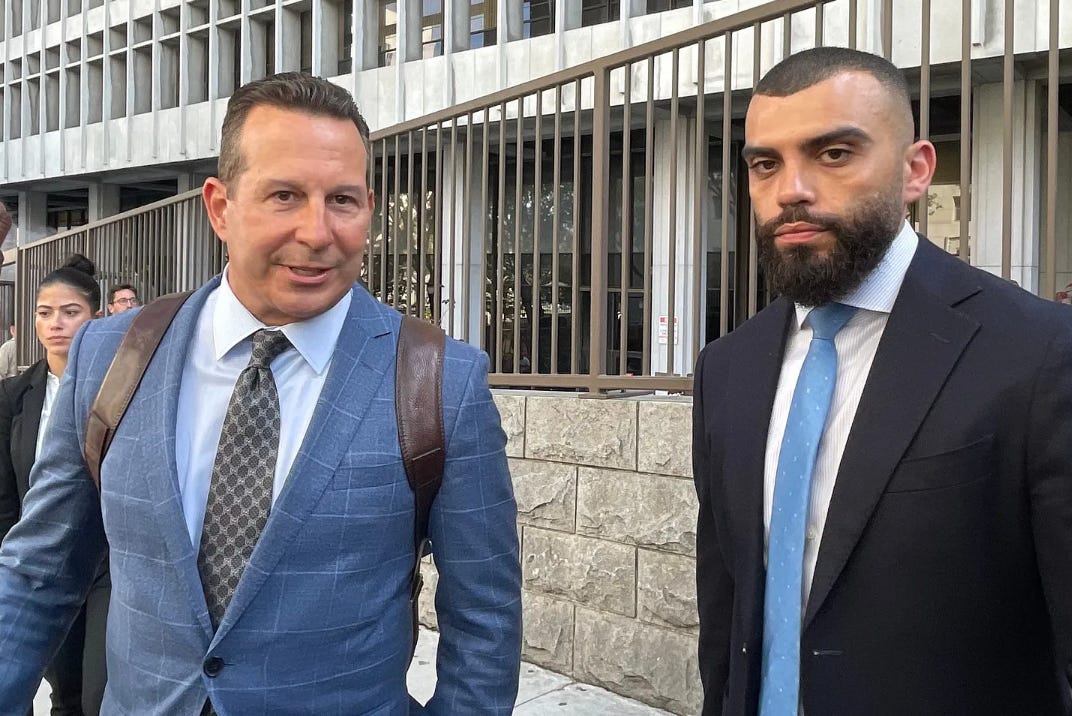
Lanez hired Barhoma and Baez after a jury convicted him of first-degree assault with a firearm, discharge of a firearm with gross negligence and having a concealed firearm in a vehicle - unregistered following a two-week trial in December.
For Barhoma, a licensed California lawyer since December 2017, the work is the most high-profile of his career. Baez, a licensed lawyer in Florida since 2005, secured a storied history in courtroom lore when he got accused child killer Casey Anthony acquitted in 2011, then re-upped himself in 2014 when he successfully represented the now-late NFL star Aaron Hernandez in a double-murder case. But Barhoma’s only brush with high-profile cases before Lanez was talking about them on Law & Crime Network and Court TV as a guest analyst.
Prior to opening his own law firm, the California Western School of Law graduate worked at San Diego-based Higgs, Fletcher & Mack, according to his biography on a paid advertising website.
“From there, Mr. Barhoma build [sic] Barhoma Law, P.C., and provided Of Counsel serves [sic] to Aaron Spolin with Spolin Law,” according to the website.
The Los Angeles Times in April published two articles about Spolin that questioned the quality of his appellate work, saying he “encouraged people to spring for pricey legal services that he knew or should have known had little or no chance of success.”
Barhoma’s experience in the appellate courts is much more limited than Spolin’s. While Spolin is listed as an attorney in dozens of cases in most appellate districts in California, Barhoma is listed in six. He recently argued an appeal in the 5th District in Fresno on behalf of a tattoo shop owner convicted of murder for shooting a homeless man to death. The court rejected Barhoma’s arguments and affirmed the man’s conviction eight days later.
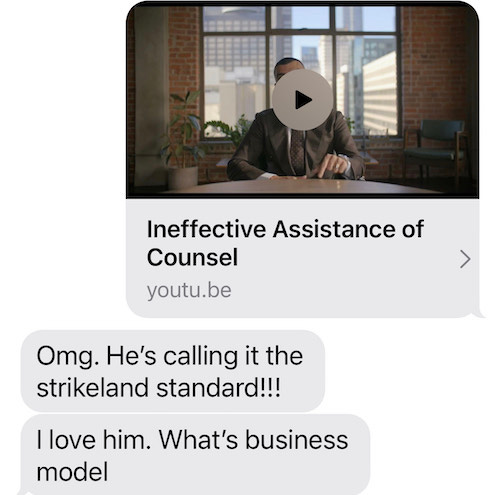
Part of Barhoma’s practice focuses on arguing ineffective assistance of counsel by other lawyers, as he explains in an advertising video in which he repeatedly mispronounces the Strickland standard as “the Strikeland standard.”
UPDATE: Sadly, Barhoma has removed the video from YouTube. I didn’t record my own copy, but I do have this memorial text exchange:
Baez acknowledged his and Barhoma’s inexperience with judge disqualifications in California during last month’s hearing, telling Herriford, “As the court knows, I’m not from this jurisdiction, and Mr. Barhoma’s never filed one of these.” Baez was joined by his associate Christine Benavente, who’s been a licensed lawyer in Florida for nine months.
It was Herriford who first put forth the idea of a writ petition over his disqualification, telling Barhoma, “You need to look and see how to address that if you want to appeal it.”
“I understand that. There’s a procedure for that, Your Honor,” Barhoma replied.
“I know the procedure,” Herriford said.
After social media blitz, silence over appellate bid
The appellate petition continues the bold approach Barhoma and Baez brought to their motion for new trial.
But in a change, neither attorney has publicly acknowledged it.
This follows a social media blitz before the hearing on the new trial motion that included the attorneys drawing attention to baseless claims on Lanez’s Instagram page that prosecutors “manipulated” Lanez’s DNA “and lied to the world.”
It was made clear during the hearing that the new DNA expert hired by Baez and Barhoma analyzed the same DNA report that’s always been available. Both the prosecution’s expert and an expert hired by Lanez’s previous lawyers concluded Lanez’s DNA could neither be included or excluded from the DNA on the gun.
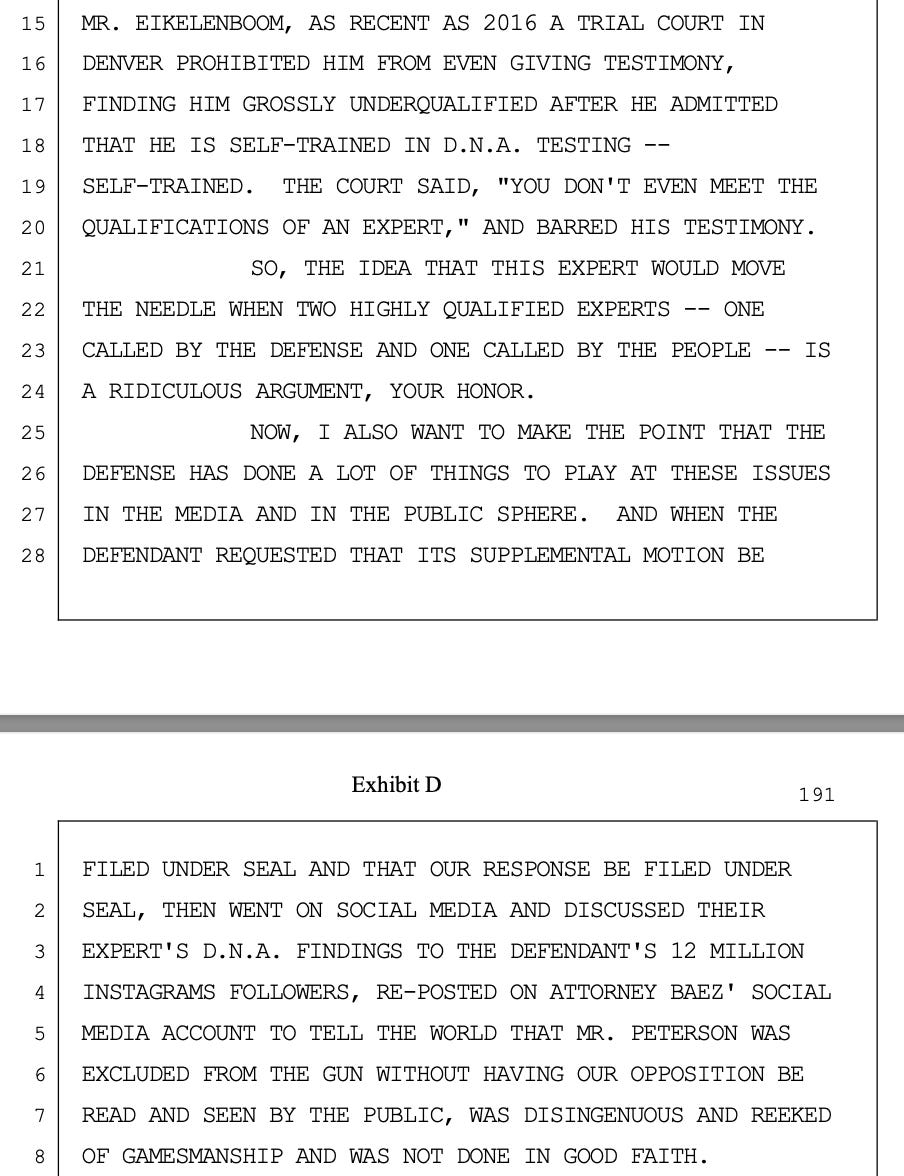
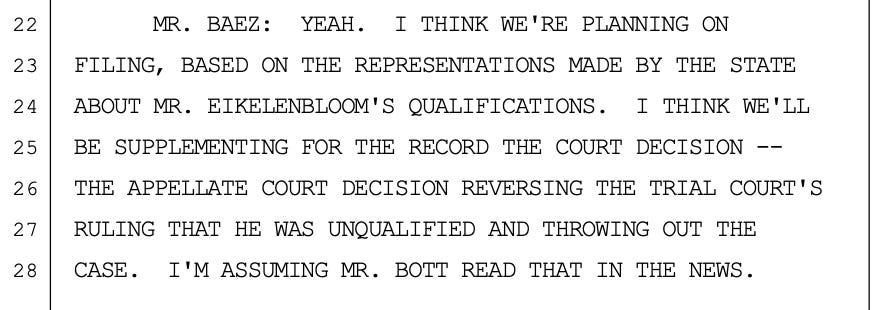
The expert who wrote the new report for Barhoma and Baez is Richard Eikelenboom, who was Baez’s DNA expert in the Casey Anthony murder trial. Prosecutors said during last month’s hearing that Eikelenboom’s alleged expertise was discredited by a judge criminal case in Colorado in 2016, but Baez said the judge’s finding was reversed on appeal.
Here’s what D.A. Alex Bott said:
And here’s what Baez said:
Barhoma and Baez cited concerns about attorney-client privilege when they sealed their filing about Eikelenboom’s report, as their filing also accuses Lanez’s previous attorney Shawn Holley of ineffective assistance of counsel.
They didn’t mention their allegations against Holley in their social media posts. But as Lanez posted the false claims about DNA, Barhoma posted transcript excerpts from the testimony of Sean Kelly, the Hollywood Hills homeowner who witnessed the shooting from his balcony and called 911 to say he saw a group of people beating a woman. Barhoma highlighted Kelly answering “yeah” after Mgdesyan asked if Lanez may have grabbed the gun from the women.
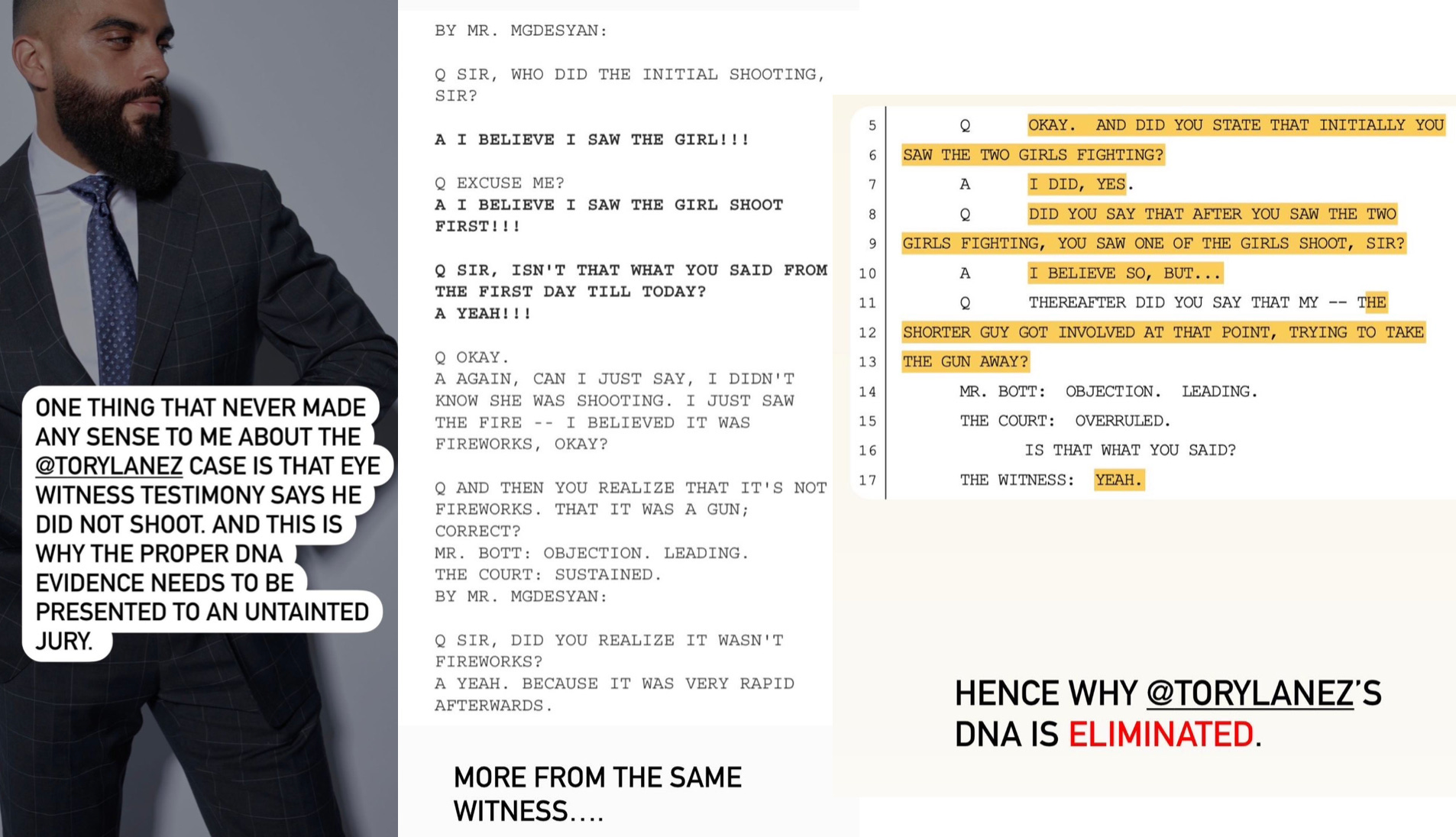
The lawyer wrote: “Hence why ToryLanez’s DNA is eliminated.” He didn’t mention that Kelly also testified he saw Lanez fire “four or five” shots.
Lanez’s fans embraced the false allegations with fervent excitement.
“Let’s goooooo stop being soft on em” one Twitter user wrote in reply. Another solicited money online to pay for her cross-country flight so she could attend the hearing. And amid the heightened acrimony, the court moved the hearing from Herriford’s courtroom on the 15th floor to the more secure 9th floor.
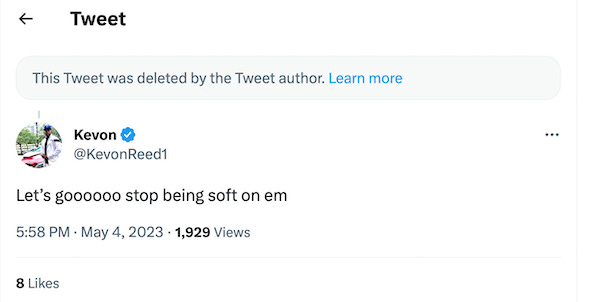
Barhoma has since deleted the post from Twitter. He’s also changed the privacy settings on his Twitter and Instagram accounts from public to private. He did not respond to an email asking why.
Prosecutors are to file their sentencing memorandum by the close of business on Tuesday. Stay tuned for my coverage, and please subscribe if you haven’t already. Also, subscribe to my YouTube channel and check out my video report.
Google Drive links to PDFs of the appellate documents, including the 206-page transcript from the hearing on the motion for new trial, are available below. I paid $65 for the documents, and I recouped that through new subscriptions, so I’m now making the documents available for everyone. Remember, your paid subscriptions make my work possible. If you’re able and willing, you can pay through Substack (it’s secure!) at the link below. The cost is $8 a month or $80 a year. If you’d prefer, you can pay through Venmo (MeghannCuniff), CashApp ($MeghannCuniff) and Zelle: (meghanncuniff@gmail.com). Thank you for reading!
- meghann
Appellate writ petition seeking Judge Herriford’s disqualification (32 pages)
Application to file oversized brief (6 pages)
Original disqualification motion under 170.1 (15 pages)
Judge Herriford’s order and answer (4 pages)
Full transcript from the two-day hearing on the motion for new trial (206 pages)
Prosecutors’ motion for aggravating factors (5 pages)
Thank you for supporting Legal Affairs and Trials with Meghann Cuniff through a paid subscription. Your support makes my work possible.
OMG, this transcript is hilarious. “Your Honor, we have no ability to think on our feet in order to present our evidence in a different order. Motion for a third sidebar! No? Recess pls? We need another ten minutes to discuss!”
Damn this “Strickland” (🫣) advert video was purged! I wonder if Barhoma was recently employed by Aaron Spolin for $30/hour? Reality is that many desperate convicted people & their families will spend $$ because they hear something they like... despite being 100% unrealistic nonsense.