
9th Circuit vacates Michael Avenatti's 14-year prison term, remands for sentencing
Disgraced lawyer Michael Avenatti will return to Santa Ana for resentencing under a new appellate order that says a judge must determine the value of his legal work.

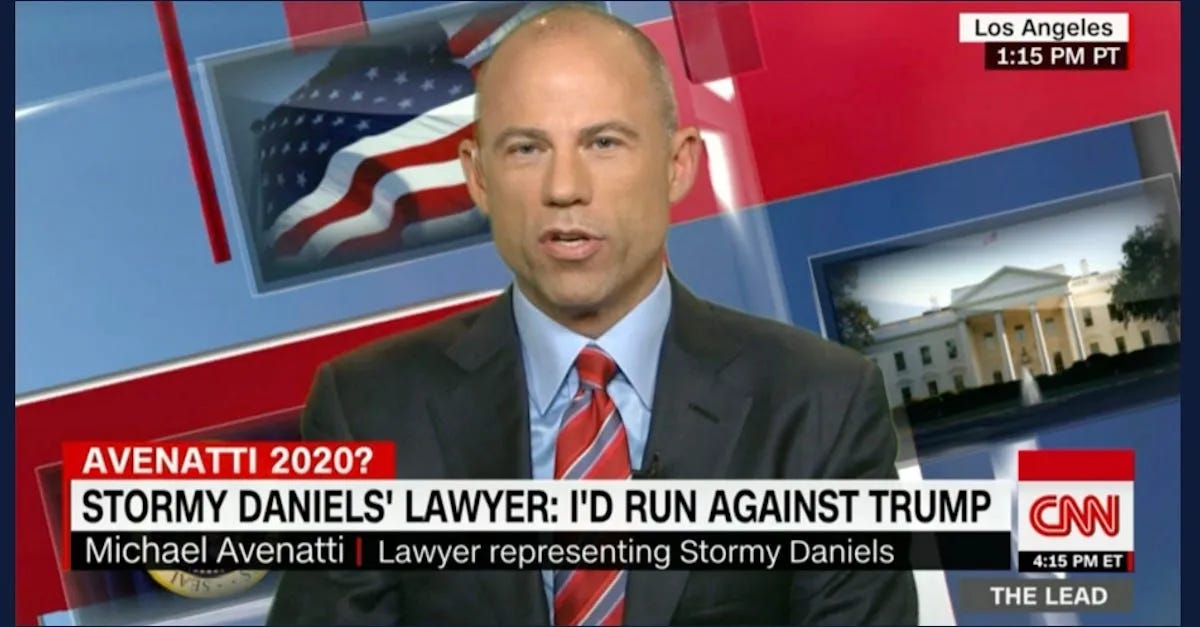
A federal appellate court on Wednesday vacated disgraced lawyer Michael Avenatti’s 14-year prison sentence in his California client fraud case.
The 9th Circuit U.S. Court of Appeals said Avenatti’s sentence didn’t properly consider the money he paid victims as well as the value of his legal services because Senior U.S. District Judge James V. Selna punished him for the full amount of the settlements from which he embezzled.
The ruling says Avenatti’s clients “were never entitled to receive the full settlement values — they hired Avenatti on a contingency fee basis and agreed, by contract, to pay him a portion of any settlement as his fees and to reimburse him for his costs.”
“Thus, even if Avenatti acted lawfully, his clients would not have received the full settlement amounts,” according to the nine-page unpublished memorandum from 9th Circuit Judges Michelle T. Friedland and Roopali Desa as well as U.S. District Judge Karen E. Schreier, sitting by designation from the District of South Dakota.
The judges didn’t decide whether Avenatti should be credited for work on the cases by other attorneys at his firm, saying he forfeited the argument by raising it in his reply brief instead of his opening brief.
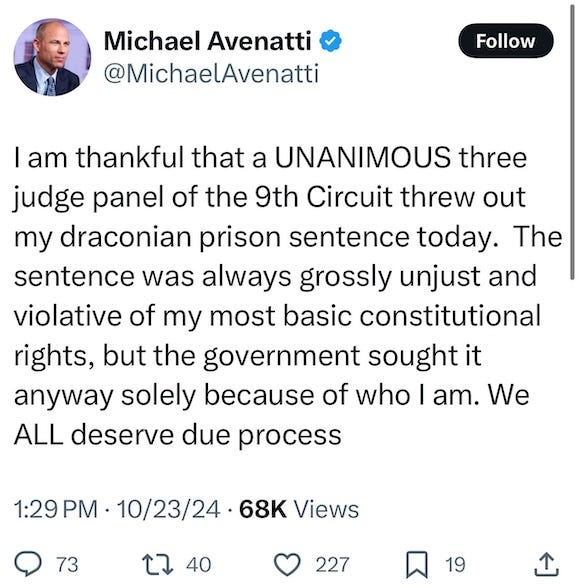
In an X / Twitter post apparently dictated from prison, Avenatti said he’s thankful the panel unanimously “threw out my draconian prison sentence today.”
“The sentence was always grossly unjust and violative of my most basic constitutional rights, but the government sought it anyway solely because of who I am. We ALL deserve due process,” Avenatti wrote.
The ruling could affect other lawyers prosecuted under federal wire fraud law for stealing from clients, including disbarred Real Housewives of Beverly Hills lawyer Tom Girardi, who’s to be sentenced in December in Los Angeles for four wire fraud convictions.
Like Avenatti, Girardi paid his victims partial amounts from their settlements while lying to them for several years about what was going on with the rest of the money. Prosecutors said they were “lulling payments” meant to continue the fraud.
In Avenatti’s case, Assistant U.S. Attorneys Brett Sagel and Ranee Katzenstein persuaded Senior U.S. District Judge James V. Selna to increase by 20 points Avenatti’s offense level for wire fraud under U.S. Sentencing Guidelines, based on the total of the four client settlements he ransacked, which is $12.35 million.
The 9th Circuit said this contradicts “the purpose of the loss enhancement, which is to ensure that a defendant’s sentence is proportional to the harm he caused.”
“We therefore remand and direct the district court to account for the fair market value of Avenatti’s legal services and costs in its ‘actual loss’ calculation, without any reliance on forfeiture,” according to the ruling.
The judges also said Selna didn’t properly show how Avenatti’s perjury during judgment-debtor examinations in separate civil proceedings justified an increased sentence for obstruction of justice in his client fraud case, and they said his $7.6 million restitution order should have considered the legal services he provided cosmetics entrepreneur Michelle Phan when he acquired Em Cosmetics for her while negotiating her departure from Ipsy, the company she founded after becoming famous by posting makeup tutorials on YouTube.
Avenatti’s agreement with Phan entitled to 7.5 percent of the value of Em Cosmetics, and “such services rendered to the victim must be deducted from the restitution owed,” according to Wednesday’s ruling.
Additionally, the judges said Selna should have imposed Avenatti’s sentence to run at the same time as his four-year sentence in the Southern District of New York for stealing from the client who rocketed him to fame in 2018, adult film star Stephanie “Stormy Daniels” Clifford. But they said Selna was justified when he imposed the sentence consecutively with Avenatti’s 30-month sentence for extorting Nike.
“The modus operandi in the Nike offense — attempting to extort money from a company — is distinct from the stealing of settlement money from clients at issue here,” the 9th Circuit judges wrote.
However, “Contrary to the district court’s finding, the Clifford offense was also contemporaneous with the offenses in the present case: the relevant conduct in the Clifford offense spanned July 2018 to February 2019, and the conduct here spanned January 2015 to March 2019.”
Selna also increased Avenatti’s sentence because he abused a position of trust, used sophisticated means, victimized vulnerable people, caused them substantial financial hardship and obstructed justice when he threatened on Twitter speak about his client-turned-victim Alexis Gardner and her ex-boyfriend, NBA player Hassan Whiteside.
The 9th Circuit didn’t touch those enhancements in Wednesday’s ruling.
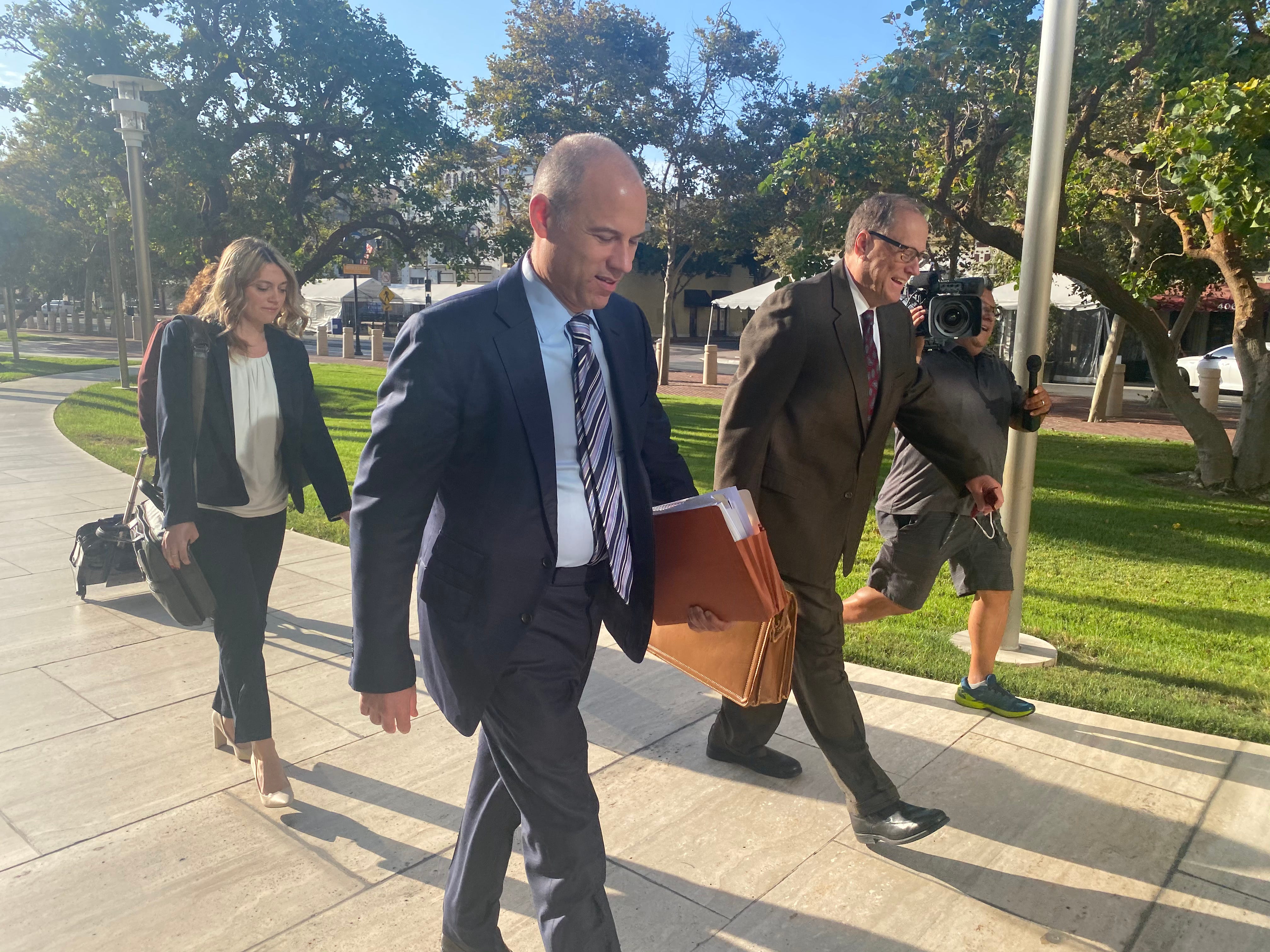
The finding regarding a concurrent sentence with the Clifford case could reduce Avenatti’s new sentence by at most four years, which is the length of the sentenced imposed by U.S. District Judge Jesse M. Furman. Furman imposed the 48-month sentence with 18 months to run concurrently with the 30-month Nike sentence.
Regarding the total loss amount, Avenatti argued during his trial in summer 2021 that federal investigators didn’t properly consider the work he did for clients and the partial payments he gave clients from their settlements. His repeated questions about his law firm’s bill records in the Tabs3 software program — “WHAT IS TABS?” — led to the U.S. Department of Justice releasing 2,000 electronic files to him six weeks into trial.
The records weren’t reviewed by investigators or the financial expert hired by prosecutors, and they led Judge Selna to declare a mistrial on Aug. 24, 2021, because he said Avenatti could have used the Tabs info when preparing his defense. Selna said the failure to provide the info violated Brady v. Maryland case law regarding prosecutors’ duties to release favorable evidence to defendants. But he also said no misconduct occurred and that prosecutors didn’t try to goad the mistrial, and he rejected a double jeopardy claim from Avenatti that sought to prevent a retrial.
Prosecutors said the records couldn’t contain enough previously unknown client costs and expenditures to change the scope of the case, and they emphasized that they used bank records to track Avenatti’s expenditures and how he spent settlement money They also accounted for Tabs3 data that was used in two client cases because it was reflected in banking transactions.
Avenatti never publicly revealed the details of the Tabs data. Instead of going to trial a second time, he pleaded guilty on June 16, 2022, to five of his 36 charges without a plea agreement with prosecutors. Prosecutors recommended Selna sentence him to 18 years in prison, while Avenatti asked for a six-year sentence to be served concurrently with his New York sentences. He and his lawyer, H. Dean Steward, argued the money Avenatti stole from his clients was far less than prosecutors alleged — $1.5 million to $3.5 million.
In Avenatti’s appellate opening brief, Deputy Federal Public Defender Margaret A. Farrand said Selna’s decision to consider the entire $12.35 million in settlements “invented a novel, extratextual, and state-dependent exception to the net loss rule for attorney defendants.”
Had Selna considered Avenatti’s payments and work for the client victims, the amount “would have been less than $9.5 million,” Farrand wrote, which would have decreased the sentencing enhancement under U.S. Sentencing Commission guidelines.
In her answering brief, Katzenstein said Judge Selna “did not apply a blanket legal rule prohibiting credit for fees” and instead “found, after considering all the circumstances, that the services defendant provided to obtain the settlements had no fair market value.”
Katzenstein said in oral argument on Sept. 12 that Avenatti was lying to his clients and causing them great harm, “and no lawyer could reasonably believe that he was nonetheless entitled to his fees.”
“No one would pay to have their money stolen from them,” Katzenstein said.
Judge Desa asked Katzenstein if “another way of looking at it” is “but for his services, they wouldn’t have bee entitled to the settlement amounts?”
Katzenstein replied that Avenatti’s “services” “were designed to get the settlements into his hands.”
“They didn’t get the settlements. His services got the settlements for him,” she said.
Wednesday’s ruling sided with Farrand and Avenatti and said “Forfeiture is a sanction that does not approximate the pecuniary harm caused by an attorney’s misconduct.”
“It has no place in calculating ‘actual loss’ for the purposes of enhancing a criminal defendant’s sentence,” the judges wrote.
Selna has not yet scheduled a hearing. He could schedule briefing regarding the loss amount issue.
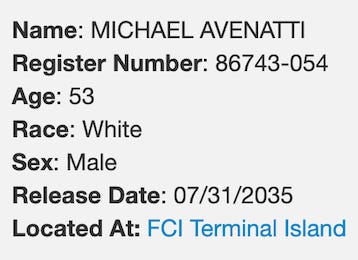
Avenatti, 53, currently is incarcerated at the Terminal Island federal prison in San Pedro, near Los Angeles.
Court documents:
Dec. 5, 2022: Judge Selna’s sentencing order
Nov. 3, 2023: Avenatti’s opening brief
Feb. 5, 2024: Prosecutors’ answering brief
March 27, 2024: Avenatti’s reply brief
Oct. 23, 2024: 9th Circuit ruling
Previous articles:
Thank you for supporting my independent legal affairs journalism. Your paid subscriptions make my work possible. If you’re not already a paid subscriber, please consider purchasing a subscription through Substack. You also can support me through Venmo (MeghannCuniff), CashApp ($MeghannCuniff) and Zelle (meghanncuniff@gmail.com). Thank you!