
Meta and Google begin trial in lawsuit over child addiction and mental health claims
One of the most successful mass torts lawyers in the United States will question Facebook co-founder Mark Zuckerberg and Instagram Head Adam Mosseri as adverse witnesses.

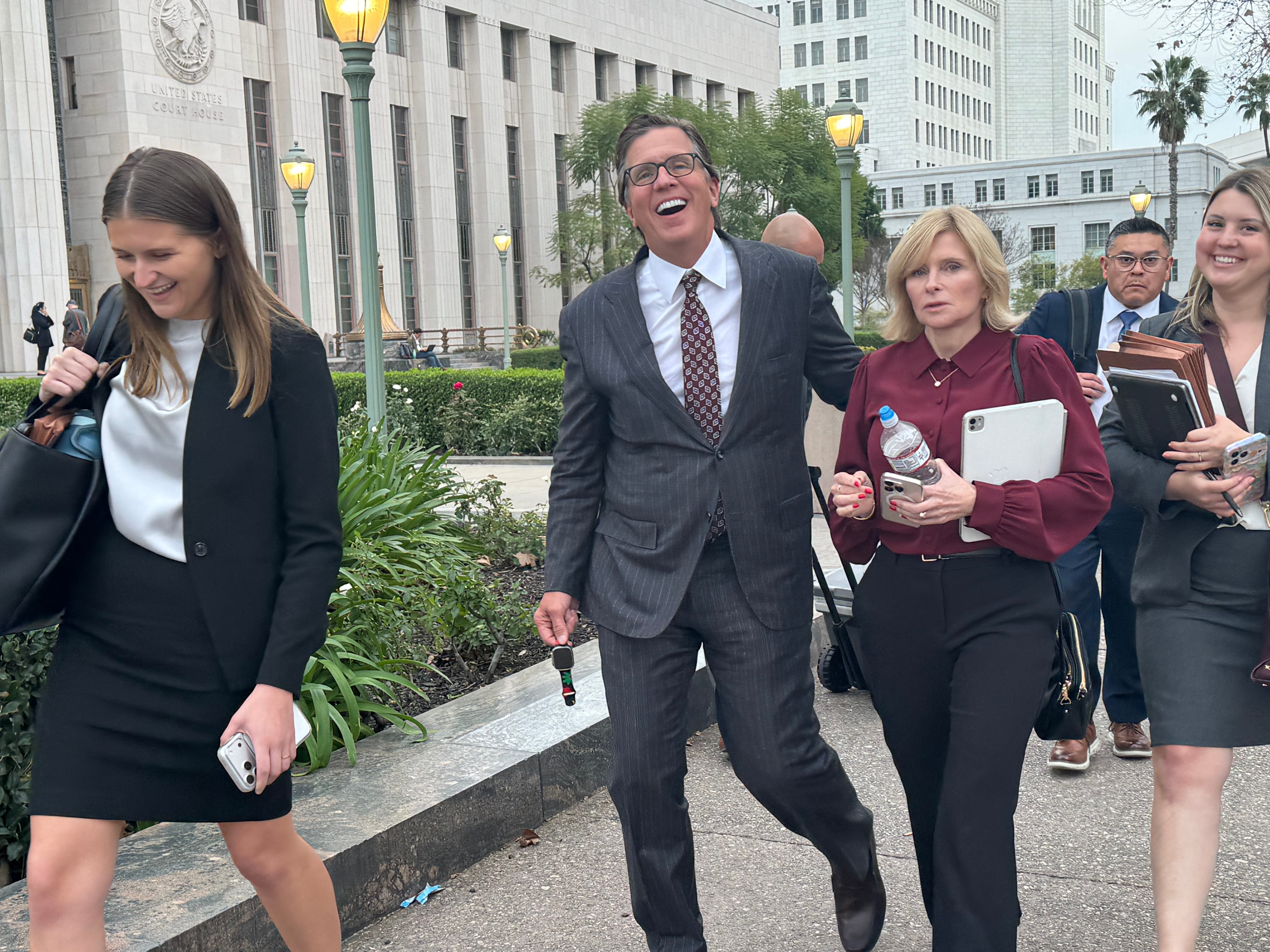
The first trial in a wave of lawsuits alleging social media companies intentionally addict children opened Monday in Los Angeles with one of the most successful mass torts lawyers in the United States telling a jury that his case is “as easy as A-B-C.”
“Addicting brains and children. I’m going to show you evidence that these companies built machines designed to addict the brains of children, and they did it on purpose,” said Mark Lanier, a Houston, Texas-based attorney who tries major product defect lawsuits and other mass torts across the country.
Lanier is suing Google and Meta Platforms, on behalf of a now-20-year-old woman who claims Google’s YouTube and Meta’s Instagram were so addicting they caused severe mental disorders. SnapChat settled on Jan. 21, and TikTok settled on Jan. 27 shortly before jury selection began.
The lawsuit is among thousands of personal injury lawsuits against the companies that have been coordinated into mass tort proceedings in California state and federal courts. The trial before Los Angeles County Superior Court Judge Carolyn Kuhl is considered a bellwether trial that could influence how lawyers approach the other lawsuits.
The plaintiff is identified in court by the pseudonym and initials Kaley G.M. She’ll testify as a key witness, but Lanier told the jury on Monday that “as her lawyer, I’ve made the decision to keep her out of this courtroom until the moment she has to testify” so she doesn’t hear her traumas recounted in testimony.”
Kaley “is now easily overwhelmed and the part of a mind that filters out noise and stress, you will hear evidence it was devastated by the defendant’s machine,” Lanier said. “To ask her to sit here for weeks and listen to people talk about her descent would be like asking someone with a broken leg to run a marathon. We’re here to seek justice, not to cause her more harm.”
Kaley appeared briefly in the courtroom after the noon recess as Lanier told the jury “you’ll get to hear from her when she comes to testify.”
“You will enjoy getting to meet her and getting to know her, but I am going to continue to ask that she stay outside the courtroom while we talk about her and her life and what all happened,” Lanier said.
Lanier told the jury Kaley got involved in the litigation “because her mom was pushing her” as she “recognized that this was important ligation, and it would be important for Kaley’s future.”
“You’re going to hear from Kaley that she didn’t really want to do this, in part because she didn’t want him to take them to take down her sites. She was nervous over losing her accounts.”
Lanier tried to get ahead of Kaley’s family problems by telling jurors early in his opening that the companies targeted “a child named Kaley, and now in this courtroom, I suspect they’re going to target her again, blaming her for what they did to her.”
He said later that Kaley had problems at home, including a mother who “couldn’t manage to control” her and said “some things she shouldn’t have” and “thumped her on the head.” Lanier told jurors the thump was “not in any ‘ go to the police’ way, but, you know, like ‘Hey, cmon, kid.’”
“I’m not condoning that. I’m just trying to make sure that it’s in perspective,” Lanier said. “Kaley’s in a tough situation, and what these apps have been designed to do is to exploit people who are in that tough situation.”
Meta’s lawyer Paul Schmidt disputed Lanier’s description of the mother’s abuse by showing jurors quotes from Kaley’s meetings with a therapist in which she said her mother hit her in her head and called her stupid
“You were told that when she was hit it was ‘hey, c’mon kid,’” said Schmidt, a partner at Covington & Burling LLP. “That is not how she perceived it. That’s not how she wrote about it in real time. That’s not how she talked with therapists about it.”
Google’s lawyer Luis Li of Wilson Sonsini Goodrich & Rosati will give his opening statement Tuesday morning.
The first witness will be Anna Lembke, a Stanford University psychiatrist and addiction medicine expert who was Lanier’s addiction expert in the landmark trial against opioid manufacturers in Cleveland, Ohio, in 2021.
‘That’s not using an app. That’s being in prison.’
Lanier is trying the case with his daughters, Rachel Lanier and Sarah Lanier, as well as Rahul Ravipudi of Panish | Shea | Ravipudi LLP.
Ravipudi’s law partner Brian Panish, a prominent plaintiff’s lawyer who works with Lanier, was in the gallery for the beginning of openings.
Lanier is known for incorporating demonstratives into his courtroom presentations, and he had several on Monday: the three A B C children’s blocks, a hammer, a case of eggs that he said were de-yolked, a miniature model of a red Ferrari and a small slot machine.
He told the jury the case “is about two of the richest corporations who have engineered addiction.”
“I’m going to show you evidence that these companies built machines designed to addict the brains of children, and they did it on purpose,” Lanier said. “I’ll give you evidence on why a child like Kaley couldn’t just put it down, no matter how much she wanted to.”
The evidence includes “internal documents that people don’t generally get to see” and include emails from Meta CEO Mark Zuckerberg and YouTube executives that discuss “the manipulation matrix.”
“You’ll see in their own words, engineered addiction,” Lanier said.
Legal Affairs and Trials with Meghann Cuniff is a reader-supported project that utilizes my 20 years of reporting experience in traditional media to bring you in-depth news about major legal issues. If you want to support my work, consider upgrading to a paid subscription.
Lanier said Kaley began using YouTube when she was six years old and Instagram when she was 9 years old after her mother gave her a phone without it but she downloaded it anyway. The longest time she spent on Instagram in one day was 16.2 hours on March 15, 2022.
“That’s not using an app. That’s being in prison,” Lanier said.
He differentiated social media applications or “apps” from books and newspapers telling jurors to “Imagine a slot machine that fits into your pocket.”
“Every time she swipes, she’s gambling,” Lanier said. And it’s “not for mental stimulation. You’ll hear the scientists say it’s for a dopamine hit.”’
Lanier later held up a hammer and told jurors, “A tool is something you put down when you’re through with it.”
“But that’s not the way it is with these apps. These apps aren’t tools,” Lanier said.
He said children seek “social validation” from Instagram “all the while scrolling through an endless feed of other people’s filtered lives.” YouTube “plays the next video before you can decide to stop” using an algorithm, which Lanier described as “a computer set of rules that learns what keeps you watching and feeds you more of it, whether you search for it or not.”
Lanier displayed an internal document from YouTube in 2011 that said “the goal is not viewership, it’s viewer addiction.”
“That’s their word. It’s not mine. It’s not some lawyer trying to make them sound bad,” Lanier said.
Instagram and YouTube are free for users, and the company makes money by selling advertisers access to its users.
YouTube values viewership because “they sell advertising.”
“When Kaley puts the phone down, the cash register stops ringing,” Lanier said.
Lanier showed jurors a message Zuckerberg wrote in 2015 about hoping to increase revenue by increasing time spent on the app by 12 percent.
“He wants to reverse the teen trend, because not as many teens are spending as much time as they had hoped,” Lanier said.
Lanier should another meta document that said, “If we want to win big with teens, we must bring them in at 9, 10.”
“You’re going to hear evidence that their public policy said no one under 13 should be on this, but their internal strategy says we need to bring them in,” Lanier said. “Why target the 9, 10, 11, 12 -year old? Because they did the math.”
Lanier displayed YouTube documents that discuss the need for YouTube to serve as “a digital babysitter.”
“Parents don’t want to monitor content. They want to trust that they can leave their child on their own with the app to safely and independently be entertained,” the document said.
Lanier called it an example of the “attention economy.”
“They can sell the attention of people to others,” he said.
Lanier said children develop a chemical addiction to the validation they receive from the app because of the dopamine involved, which exploits people in more difficult situations who are more prone to addiction.
Lanier displayed another exhibit in which an expert told them that “receiving a like or a positive comment on social media releases dopamine. That’s why these apps are so addictive.”
“They knew that for a child, social validation isn’t just nice, it’s a biological necessity,” Lanier said. “They turned the need for friendship into a chemical delivery system.“
He displayed a document from December 2018 in which Instagram officials listed a weakness as, “There are no products or programs to push back” on the link between the app and “loneliness, eating disorders and poor sense of self worth.”
In another document, an Instagram employee said, “If we’re committed to the well being of individuals, we need to alert people to the effect that the product has has on their brain.”
In another document, an Instagram official wrote that he was told to delete data regarding the app’s “emotional impact.”
In another document, an Instagram employee wrote, “Someone just said to me, ‘if the results are bad and we don’t publish and they leave, isn’t it going to look like tobacco companies doing research knowing cigs were bad and then keeping that information to themselves.’”
Lanier showed jurors emails in which an employee said he told Instagram Head Adam Mosseri that Instagram “was affecting dopamine and that we were basically pushers” and Mosseri “freaked out when I talked about dopamine in my teen fundamental lead review.”
“But it is undeniable. It’s biological. It’s psychological truth,” the employee wrote. Mosseri is expected to testify on Wednesday, and Zuckerberg is to testify next week. YouTube CEO Neal Mohan also will testify.
Lanier told the jury, “These companies aren’t totally made up of deranged freakos” which prompted Schmidt to stand and tell Judge Kuhl that was “argument” and not a proper way “to talk about anyone.”
The judge agreed, and Lanier withdrew the statement.
Near the end of his opening, Lanier showed jurors a case of eggs and said an “eggshell plaintiff” is a plaintiff who you take how they are.
“People who are fragile. People who have trauma. You don’t mock them for it. You don’t take advantage of them for they’re the most likely to get addicted,” Lanier said.
But Google and Meta “didn’t use the data to protect these kids. They used it to ensure their algorithm never let them go.”
“They knew the parents stood no chance. Their own researchers found that corrective supervision made no difference,” he said.
Lanier showed jurors a miniature red Ferrari identified areas of the brain that seek rewards and validation and said the prefrontal cortex is like the brakes.
“The defendants knew the engine was roaring. They knew the brakes didn’t work,” Lanier said.
Lanier ended by returning to Kaley and her family and telling the jury he wants them “to hear about the struggles in school.”
“I want you to hear about the fragile home. I want you to hear about her mom being overwhelmed and having three kids at home,” Lanier said. He motioned to his wife in the galley and said “we had five kids at home, two parents, and it was chaos there, too.”
Defense focuses on plaintiff’s therapy records
Schmidt missed the end of jury selection after he apparently became ill, and Monday was his first day back in the courtroom.
He had a big gash and bump on his head, and he told the jury he wished he had a better story. Instead, all that happened is he got dizzy and fell over and sustained “a bad concussion.”
He considered trying to conceal his wound with makeup so he wouldn’t distract the jury, because “this isn’t about me.” He decided not to because “we’ll have distractions. There’ll be various distractions in the course of the trial.”
“We believe that we will focus on what matters in this case, the facts, the evidence and the proof in this case. And that’s really why I’m most glad to be back here instead of being at home or someplace else,” Schmidt said.
Schmidt told jurors the key issue before them is deciding whether social media caused Kaley’s mental health problems.
“It’s not about whether social media is or is not a good thing,” he said.
Schmidt played an excerpt from Kaley’s therapist’s deposition in which the therapist said Kaley didn’t talk much about social media when discussing her troubles. Another therapist said if Kaley had said Instagram was an issue, she would have tried to address it.
Schmidt displayed many quotes from Kaley’s therapy sessions about her abusive mother and suicidal thoughts on the courtroom overhead projector without reading them aloud.
He described other records about the mother experiencing domestic violence when Kaley was three years old, feeling abandoned by her father after her parents divorced. Kaley told therapists her mother wouldn’t talk to her for days on end and would sometimes refuse to pick her up from school.
When she was 16, Kaley told her therapist she wants her mother to stop saying hurtful things to her “and yelling at me.” She also said her mom “makes me want to kill myself”
“Those are really hard here. I recognize that,” Schmidt told the jury. “They’re really important in a case when you’re being asked to asses what caused her mental health struggles.”
Schmidt referenced a line in therapy notes that says Kaley dealt with a cyberbullying issue by “turning her phone off and stopping looking at posts.”
Schmidt discussed Kaley’s medical history and therapy records for about 40 minutes before moving into the apparent defense theory that Kaley’s social media use was actually good for her.
He highlighted how her therapist asked where she has a place “to be seen” and Kaley answered, “my social media pages.”
“This is an Instagram post from her in 2020 talking about her video edits: ‘I’m sorry, my posts have been kind of sad. This is how I express myself. This is how I go through my feelings. Sorry. A lot of my edits have been sad lately, going through hell, and that’s my small way of coping.”
Schmidt said jurors will hear the term “well being” a lot through trial because “that’s a term that people are going to use to try to make Instagram better.” He said the company “conducts research, supports users, acts on that research and is constantly adapting.”
“We wanted to understand Instagram’s role, for better or worse .. in order to prioritize mental health and well being issues,” Schmidt read from a document.
The company in 2018 wanted to better understand the behavior of “high-time spent users” because they “are potential candidates for products that aim to help habitual or problematic usage.”
Schmidt discussed features on Instagram such as the ability to set reminders about time usage and ended by telling jurors he believes they’ll hear more from Zuckerberg and Mooseri before they hear anything specific about Kaley. He again highlighted the main question for the jury: “Is Instagram a substantial factor in Kaley’s mental health struggles?”
“Here’s the critical language in this instruction: Conduct is not a substantial factor in causing harm if the same harm would have occurred without that conduct,” Schmidt said.
He said jurors must consider, “if you put the Instagram away and everything else becomes the same …would she still be struggling with the same things?”
‘It’s not the whole truth.’
Lanier told reporters outside the courthouse that Schmidt’s opening presented an incomplete picture. He also disputed that Kaley’s mother contributed to her mental health problems by pointing out that Kaley still lives with her mother.
“I think that the picture painted of Kaley and her mom is unfortunate,” Lanier said. “I’ll bet there aren’t any cherries left in the supermarket tonight because they picked them all as they went through those records. It’s not the whole truth.”
Lanier said he introduced Kaley during his opening because, “I think the jury needs to see her.”
“I think they need to know that she’s not just here, but to know what she looks like,” he said. He said Kaley “will be here each day” but not in the courtroom.
“It’s just nobody should have to sit there and listen to a one sided presentation of your life that doesn’t accurately reflect your life,” Lanier said.
Lanier said he’s tried other cases without a plaintiff in court each day.
“I’ve had a brain-damaged plaintiff who was in the hospital and wasn’t able to be present. I’ve had mesothelioma victims who weren’t able to leave because they couldn’t leave their bedside. It’s not that unusual,” Lanier said.
Jury seated after ‘Batson challenge’ threat
I caught the final 90 minutes of voir dire last Friday, and Lanier backed off on using a strike on a Black woman after defense counsel told him they’d challenge the strike under Batson v. Kentucky, the 1986 U.S. Supreme Court case that said a preemptory challenge against a potential juror cannot be used only because of race.
“Never had a Batson challenge in my life,” Lanier said.
Judge Kuhl told Lanier the state has been “very much focused on this issue of implicit bias” which becomes an issue of “how it looks.” She said the stae “just in the past two years has really ramped things up.”
She told Lanier “not think this is to call you out as being discriminatory, for considering striking this person.”
Lanier decided not to use the strike, and the woman was sworn in as one of six alternate jurors.
Thank you for supporting my independent legal affairs journalism. Your paid subscriptions make my work possible. If you’re not already a paid subscriber, please consider purchasing a subscription through Substack. You also can support me through my merchandise store and by watching my YouTube channel. Also, please follow me on Facebook and Instagram as I grow my Meta presence. Thank you!